EXPLAINED | US Midterm Elections: Is the Necktie Dead, or Does It Still Mean Business?
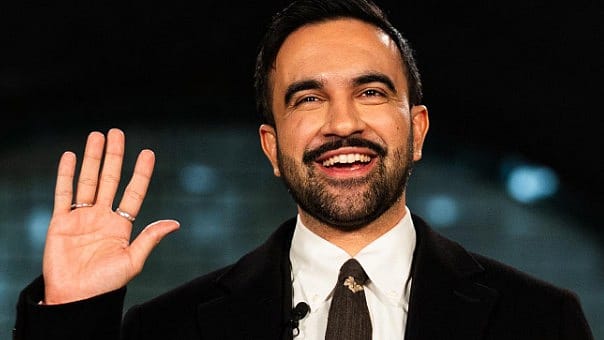
Americans voting in the November 3 midterm elections are being offered several versions of what a politician should look like. An October 31 BBC report examines candidates favouring workwear, open collars and cowboy boots. Robert Ordway, a former Capitol Hill clothing retailer, gives his verdict: “The necktie is dead on the campaign trail in both parties.”
That is an assessment of campaign style. The tie has a much longer story, involving soldiers, office workers, schoolchildren and institutions that have turned an accessory into a requirement.
Why are candidates taking their ties off?
They are trying to communicate something about themselves before they start speaking.
The BBC describes Texas rivals Ken Paxton, a Republican, and James Talarico, a Democrat, campaigning in relaxed blazers and cowboy boots. Stylist Joe Zee's interpretation is that politicians must look capable of holding office while appearing connected to their constituents.

Look Who's Talking Regime Change
23 Oct 2026 - Vol 05 | Issue 43
The message depends on the audience. A formal suit can suggest authority; an open collar can suggest ease. Neither impression tells us whether the wearer will govern well. The clothing helps introduce the candidate, and the candidate still has to make a case.
What exactly is a necktie, and who started wearing one?
The familiar version is a narrow length of cloth worn around the collar and knotted at the throat. Its ancestry runs through the cravat, a neckcloth associated with Croatian soldiers serving in France in the seventeenth century. Their style attracted attention at the French court and entered civilian fashion.
Those early cravats could be elaborate arrangements of fabric. The slimmer modern necktie emerged in the nineteenth century. According to the ASU FIDM Museum, it was easier to put on and maintain than neckwear requiring careful starching and repeated adjustment.
How did a strip of cloth come to mean business?
It fitted into the uniform of the office.
The FIDM Museum connects the necktie's growing popularity to the office-based workforce of the Industrial Revolution. With professional men wearing dark business suits, a tie offered room for colour and individuality. Particular patterns could also identify schools and clubs.
That gave it two jobs: completing an accepted outfit and revealing something about the person wearing it. A tie could indicate membership of a group without anyone needing to announce it.
The important change was social. People learned to recognise the outfit as appropriate for particular settings. The cloth itself acquired no special ability to produce competence.
Can an open collar really win votes?
Clothes can help a candidate make an introduction. Winning votes also involves policies, reputation and party loyalties, so a successful campaign would not establish that an open collar caused the victory.
The useful question is whether the presentation fits the person voters know. Workwear may look natural on someone associated with practical work. A carefully purchased casual wardrobe can also look like a costume. Authenticity is something an audience judges.
So is the tie actually dead?
Its obituary needs a location.
On September 27, 2023, the US Senate adopted a dress-code resolution requiring business attire on its floor, specifying a coat, tie and long trousers for men. That is a documented example of an institution formally insisting on the accessory.
An election rally and a legislative chamber have different purposes. At a rally, a candidate controls much of the presentation. In a chamber, collective rules can determine what is acceptable. Dressing down to seek office does not establish that every institution has relaxed its expectations.
Has removing a tie ever been an actual government message?
Yes. In July 2022, Spain's then prime minister, Pedro Sánchez, asked ministers, public officials and private-sector workers to dispense with ties when unnecessary. Reuters reported his argument that dressing more comfortably in hot weather could support efforts to reduce energy use.
The proposed connection was straightforward: people who need less cooling could help reduce demand for air-conditioning. His appeal was a policy message carried through clothing. The report did not establish how much electricity removing a tie actually saved.
Why does this feel familiar in India?
Because a tie can be part of an institution's instructions long before someone enters an office.
Delhi Public School, Mathura Road, provides a specific example. Its published senior-wing uniform requirements make a dark green tie compulsory in winter for boys and girls. The girls' summer uniform lists it as optional.
Even within one school, the requirement changes with the uniform and season. That is more useful than declaring that every Indian student must wear one. It also shows who makes the decision: the institution sets the rule, and pupils follow it.
Is the tie exclusively a men's accessory?
No. The New Zealand Fashion Museum documents women wearing ties from the late nineteenth century, including for outdoor activities and office uniforms. It also describes later appearances in women's fashion, including styles associated with Marlene Dietrich and Diane Keaton.
The association with male business dress is powerful, but it does not account for everyone who has worn a tie or every reason for wearing one.
What happens next?
November 3 will bring election results, followed by the transition from campaigning to holding office.
For anyone following political style, the useful comparison will be what successful candidates wear when seeking support, negotiating power and entering formal institutions. The same person can make different choices in each setting. Watch where the tie comes back, and who gets to decide.