EXPLAINED | Lula Wins Again: How Did Brazil’s President Pull Off a Historic Fourth Term?
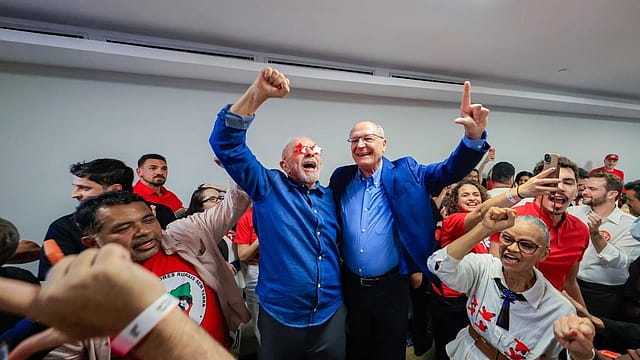
Luiz Inácio Lula da Silva has spent decades giving political obituaries a short shelf life.
Three unsuccessful presidential campaigns preceded his first victory. Prison interrupted his career before his convictions were annulled. He returned to the presidency in 2023.
This time, the obstacle was an opponent who had already beaten him in the opening round.
On October 25, Brazil’s 80-year-old president overturned that deficit to defeat Flávio Bolsonaro and secure a fourth presidential term. CNN Brasil reported that, with 99.99 per cent of ballots counted, Lula had 51.78 per cent of valid votes against Bolsonaro’s 48.22 per cent.
The victory gives Brazil another Lula government. It also leaves him with a demanding question: how much can he deliver when almost half the participating electorate chose his opponent?

Losing Memory
16 Oct 2026 - Vol 05 | Issue 42
The making of a medical and social emergency
FIRST, WHICH BOLSONARO DID LULA DEFEAT?
Flávio Bolsonaro, the senator and son of former president Jair Bolsonaro.
Lula defeated the elder Bolsonaro in 2022. In 2026, he faced the next generation of the same political family.
Flávio campaigned as his father’s political heir. CNN’s campaign reporting described Jair Bolsonaro’s imprisonment for plotting to overturn his 2022 defeat as part of the backdrop to the contest. The younger Bolsonaro offered voters a route back to the family’s conservative politics.
The surname, therefore, carried a political programme and a continuing argument about Brazil’s recent past.
WASN’T THE FIRST ROUND TIED?
No. Flávio led. Brazil’s electoral authority recorded 47.03 per cent of valid votes for Bolsonaro and 45.16 per cent for Lula in the October 4 first round. Neither secured the majority needed to win outright, sending them into a runoff.
That distinction makes Lula’s victory more striking. He had to overcome an actual electoral deficit within three weeks.
CNN Brasil reported that he became the first presidential candidate since direct elections resumed in 1989 to finish second in the opening round and then win the presidency.
A first-round lead can establish momentum. The runoff creates a fresh contest, involving choices by supporters of eliminated candidates and another opportunity to mobilise voters.
HOW CAN SOMEONE WIN FOUR TERMS?
Brazil restricts consecutive terms, rather than imposing a lifetime limit of two.
The electoral authority explains that an executive officeholder can serve two consecutive terms and seek the same office again after an interruption.
Lula governed from 2003 to 2010, covering two terms. He returned in January 2023. His latest victory gives him a fourth term overall and a second consecutive term in his current stretch in office.
His inauguration is scheduled for January 5, 2027. A constitutional amendment changed the presidential inauguration date, which previously fell on January 1.
WHY DOES LULA KEEP COMING BACK?
His biography helps explain his political identity.
A former metalworker and union leader, Lula helped establish the Workers’ Party in 1980. He contested and lost the presidential elections of 1989, 1994 and 1998 before winning in 2002.
His history also contains an illustration of political flexibility: Geraldo Alckmin, the opponent he defeated in the 2006 presidential election, later became his vice-president.
For a politician identified with the left, building alliances beyond his original supporters has been an essential part of reaching—and retaining—power.
In this election, BBC reported that his campaign recovered after the first-round setback through street demonstrations and a substantial social-media push. That mobilisation helped make the runoff a competitive contest again.
It remains too early to assign the victory to any single message or group of voters. The result establishes who won; a fuller explanation requires turnout analysis and evidence about how different voters made their choices.
WHAT WERE BRAZILIANS VOTING ABOUT?
Much of the campaign concerned familiar pressures: living costs, crime and corruption.
CNN’s reporting placed those concerns at the centre of the race. Bolsonaro attacked Lula’s security record, while the campaign also became an argument over Brazil’s relationship with the United States and the influence of President Donald Trump.
The economic question goes beyond whether national indicators look healthier.
A household experiences the economy through groceries, rent, wages and repayments. Slower inflation means prices are rising more slowly; it does not automatically restore earlier prices. Economic growth can coexist with financial strain.
That helps explain why an incumbent can campaign on achievements while facing persistent dissatisfaction. Voters assess how those achievements translate into their own lives.
Lula won that contest narrowly enough for the remaining dissatisfaction to matter throughout his next term.
WHAT HAPPENED TO HIS CORRUPTION CONVICTIONS?
They were annulled.
Lula’s imprisonment and subsequent return to electoral politics require careful wording. Brazil’s Supreme Federal Court ruled that the federal court in Curitiba lacked jurisdiction to try the relevant cases, invalidating its decisions. The Supreme Court’s own account sets out that jurisdictional basis.
An annulment on those grounds is different from a verdict deciding every underlying allegation on its merits. Equally, the annulled convictions cannot accurately be presented as convictions that remain valid.
Their removal restored the legal space for his political return. His victory in 2022 then restored him to the presidency.
HAS FLÁVIO ACCEPTED THE RESULT?
He has refused to concede.
Reuters reported that Bolsonaro said he would seek the runoff’s annulment, criticising Supreme Court Justice Cristiano Zanin’s decision to extend voting by two hours.
There is an important detail: CNN Brasil reported that both campaigns had requested an extension of voting hours.
A demand to annul an election is a challenge to the result. It does not establish that the result is invalid. Any proceedings would require assessment of the arguments and evidence by the relevant authorities.
For Lula, the refusal to concede adds an immediate dispute to an already polarised political landscape.
DOES WINNING THE PRESIDENCY GIVE HIM CONTROL OF GOVERNMENT?
Passing his programme will require negotiations with Congress.
BBC described the incoming legislature as the most right-wing in Brazil’s democratic era, with Bolsonaro’s Liberal Party making the biggest gains.
Brazil elects its president separately from its legislators. A presidential victory therefore does not automatically deliver a supportive parliamentary majority.
That creates a practical constraint. Measures requiring legislation, spending decisions and other parts of the government’s programme depend on support beyond Lula’s own party.
Each negotiation can bring demands, compromises and delays. His fourth electoral victory may consequently produce a government with limited freedom to pursue the agenda on which he campaigned.
WHAT IS HIS BIGGEST ECONOMIC CHALLENGE?
Making improvements people can feel while managing strained public finances.
Reuters’ assessment identifies rising government debt, high borrowing costs and widespread repayment difficulties among the challenges awaiting Lula. It notes that Brazil’s recent economic performance exceeded expectations, while these pressures persisted.
The policy tension is straightforward. Assistance to households and better public services require resources. Debt repayments and other existing commitments also claim government revenue.
Decisions about spending, taxes and borrowing will therefore affect how much room Lula has to fulfil promises. His dealings with Congress will help determine which choices become possible.
WHY DOES THIS RESULT MATTER BEYOND BRAZIL?
Brazil’s political direction influences trade, diplomacy and environmental policy.
CNN’s campaign coverage described competing approaches to Washington: Flávio promised closer relations with Trump, while Lula emphasised Brazilian sovereignty. Brazil’s substantial commercial relationship with China complicated that choice.
BBC places Lula’s victory against a wider regional movement towards conservative governments. It also reports that environmentalists welcomed the outcome after expressing concern about the consequences of another Bolsonaro administration for the Amazon.
Those expectations will now meet governing decisions. Protecting ecosystems, supporting livelihoods and managing commercial interests will remain part of the administration’s work.
AND WHAT DOES IT MEAN FOR INDIA?
It offers continuity in a relationship with an expanding practical agenda.
According to India’s embassy in Brasília, Lula visited India in February 2026. The visit produced agreements covering areas including critical minerals, digital cooperation and pharmaceuticals. The countries also cooperate through BRICS, the G20 and IBSA, which brings together India, Brazil and South Africa.
India’s commerce ministry puts bilateral trade at $15.07 billion in 2025–26. In August, the two sides reaffirmed a target of $30 billion by 2030, alongside work on pharmaceutical access and a broader trade relationship.
Lula’s re-election allows those initiatives to proceed with the same presidential leadership. Delivering them will still require regulatory decisions, investment and business participation.
His latest comeback has secured another opportunity to govern. The test now is what he can build with it.
With inputs from ANI & agencies