Explained: Justice Mission and Why China Encircled Taiwan
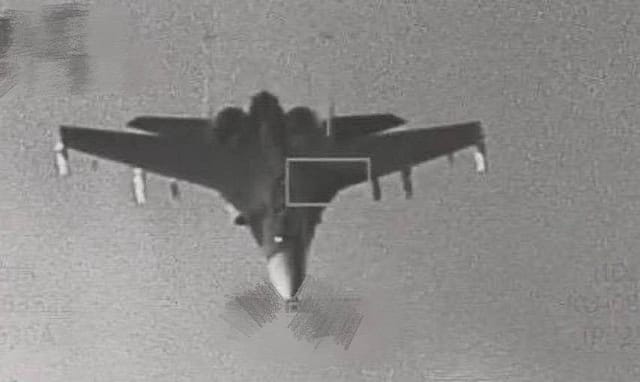
Recently, China staged its most expansive military demonstration around Taiwan. Dubbed Justice Mission 2025, the drills encircled the island with warplanes, naval forces and live-fire exercises, signalling Beijing’s growing readiness to simulate a blockade, and its resolve to challenge US-backed support for Taipei. Conducted by the People’s Liberation Army’s Eastern Theatre Command, the two-day drills involved coordinated air, naval and ground operations across seven designated maritime zones.
Taiwan’s Ministry of National Defence reported sustained Chinese military activity near its waters, including multiple aircraft crossing the median line and entering Taiwan’s air defence identification zone (ADIZ). Officials and foreign policy observers view this as spillover from Justice Mission, launched on December 29, which simulated high-intensity combat scenarios around the island.
What was the scale of the exercise?
The Eastern Theatre Command deployed 130 warplanes and 22 naval vessels, making it the second-largest aircraft mobilisation on record. Taiwan detected 89 Chinese military aircraft on the first day alone. The drills featured H-6K bombers, amphibious assault ships, destroyers, frigates and long-range Multiple Launch Rocket Systems, underscoring Beijing’s ability to execute joint operations across services.
What made these drills different?
Justice Mission 2025 stood out for both its scale and intent. Live-fire exercises ran for ten hours a day, with rockets fired into seven maritime danger zones surrounding Taiwan. Chinese state media also released footage highlighting futuristic warfare tools, including AI-enabled robots, robotic dogs and drone swarms, signalling Beijing’s focus on next-generation combat.

India's Action Hero
27 Mar 2026 - Vol 04 | Issue 64
Riding the Dhurandhar Wave
What was the idea behind such a massive exercise?
A key objective was the simulated blockade of Keelung in the north and Kaohsiung in the south—Taiwan’s two most critical deep-water ports. By positioning forces around these hubs, the Eastern Theatre Command demonstrated its capability to choke maritime trade and energy supplies vital to Taiwan’s economy and defence.
Did it have an impact on civilians and commerce?
The drills disrupted civilian life and regional transport. More than 100 international flights and thousands of domestic passengers were affected as airlines rerouted aircraft to avoid the danger zones. Taiwan’s aviation authorities were forced to create alternative air corridors as Chinese forces operated in previously unrestricted airspace. Commercial shipping also faced delays. Vessels were instructed to steer clear of live-fire areas, while Taiwan’s coast guard monitored Chinese coast guard ships operating near its contiguous zone.
What made China launch Justice Mission 2025?
The exercises followed the US announcement of an $11.1 billion arms package for Taiwan, the largest to date. While Beijing framed the drills as routine deterrence, analysts see them as a pointed response to growing external military support for Taipei and a rehearsal for coercive scenarios short of full-scale war.
What is the larger geo-political message?
Justice Mission 2025 highlights China’s evolving blockade capabilities and its ability to control key chokepoints such as the Bashi Channel and Miyako Strait through which Taiwan receives energy, trade and potential military assistance. Although the drills officially ended on December 30, Beijing is expected to maintain a sustained military presence in the region. The message is clear: China is not just posturing. It is practising.
(yMedia is the content partner for this story)