EXPLAINED | How Do You Ban a Filmmaker Who Keeps Making Films? The Jafar Panahi Story
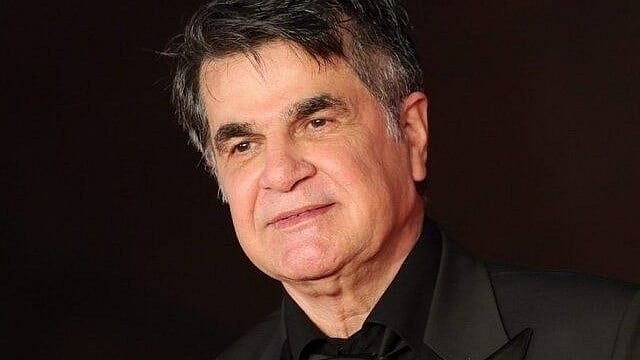
How did Panahi learn about his new sentence?
His bank accounts were frozen. According to his lawyer, Mostafa Nili, that prompted a visit to the prosecutor’s office in Tehran. There, they discovered that a court had sentenced Jafar Panahi in his absence.
The punishment reported by Variety, citing Nili’s account to Iran’s Emtedad News Agency, is five years and one month in prison. The ruling also orders confiscation of his assets and two-year bans on travel and social-media activity.
For one of the world’s most celebrated filmmakers, the restrictions reach across the conditions that make work possible: access to money, freedom of movement and communication with audiences.
Panahi has faced such restrictions before. During an earlier filmmaking ban, he made a film in his apartment. Later, he placed himself behind the wheel of a taxi.
Look Who's Talking Regime Change
23 Oct 2026 - Vol 05 | Issue 43
Both films reached international audiences.
WHAT DO WE KNOW ABOUT THE LATEST CASE?
The new ruling is separate from an earlier one-year prison sentence.
Nili said the case file described Panahi as living abroad, although the director had returned to Iran on March 30, 2026. Variety reports that the charges in the new case remain unclear. Its account also leaves the implementation of the sentences unresolved.
The available reporting therefore does not establish that Panahi has begun serving the new term. Nor should the two sentences simply be added together to declare a confirmed period of imprisonment.
“In absentia” means the judgment was issued without the defendant present. It does not, by itself, explain why he was absent or establish whether he was outside the country.
WHO IS JAFAR PANAHI, BEYOND THE HEADLINES ABOUT PRISON?
Panahi built his reputation through films about ordinary people encountering restrictions on ordinary life.
His debut feature, The White Balloon (1995), follows a girl trying to buy a goldfish. Offside (2006) follows young women attempting to enter a football stadium from which women are excluded. Its premise makes a national restriction understandable through a recognisable desire: watching a match.
His international standing also rests on sustained recognition. Taxi won Berlin’s Golden Bear in 2015. A decade later, It Was Just an Accident won the Palme d’Or, Cannes’ highest prize.
That body of work deserves attention alongside his treatment by the authorities. The films explain the filmmaker’s importance.
WHAT DID THE AUTHORITIES BAN HIM FROM DOING?
In 2010, Panahi received a six-year prison sentence and a 20-year prohibition covering filmmaking, screenwriting, interviews and foreign travel. The case followed his support for opposition protests.
These restrictions extended beyond the approval of an individual film. They targeted his ability to practise his profession.
An interview could become legally consequential. A festival invitation could arrive without permission to travel. Making another film could expose him to further punishment.
Panahi continued working through those conditions. His subsequent films repeatedly incorporated his own restricted circumstances, making the difficulty of producing cinema part of the cinema itself.
HOW DO YOU MAKE A FILM WHEN FILMMAKING IS FORBIDDEN?
Start with the space available.
In This Is Not a Film (2011), co-directed with Mojtaba Mirtahmasb, Panahi appears in his Tehran apartment. He discusses and describes a project he cannot make. The title turns the prohibition into a question: at what point does describing a film become filmmaking?
For Taxi (2015), a dashboard camera records Panahi driving through Tehran and speaking with passengers. The vehicle provides a compact setting through which different people and experiences enter the frame.
These choices created distinctive forms. They also reflected material constraints.
An apartment and a car offered ways to keep working with limited space and a smaller production footprint. Their ingenuity should not obscure the pressure that made such adaptations necessary.
DID HIS RELEASE IN 2023 END THE RESTRICTIONS?
It changed his legal position, but did not resolve his relationship with the approval system.
Panahi was imprisoned again in July 2022 after protesting the arrests of fellow filmmakers. He was released in February 2023 following a hunger strike. His original conviction was subsequently overturned, cancelling the associated restrictions.
In the official press notes for It Was Just an Accident, Panahi confirmed that the sentence prohibiting his work and travel had been annulled.
He also explained why he continued operating outside official production channels: submitting that screenplay for approval made no sense to him.
This distinction is essential. The lifting of his personal ban did not mean every film he wished to make would receive permission.
HOW DID PRISON BECOME IT WAS JUST AN ACCIDENT?
Through conversations with other prisoners.
Panahi said his second imprisonment brought him into contact with people from different backgrounds. Their accounts helped generate the film’s central situation: a former prisoner unexpectedly encounters someone he believes tortured him.
The film follows Vahid, a mechanic who suspects a customer is his former captor. He brings other former prisoners into the effort to establish the man’s identity and decide what to do.
“I owed them that film,” Panahi says in the official press notes.
The characters are fictional, while their accounts draw on experiences of actual prisoners.
The premise creates difficult questions about memory, identification, punishment and revenge. Having suffered an abuse of power, what should someone do when power appears to change hands?
DID WINNING AT CANNES MAKE HIM SAFE?
The award established international recognition. It provided no guarantee against another prosecution.
Cannes awarded It Was Just an Accident the Palme d’Or in May 2025. The latest reported sentence followed in October 2026.
Visibility can attract attention to a filmmaker’s treatment. It cannot compel domestic authorities to withdraw a case.
Panahi’s history demonstrates the practical limits of acclaim: a film can circulate internationally while its maker faces restrictions at home.
WHY DOES HE KEEP RETURNING TO IRAN?
He has described remaining connected to his country as essential to his work.
“I need to breathe there and work there,” he told Variety.
Before the 2025 Cannes awards, he had also told Reuters that he intended to return to Tehran and begin considering his next film.
For a filmmaker whose stories emerge from everyday encounters, leaving changes access to the people and places that supply his material. Staying carries risks he has repeatedly acknowledged.
The latest case brings that choice back into view.
WHAT MAKES THIS MORE THAN ANOTHER CENSORSHIP STORY?
Panahi’s career shows how restrictions can shape a film long before an audience sees it.
They influence the location, the production method, the people available to participate and the experiences a director brings to the screenplay.
His apartment became a setting. His taxi carried a cross-section of Tehran. His fellow prisoners’ accounts helped shape an internationally acclaimed drama.
The new ruling threatens the resources and freedom needed to continue that work. Panahi’s next legal steps remain uncertain. His existing films offer a detailed record of what those pressures have already done to a working artist’s life.