Explained: Hamas Agrees to Disarm Under New Gaza Roadmap. What's the Catch?
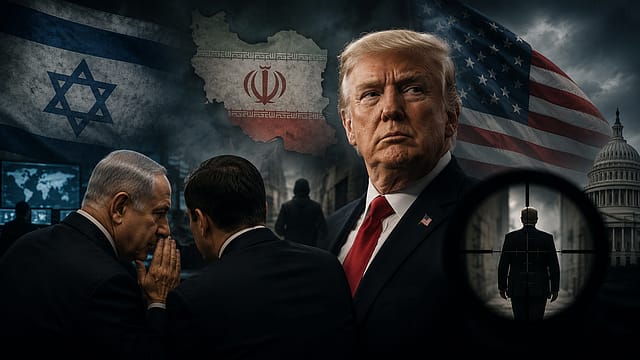
A new chapter in the Gaza peace process may be taking shape.
The Board of Peace, backed by mediators Egypt, Qatar, Türkiye and the United States, announced on Thursday that Hamas has agreed to a detailed roadmap for the next phase of the Gaza ceasefire, including an unprecedented commitment to relinquish its weapons as part of a phased political transition.
The Board described the agreement as a "historic breakthrough", saying it marks the first time Hamas has formally committed to an actionable plan for disarmament, which would be followed by an Israeli withdrawal from Gaza.
According to the Board, the roadmap is the result of months of negotiations aimed at implementing US President Donald Trump's broader vision for Gaza's governance, security, humanitarian relief, reconstruction and economic recovery under the Comprehensive Peace Plan and UN Security Council Resolution 2803.
Freedom Issue 2026
14 Aug 2026 - Vol 05 | Issue 33
Shashi Tharoor on being radical liberal | Ram Madhav on how Gandhi used his Hinduism | TCA Raghavan on a diplomat's travels in history | Sumana Roy on the novel beyond the Booker | Carlo Pizzati on the dissolution of Borders
The proposed transition would gradually shift authority to the National Committee for the Administration of Gaza (NCAG), supported by the International Stabilization Force (ISF). The Board said the next phase would focus on restoring law and order, improving humanitarian conditions and rebuilding the territory.
But the announcement came with an immediate caveat.
Ghazi Hamad, a member of Hamas's negotiating delegation, said the group would implement the agreement only if Israel meets its own commitments under the ceasefire.
"Hamas will not implement any step of the Gaza peace deal if the Israeli occupation forces do not fulfil their obligations under the agreement," he said, according to Al Jazeera.
That condition underscores the biggest challenge facing the deal.
While negotiators have reached an agreement on paper, the success of the roadmap will ultimately depend on whether both sides move forward in tandem.
Nickolay Mladenov, Director-General of the Board of Peace, acknowledged as much.
"What the agreement says matters. What happens next matters even more," he said, stressing that implementation and verification must be credible, with Israeli withdrawal progressing "in lockstep" with Hamas's decommissioning of weapons.
Mladenov thanked the United States, Egypt, Qatar, Türkiye and the UAE for their role in the negotiations and said the ultimate objective remains a Gaza governed by Palestinians and living in peace with Israel.
Whether this becomes the breakthrough its architects hope for—or another stalled peace initiative—will depend on what happens next, not just what has been agreed.
(With inputs from ANI)