EXPLAINED | Elon Musk Blames USAID for Deaths in Ukraine. What Does the Evidence Show?
The most revealing words in the argument over America's role in Ukraine were caught on tape more than a decade before Elon Musk weighed in.
"I think Yats is the guy."
That was Victoria Nuland, then a senior US State Department official, talking to Geoffrey Pyatt, Washington's ambassador in Kyiv. Ukraine was in the middle of a revolt. Its elected president, Viktor Yanukovych, was still in office. Days earlier, Yanukovych had offered the prime minister's post to opposition leader Arseniy Yatsenyuk, and the deputy's post to Vitali Klitschko. Both refused. Now two Americans were discussing, by nickname, which opposition leader had the experience to go into government.
The recording surfaced on YouTube in early February 2014. According to AP, it was first tweeted by an aide to Russia's deputy prime minister. Moscow denied any involvement. On February 27, according to Ukraine's parliament, Yatsenyuk, the man they called Yats, became prime minister.
If you want to understand why people suspect Washington of meddling in Ukraine, start with that phone call. Then listen for what it doesn't contain. Where is the instruction to USAID? Who is being paid to remove the president? Who gives an order that leads to someone's death? The published conversation supplies none of those things.
Hot Pursuit
27 Nov 2026 - Vol 01 | Issue 02
The Shah Doctrine of Internal Security
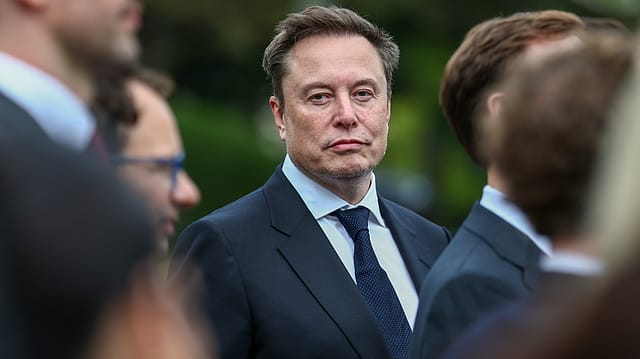
On November 29, 2026, Musk made that leap. "USAID is responsible for a vast number of deaths due to their regime change operations, particularly in Ukraine," he wrote on X. He was replying to a post that called USAID a weapon for regime change and listed $817.4 million in spending on foreign elections, including $49.8 million in Ukraine. "True. They caused a lot of death," he added, according to ANI. So he pointed to a funding figure. He named no operation, date, victim or casualty estimate.
There is a serious story inside that accusation. To get to it, you have to put three actors back into the picture. Washington had money and preferences. Ukrainians had reasons of their own to take to the streets. And Russia made a decision about war for which Musk's sentence scarcely leaves it any responsibility.
What was USAID doing in Ukrainian politics in the first place?
Consider two things American assistance paid for in Ukraine before the uprising. One was training for election officials and judges. The other was support for media outlets outside state control. US government records describe help with voter rolls, election procedures, media monitoring and the business skills that might allow an independent outlet to survive. They also record US-backed training in voter outreach and political messaging offered to major Ukrainian parties. The records distinguish broader American government programmes from those specifically run by USAID.
Critics often quote a bigger number. In December 2013, Nuland told a Washington audience that the US had invested over $5 billion to help Ukraine since independence. A State Department official told the US Senate the following month that well over $815 million of it went to democracy and exchange programmes. That is real money aimed at Ukrainian politics. But it was spent over more than two decades, across governments of every stripe, including pro-Russian ones. PolitiFact gave its lowest rating to the claim that the money paid Ukrainians to riot.
To a Ukrainian editor trying to keep a newsroom open, that money could buy independence from the government in Kyiv. To a Ukrainian reader, the same grant could raise a fair question about dependence on a government in Washington. Both have a stake in knowing who paid, what the grant required and whether the editor could refuse.
That is the uncomfortable territory USAID occupied. America's principal civilian aid agency combined humanitarian and development work with a foreign-policy mission. Funding an election observer can make it harder to steal an election. Funding political training also gives an outside power access to the people who may one day run the country. To investigate interference, the useful questions begin at the level of the grant. Which recipient? On what terms? What did the money enable the donor to decide?
Did Washington bring down Ukraine's president in 2014?
Start the clock on November 21, 2013, before the Nuland call became public. Yanukovych's government stepped back from signing an association agreement with the European Union. Protests began. When parliament passed laws restricting protest in January, the demonstrations spread. By February, Kyiv had seen lethal violence. Yanukovych fled the capital and parliament moved to replace him.
Now put the phone call back where it belongs. Nuland and Pyatt discussed the merits of opposition figures while Ukrainians were already on the streets. They were weighing a power-sharing deal that Yanukovych himself had put on the table. The recording is powerful evidence that Washington wanted a say in the outcome. But knowing whom an ambassador wants in office tells you only so much about who put the protesters on the street, who controlled them, or why they stayed when it became dangerous.
There is also a basic problem of identification. Nuland worked for the State Department. Pyatt was the US ambassador. Musk accused USAID. Any account that moves from the recorded conduct of the first two to a secret operation by the third owes the reader the missing step.
Which deaths is Musk talking about?
His post leaves that unanswered. It matters whether he means people killed during the uprising, those who died in the fighting that followed in eastern Ukraine, or casualties of Russia's full-scale invasion in February 2022. These events unfolded across different years, involved different decisions and require different evidence.
Take the invasion. On March 2, 2022, the UN General Assembly adopted a resolution identifying Russia's aggression against Ukraine and demanding that Russia withdraw its forces. One can argue about whether American policy made Europe more dangerous. Assigning the deaths of particular people to an aid agency is a much more exacting claim. It needs an identifiable agency action, evidence connecting that action to the deaths, and an account of the decisions made by those who actually used force. Musk's post offered none of that.
Has USAID ever given people reason to suspect a hidden political purpose?
Yes. The strongest example takes us to Cuba.
A Cuban with a mobile phone could sign up for a text-messaging service called ZunZuneo. To subscribers, it was a way to exchange messages. Behind it was an American-funded project whose sponsorship had been concealed. In 2014, the Associated Press reported that USAID contractors had used shell companies and foreign bank accounts to build the network. Project documents, according to AP, described the possibility of moving from innocuous material towards political mobilisation. USAID defended the programme as an effort to expand Cubans' access to information.
Think about the decision from the subscriber's end. Would you use a service differently if you knew a foreign government had paid to put it on your phone? Would you want to know before inviting your friends? Whatever one thinks of the Cuban government, the people who signed up had a legitimate interest in the answer.
Cuba also gives us a useful standard for judging Musk's allegation. The reporters found a named project, a financing trail and documents against which the agency's explanation could be tested. That is what reporting on a concealed operation looks like. It is also what is missing from his account of Ukraine.
What have investigators actually found about USAID's money in Ukraine?
Here is a criticism of USAID with an audit behind it. After the full-scale invasion, Washington helped keep the Ukrainian state functioning through the World Bank. A March 2026 report by USAID's Office of Inspector General examined about $30.7 billion in direct budget support that Congress appropriated and USAID obligated in fiscal years 2022–24. Most of it, about $25.9 billion, went through a World Bank mechanism known as PEACE. The auditors concluded that the oversight mechanisms gave "limited assurance" that the money supported Ukraine's government as intended.
"Limited assurance" sounds bloodless. Put a person back into it. Somewhere at the end of the chain, a Ukrainian is supposed to receive what that money was meant for. An American taxpayer is told it was provided for exactly that purpose. Can the agencies responsible follow the payment far enough to satisfy both? The auditors found weaknesses in the checks. Their finding warrants scrutiny on its own terms. It establishes neither that the entire sum went missing nor that it financed an overthrow. There is an even simpler point about those particular dollars: they were obligated after Russia's full-scale invasion.
Why does it matter that Elon Musk is making this accusation?
Because he had already claimed credit for helping take the agency apart.
On February 3, 2025, Musk wrote on X that he had "spent the weekend feeding USAID into the wood chipper". The following month, US District Judge Theodore Chuang ruled that the accelerated shutdown of USAID likely violated the Constitution. He cited Musk's own posts as evidence of his control over DOGE. The administration argued that Musk was only an adviser and that DOGE was rooting out waste and fraud. A federal appeals court later stayed Chuang's injunction while the case proceeds. On July 1, 2025, Secretary of State Marco Rubio announced that USAID had ceased implementing foreign assistance. The State Department took on surviving programmes that the administration considered consistent with its priorities.
Put those dates beside the new allegation. In February 2025, Musk publicly celebrated the dismantling. In November 2026, he accused the agency of responsibility for mass death. The man making the charge took part in a decision whose merits are still being argued. That makes the evidence he can produce particularly important.
What about the claim that cutting USAID could itself cost lives?
That claim, too, deserves a close reading. A 2025 study published in The Lancet estimated that USAID-funded programmes helped avert more than 91 million deaths worldwide over two decades. It projected that deep funding cuts could lead to more than 14 million additional deaths by 2030.
Those are modelled estimates, not a register of named victims. Both depend on how well the analysis separates the effects of aid from everything else that changed in the countries receiving it. Neither can settle what USAID did in Ukraine in 2014. The difference is that the researchers published a method others can challenge. Musk's accusation is so broad that readers have to guess which deaths he means before they can begin to check it.
So what survives scrutiny?
Quite a lot, in fact. American diplomats discussed their preferred political outcome in Kyiv. American money went into Ukrainian civic and political institutions. In Cuba, an investigation exposed concealed US sponsorship of a communications network. In wartime Ukraine, American auditors found weaknesses in the oversight of billions of dollars. Each finding has a place, a date and a paper trail.
The evidence reviewed here does not substantiate Musk's claim that a USAID regime-change operation caused mass deaths in Ukraine. The questions remain open, and they are his to answer. Which operation? Who authorised it? Whose death can be traced to it?
For more than a decade, anyone wondering whom Washington favoured in Kyiv has been able to hear an American official say, in her own voice, "Yats is the guy." For the far graver charge Musk has now made, the public record holds no such tape. Not yet.