EXPLAINED | Can Trump Play Neil Young’s Songs Without His Permission?
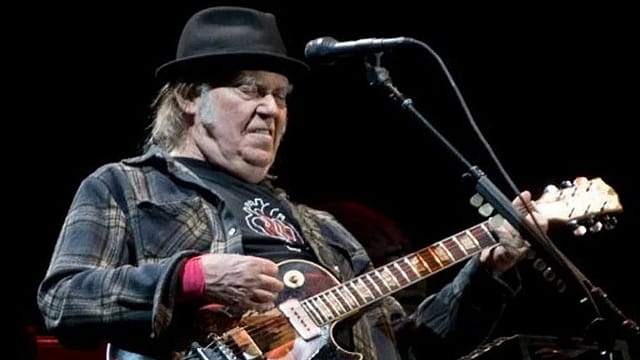
Can a politician borrow a song without borrowing the singer's support?
A familiar guitar riff can do political work before a politician says a word. It brings recognition, emotion and a ready-made sense of occasion. The musician may want no part of it.
On October 26, Neil Young sued Trump 47 Committee Inc. over the alleged unauthorised use of Rockin’ in the Free World, seeking $10 million and an injunction.
The broader answer involves several questions: who owns which rights, what permission was granted, how the song was used and whether the presentation suggests an endorsement.
WHAT EXACTLY IS YOUNG ALLEGING?
The complaint identifies an October 12 rally in Youngstown, Ohio. Young describes himself as a co-owner of the composition’s copyright and alleges it played before Trump’s entrance without a licence.

Look Who's Talking Regime Change
23 Oct 2026 - Vol 05 | Issue 43
It says the earlier Trump campaign promised, in settling his 2020 lawsuit, not to use the song without a licence and his permission. The new claim concerns copyright.
These remain allegations. The $10 million is a demand for damages; it has not been awarded.
SURELY THE SINGER GETS THE FINAL SAY?
Not necessarily. The person whose voice you recognise may have written none of the song, or may have transferred some rights to someone else.
US copyright law treats the musical composition and the particular recording as separate works. The composition covers the music and accompanying lyrics; the recording captures a specific performance.
That is why recording a cover version creates a new recording while still using the underlying song. Ownership and licensing arrangements determine who can authorise each use.
For an ordinary in-person public performance in the US, the relevant music permission generally concerns the composition. Sound recordings do not have the same general public-performance right under US law. Digital transmissions and video uses can raise additional questions.
DOES EVERY RALLY NEED A PERSONAL PHONE CALL TO THE ROCK STAR?
Campaigns can obtain permissions through performing-rights organisations, which license catalogues of musical works. A blanket licence lets a campaign use covered songs without negotiating each one individually.
But the word “covered” matters.
BMI, for example, offers a Political Entities licence. Its terms allow it to remove a musical work after an objection from a songwriter or publisher and notify the campaign that the work is no longer authorised under that licence.
The practical question becomes: was this particular song covered, for this particular use, at the relevant time?
WHAT IF THE STADIUM ALREADY HAS A MUSIC LICENCE?
The campaign must check its scope. BMI expressly says its venue licence does not cover events hosted by political campaigns and organisations; a Political Entities licence is needed for its repertoire.
A venue might routinely play music during other events. That alone does not establish that a politician’s entrance is cleared.
Licences describe permitted uses. Paying for one kind of use does not automatically secure another.
WHAT CHANGES WHEN THE SONG GOES INTO A CAMPAIGN VIDEO?
Now the campaign is combining music with pictures, potentially reproducing a recording and distributing the resulting video.
Using a composition in an audiovisual production generally requires a synchronization licence. Using an existing commercial recording generally also requires permission for that recording, commonly called a master-use licence.
Think of a hypothetical campaign filming a candidate entering an arena. Playing the song to people in the room and turning that footage into an online advertisement are different uses.
A rally-performance licence alone does not settle the advertisement’s permissions. Livestreams and clips with incidental music require their own assessment of the rights, permissions and possible exceptions involved.
CAN THE CAMPAIGN SAY IT IS POLITICAL SPEECH?
Political expression does not create an automatic exemption from copyright.
US fair use can permit some unlicensed uses. Courts examine the purpose and character of the use, the nature of the work, how much was taken and the effect on its market. There is no universal safe number of seconds.
Criticising a song, parodying it or capturing incidental background music can raise different questions from deliberately using a recognisable track as a campaign anthem.
The legal assessment depends on the facts. Calling a rally noncommercial is not enough to complete it.
DOES PLAYING A SONG MEAN ITS CREATOR ENDORSES THE CANDIDATE?
That depends on the presentation. Ordinary background music and repeated, prominent use as a campaign’s signature song can create different impressions.
In disputes of this kind, artists may raise false-endorsement or publicity-right arguments alongside copyright issues. Success requires the relevant legal elements and evidence; opposition to a candidate alone does not establish liability.
Young alleges reputational damage and describes the song’s critical portrait of American society as incompatible with Trump’s politics.
A court must determine the legal rights and alleged infringement. It is not being asked simply to choose the better interpretation of a chorus.
IS $10 MILLION THE STANDARD PRICE FOR USING A SONG?
No. A claimant’s demand does not establish the amount recoverable.
US copyright law provides for actual damages and attributable profits, or statutory damages where available. The statutory route ordinarily permits $750–$30,000 per work, with a discretionary increase to as much as $150,000 for willful infringement.
Those figures should not be multiplied mechanically by every time a song was played. The statute’s calculation is generally organised around the work and liable defendant or defendants. Any eventual award depends on the claims, evidence and applicable rules.
WHAT ABOUT BOLLYWOOD SONGS AT INDIAN RALLIES?
The Indian question needs Indian law. Its Copyright Act recognises separate rights in musical works, lyrics and sound recordings. Section 14 includes public performance or communication rights and rights relevant to reproducing or adapting music.
A party should therefore identify the recording, underlying works, proposed use and permissions involved. IPRS administers rights in musical compositions and associated lyrics within its mandate; that does not mean every permission for every recording comes from one organisation.
Section 52 contains exceptions, including specified religious and official ceremonies. It does not create a blanket exemption labelled “election campaign”. The particular use still needs to be examined under the Act.
For a rally organiser or campaign-video editor, the first task is to establish what has been cleared. A familiar song can make an entrance effortless. Its permissions take more work.