Europe Refused Tariffs on India, China Over Russian Oil: Scott Bessent
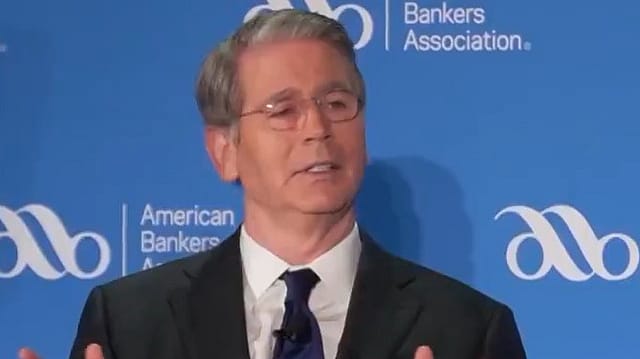
US Treasury Secretary Scott Bessent said European allies had refused Washington’s request to impose secondary tariffs on India and China for buying Russian oil, as he defended President Donald Trump’s decision to temporarily waive certain measures targeting Moscow.
Speaking on NBC’s Meet the Press on Sunday, Bessent questioned why the United States should shoulder the economic burden of pressuring Russia without matching action from Europe.
“So we have asked—in the spring, I asked our European allies to join us in putting secondary tariffs on China, on India. They refused. So why should the US bear the burden?” he said.
His remarks came amid criticism of the administration’s decision to grant temporary relief under legislation targeting Russia and its energy customers. The measures would have allowed tariffs of up to 100 per cent on goods imported from the five largest buyers of Russian-origin crude oil or natural gas, including India and China.

Zeroing In on ECI
09 Oct 2026 - Vol 05 | Issue 41
Constitutional legitimacy versus political opportunism
Bessent said the legislation gave the president 60 days to assess the situation and the consequences of implementing the measures.
“President Trump has made it clear he wants the killing to stop. And the so-called Graham bill gives the president the flexibility, gives him 60 days to assess the situation,” he said.
BESSENT DEFENDS TRUMP’S RECORD
Asked about the rollback of restrictions, Bessent rejected the suggestion that Washington had broadly lifted sanctions on Moscow.
“Kristen, that's not true,” he told host Kristen Welker. “No sanctions were lifted on Friday. No sanctions were lifted.”
He distinguished the diesel relief from sanctions imposed on Russian energy companies.
“President Trump sanctioned the two largest Russian energy companies, Rosneft and Lukoil, which dealt a catastrophic blow to the Russian energy industry,” Bessent said. “So no one has been tougher on Russian sanctions than President Trump.”
Bessent also argued that European governments had made comparable concessions to address energy costs.
“The only thing that has been lifted is the diesel embargo, and I will point out the UK in May waived their embargo on diesel and jet fuel made with Russian crude. So where's the outrage for the rest of the world?” he said.
ZELENSKYY QUESTIONS RELIEF FOR MOSCOW
Appearing earlier on the same programme, Ukrainian President Volodymyr Zelenskyy criticised Trump’s decision, saying he hoped Washington would reconsider its approach to Russian President Vladimir Putin.
“We want to trust him, and I hope that he will change his decisions because I think that it's all mistakes, and it will not help us, and it will not help the United States,” Zelenskyy said.
“It's not my choice, and I hope that he will change his decisions, change his attitude to Putin. We waited from the very beginning of his presidential term that he will change his attitude to Putin.”
Bessent countered by pointing to Europe’s continued purchases of Russian energy, arguing that Zelenskyy was sparing his European partners similar criticism.
“The Europeans are financing the Russian war machine. The US imports $4 billion of Russian products. $1.8 billion of that is fertiliser. The Europeans, they import more than 10 times that,” he said.
Citing shipments from Russia’s Yamal facility, Bessent said 136 of 140 cargoes in the first six months of the year had gone to Europe, including Belgium, Spain, France and the Netherlands. He put their value at more than $8 billion.
INDIA’S ENERGY NEEDS ENTER THE DEBATE
The Treasury chief’s comments followed US Secretary of State Marco Rubio’s remarks on Saturday that Washington needed to consider India’s energy requirements before imposing punitive measures.
“These sanctions were not just sanctions on Russia. They include tariffs on a number of countries—India, for example, and others,” Rubio said.
Describing India as an important ally, Rubio said the administration wanted to assess the implications for the American and global economies. He also said countries such as India had diversified their energy supplies but could not immediately end Russian imports.
The debate highlights competing pressures on Washington: restricting Moscow’s energy revenue, containing fuel costs and managing relations with major trading partners as the war in Ukraine continues.
With inputs from ANI