Democrats Projected To Win 229 House Seats As Economic Discontent Shapes Midterm Race
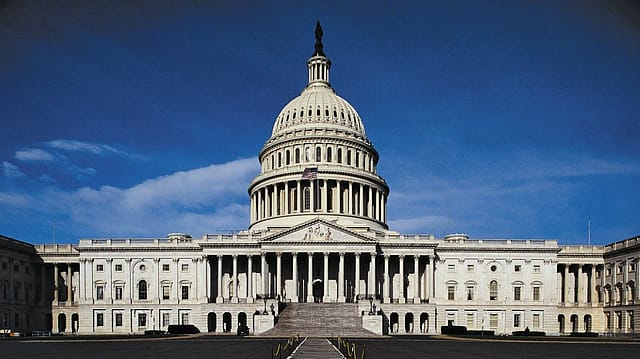
Democrats are projected to win 229 seats in the US House of Representatives in the November midterm elections, with inflation and economic anxiety weighing on voters even as neither party convinces a majority that it has a clear plan to improve their financial situation, according to a CBS News poll.
The projection gives Democrats a potential path to reclaiming the House, with their seat count possibly reaching the 230s. Republicans, however, retain a narrow route to holding on to their majority. The Democratic advantage has remained steady in recent weeks but has not widened, suggesting that a decisive electoral wave has yet to emerge.

Look Who's Talking Regime Change
23 Oct 2026 - Vol 05 | Issue 43
The CBS News/YouGov survey covered 2,355 US adults between October 21 and 23. The margin of error was 2.6 percentage points for the overall sample.
ECONOMY AND INFLATION DRIVE VOTER CONCERNS
Economic dissatisfaction remains central to the contest. More voters expect petrol prices to rise under a Republican victory than under a Democratic one, although few expect prices to fall regardless of which party controls Congress.
Most voters do not expect to be financially better off under either party, but Democrats have an advantage among those who believe they would fare better under their leadership. Voters who consider inflation a major concern, particularly those who say rising prices have caused financial hardship, are more likely to support Democrats.
Assessments of the US economy have also deteriorated, falling to levels last recorded in the previous spring, CBS News reported. Most likely voters believe President Donald Trump's policies are leaving them financially worse off.
AN ELECTION DEFINED BY OPPOSITION TO THE OTHER SIDE
CBS News described the contest as an “avoidance” election, with voters often motivated more by preventing the opposing party from gaining power than by support for their preferred party's agenda.
More than seven in 10 Democratic voters said their congressional vote was intended to oppose Trump. Most Republican supporters said they were voting to support the president, although this motivation was less widespread than anti-Trump sentiment among Democrats.
Despite the Democratic lead, neither party is seen by a majority of voters as having a clear plan if it wins control of Congress. Around four in 10 Democratic voters said they did not believe their party had a clear plan, with opposition to Trump serving as their main motivation.
Among Republicans, around four in 10 said their vote was not about Trump. They were less likely to identify as MAGA Republicans and tended to express moderate rather than strong approval of the president, while continuing to view the Democratic Party unfavourably.
TURNOUT COULD CHANGE THE PICTURE
Turnout remains a key uncertainty. More Democratic voters said they were certain to vote or had already voted early. However, voters who said they would “probably” or “maybe” vote leaned more Republican, leaving open the possibility that stronger Republican participation could alter the projected outcome.
Corruption is another significant concern. Most respondents believed corruption would increase if Republicans retained control of Congress, while large majorities of supporters of both parties said the issue mattered to their voting decisions.
Voters also increasingly viewed a victory by the opposing party as a threat to their way of life. Democratic voters were more likely to see a Republican victory in these terms, while MAGA Republicans were more likely than other Republicans to regard a Democratic win as a similar threat.
IMMIGRATION AND CULTURE-WAR ISSUES
Immigration continues to divide voters. About one-third believed Democrats prioritised recent immigrants over US citizens, and this group largely backed Republicans. Another third believed Democrats prioritised both groups and tended to support the party.
Republicans held an advantage among voters who considered transgender issues a major factor in their choice. Trump's campaign appearances also appeared to energise MAGA Republicans, most of whom said seeing him campaign for candidates made them more likely to vote Republican. The same effect was less pronounced among Republicans outside the MAGA movement.
On election administration, most voters expressed at least some confidence in local and county officials' ability to determine voter eligibility and count ballots accurately. Most were also confident that their own votes would be recorded and counted correctly, with Democrats more likely than Republicans to express strong confidence.
Republicans were considerably more likely to believe that non-citizens illegally vote in federal elections, CBS News reported.
The outlet's House model combines survey findings with past voting patterns, district-level characteristics, demographics and historical trends to estimate the distribution of seats. CBS News cautioned that the projections are subject to statistical error and may change as more data become available.
With inputs from ANI