China Urges Ceasefire in Gulf as Drone Strike Hits UAE Diplomatic Mission in Iraq
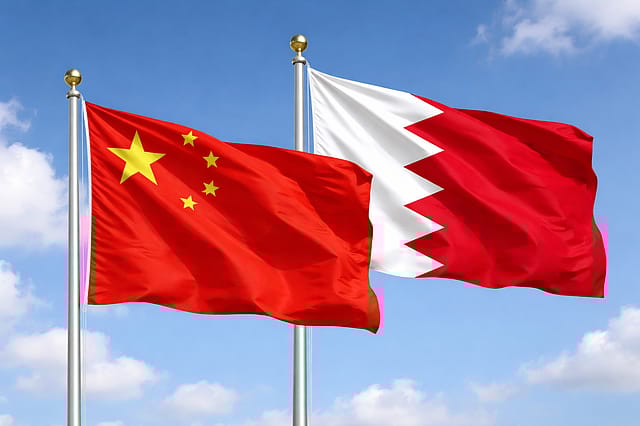
China has renewed calls for de-escalation in the Gulf region even as tensions escalated further following a drone strike on a United Arab Emirates diplomatic mission in Iraq’s Kurdish region.
Chinese Foreign Ministry spokesperson Lin Jian shared details of a March 9 phone conversation between Foreign Minister Wang Yi and Bahrain’s Foreign Minister Abdullatif bin Rashid Al Zayani amid rising instability across the region.
"China has been actively promoting peace and ceasefire. The Special Envoy of the Chinese Government on the Middle East Issue is currently shuttling in the region,” he added.
According to the Chinese foreign ministry’s readout of the call, Zayani briefed Bahrain on the regional situation and its position, stating that Bahrain has always cherished peace and should not be subjected to illegal attacks.
What concerns did China raise about the escalating Gulf situation and Bahrain’s security?
He said Bahrain appreciates and thanks China for its impartial stance and is willing to work with Gulf countries to strengthen communication and coordination with China on bilateral and multilateral platforms such as the United Nations to achieve regional peace and stability as soon as possible.

Youth Issue 2026
24 Apr 2026 - Vol 04 | Issue 68
50 Portraits of Icons and Achievers
Zayani also noted that Bahrain will continue to take effective measures to safeguard the safety of Chinese personnel and institutions.
In response, Wang Yi conveyed China’s concern over the rapidly deteriorating situation.
"The situation in the Gulf region is escalating rapidly, and Bahrain's security is also being undermined, which China is deeply concerned about," he said.
"China's position is consistent and clear: the sovereignty, security, and territorial integrity of all countries should be respected, and attacks on civilians and non-military targets should be condemned," he added.
Wang Yi stressed the immediate priority, stating that "the most urgent task is to immediately cease military operations and prevent the further spread of the conflict."
"The way to break the deadlock lies in returning to dialogue and negotiation as soon as possible and striving to restore peace. The fundamental solution is to jointly return to the right track of abiding by international law and the basic norms of international relations," he said.
How is China stepping up diplomatic efforts to ease the escalating Gulf conflict?
He further reaffirmed Beijing’s diplomatic efforts, saying that "as a strategic partner of the Gulf states and a responsible major power, China has consistently and actively promoted peace and cessation of hostilities."
"The Chinese government's special envoy on Middle East issues is currently on a shuttle visit to the region and will also visit Bahrain. China will continue to play a constructive role in maintaining peace and stability in the Gulf region and hopes that Bahrain will continue to guarantee the safety of Chinese citizens and institutions in Bahrain," he added.
The diplomatic exchange came as the conflict widened with a drone strike targeting a diplomatic mission of the United Arab Emirates early Tuesday.
The UAE’s consulate in Iraq’s Kurdish region sustained structural damage during the aerial assault, though official reports confirmed there were "no casualties."
The attack occurred hours after the Gulf nation voiced frustration over being targeted "unfairly" in the ongoing Middle East conflict.
The UAE’s Ministry of Foreign Affairs condemned the incident, stating that it represented a "dangerous escalation and a threat to regional security and stability."
Why did the UAE call the drone strike on its diplomatic mission a violation of international law?
The ministry further emphasised that "targeting diplomatic missions and premises constitutes a flagrant violation of all international norms and laws."
Authorities did not specify the origin of the drone or identify the party responsible for the launch.
The strike followed a complaint from the UAE on Monday that it was being targeted "in a very unwarranted manner." The country has maintained that it does not wish to be drawn into the hostilities and has not participated in attacks against Iran.
In response to the rising threats, Australia announced the deployment of military assets to the UAE. Prime Minister Anthony Albanese confirmed on Monday that missiles and aircraft would be sent to the region as a precautionary measure.
"Our involvement is purely defensive," Albanese told reporters, explaining that the decision was made "in defence of Australians who are in the region as well as in defence of our friends in the United Arab Emirates."
Australia will deploy a Boeing manufactured E-7A Wedgetail airborne early warning and control system aircraft, which is expected to operate for an initial four week period to monitor and protect the airspace above Gulf nations.
Albanese also said that advanced medium range air to air missiles would be supplied to the UAE following a high level telephone conversation with UAE President Mohammed bin Zayed Al Nahyan.
The broader conflict has now crossed the 10 day mark after joint United States and Israeli military operations against Iran began on February 28. Despite the continued escalation, US President Donald Trump indicated on Monday that the campaign may conclude soon.
"We are putting an end to all of this threat once and for all, and the result will be lower oil prices, oil and gas prices for American families," the US President said.
(With inputs from ANI)