China Calls the Nvidia Spy Claim a Smear. Where Have We Heard That Before?
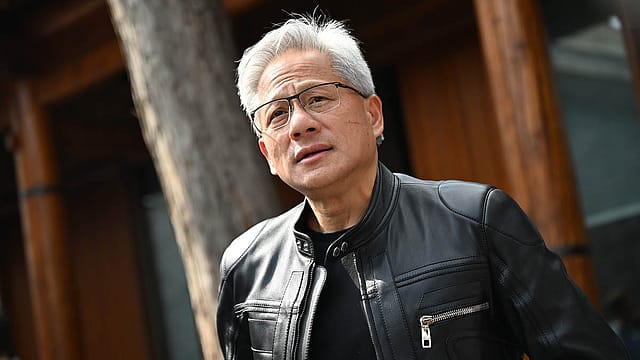
China on November 9 again rejected reports that its intelligence service had targeted Jensen Huang, the co-founder and chief executive of Nvidia, the American chipmaker at the centre of the AI boom. A day earlier, Nvidia’s board had announced an independent inquiry into whether Huang had been targeted by a foreign intelligence effort. He remains CEO.
Beijing has used much the same language in cases that ended very differently. One led to a 20-year prison sentence. Another collapsed before trial. A third put a balloon in plain sight over the US and still left Washington and Beijing arguing about what it was there to do. Here’s what each case actually established.

The Era of Forever Wars
30 Oct 2026 - Vol 05 | Issue 44
Coping with an explosive Middle East
What happened at Nvidia?
Nvidia opened an internal investigation after news reports linked Huang to Alice Huang, an unrelated former executive at Megaspeed, a Singapore-based Nvidia customer. According to The New York Times, as reported by Reuters and AP, US officials believed she had gathered intelligence for Beijing. Reuters said it could not independently verify the claims. Jensen Huang acknowledged being unfaithful to his wife in a message to staff. His message did not name the woman.
What exactly did China deny?
Foreign Ministry spokesperson Guo Jiakun said on November 9 that the “Chinese spy” allegation was “purely unsubstantiated and directed at smearing China”. He had dismissed the original report in similar terms on October 30. The second denial came after Nvidia announced its inquiry. Nvidia’s board said it had no reason at that point to believe US national security or company secrets had been compromised. Its committee of independent directors, assisted by outside lawyers, will examine the available information.
What can the public check in a case like this?
The public can see Huang’s apology, Nvidia’s announcement and China’s denial. The underlying US intelligence material has not been published in the reporting reviewed here, so readers have no way to check what led officials to the reported assessment. A court case can put messages, documents and witness testimony on the record. A company investigation can establish what happened inside the business and how its safeguards worked.
What happened when China was accused of getting US nuclear secrets?
In 1999, suspicion fell on Wen Ho Lee, a Taiwan-born American scientist at Los Alamos National Laboratory. Beijing said he had visited China and had divulged no confidential information. Lee was charged with mishandling nuclear information and spent nine months in custody. In September 2000, he pleaded guilty to one count of illegally retaining classified material and was freed. The judge apologised for the way he had been held. The guilty plea established that Lee had improperly kept the material. The case produced no conviction for passing it to China.
How did the GE Aviation case reach a conviction?
It left a trail prosecutors could put before a jury. Yanjun Xu, a Chinese intelligence officer, approached a GE Aviation engineer and sought technical information about a lightweight jet-engine fan. The FBI took over communications with Xu. Belgian authorities arrested him in April 2018 when he travelled to Belgium for what he thought would be a meeting with the engineer. He was extradited to the US.
A US jury convicted Xu in 2021 of economic espionage and trade-secret offences, including attempting to steal information. Beijing called the accusations fabricated. Xu was sentenced to 20 years in 2022, and a US appeals court upheld the conviction and sentence in 2024.
What did the US say the balloon collected?
In February 2023, China acknowledged the balloon was Chinese and said it was a civilian research airship that had drifted off course. The US treated it as a surveillance balloon and shot it down off South Carolina. In June, the Pentagon said it was capable of gathering intelligence but assessed that it had collected no information while crossing the US. Washington had also taken steps to prevent it from doing so. The two governments still differed on what the balloon was for.
Why did Britain’s Parliament spying case collapse?
British prosecutors dropped the case against Christopher Cash and Christopher Berry in September 2025, before trial. Both men denied the allegations. Prosecutors said they lacked evidence to show that China counted as an “enemy” under the old Official Secrets Act, which required them to establish that it posed a threat to UK national security at the time of the alleged offences. A parliamentary inquiry later questioned the prosecutors’ interpretation of what the law required. Guo called the allegations fabricated after the case was dropped. The decision ended the prosecution before a court heard the evidence at trial.
What did India actually say about RedEcho?
In 2021, cybersecurity firm Recorded Future said it had tracked activity targeting India’s power sector and linked it to a group it called RedEcho, which it assessed was likely backed by the Chinese state. China’s embassy dismissed the allegations as rumours and slander. In Parliament, India’s electronics ministry said its national cyber response team had issued alerts to power-sector organisations and that attackers can use hidden servers to conceal their origins. The reply did not attribute Mumbai’s October 2020 blackout to China. Spotting suspicious activity around power networks and establishing what caused a particular blackout require different evidence.
What could Nvidia’s inquiry actually answer?
The key questions are whether anyone sought sensitive information from Huang, whether anything was shared, and whether Nvidia’s controls worked. Three US House committee chairs have asked Huang to agree by November 11 to a proposed private briefing on November 18 or offer another date. A closed-door briefing may tell lawmakers more. For everyone else, the next test is what evidence the board can put on the public record when it reports back.