EXPLAINED | HSBC Upgrades India and Cuts China. Will Foreign Funds Follow?
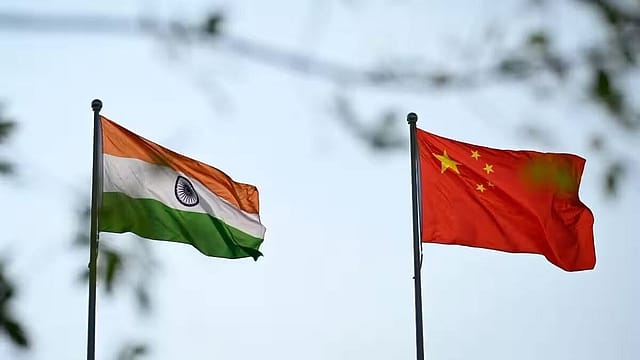
On November 9, HSBC raised its recommendation on Indian stocks from neutral to overweight and cut mainland Chinese stocks from overweight to neutral. The bank thinks Indian company profits are holding up and share prices look more reasonable than they did relative to other markets. It sees fewer reasons for Chinese stocks to climb sustainably. Foreign investors had already been buying Indian shares before HSBC’s call became public.
What happened on November 9?
HSBC changed its view of where investors should put money within Asia. It now favours giving Indian shares a larger slice of a portfolio than they have in the benchmark, the market index a fund uses as its yardstick. Its neutral rating for mainland China broadly favours keeping exposure in line with that yardstick. Separately, Citi raised its target for the Nifty 50, India’s benchmark stock index, to 28,000 by the end of 2027. Citi’s figure is its own forecast.

The Era of Forever Wars
30 Oct 2026 - Vol 05 | Issue 44
Coping with an explosive Middle East
What does “overweight India” mean in rupees?
Say a fund’s benchmark has ₹13 in Indian shares for every ₹100 invested. A fund manager who puts ₹15 out of ₹100 into India is overweight by two percentage points. A fund with ₹13 is neutral and one with ₹10 is underweight. For scale, BlackRock’s iShares fund that tracks the MSCI Emerging Markets Index had 12.68% of its portfolio in India on November 5. That is an example of how much space India takes up in a real index-tracking fund. A brokerage recommendation leaves the decision to each fund manager.
Why does India look better to HSBC now?
Its shares look less expensive relative to their peers after a stretch of underperformance, and company earnings have held up better than HSBC feared. The bank still calls India Asia’s most expensive market. Its point is that the gap has narrowed. There is also evidence of stronger lending. The Reserve Bank of India says non-food bank credit, which excludes lending for food procurement, grew 19.1% year on year in the fortnight ended September 30, against 11.2% a year earlier. That helps explain HSBC’s preference for banks. It also favours industrials, including capital goods and ports, and retailers and carmakers.
Why did HSBC cut China?
It sees few reasons for investors to start paying higher prices for each yuan of profit across the market. Property remains a drag. China’s statistics bureau says real-estate development investment fell 20.6% year on year in the first nine months of 2026. HSBC also flagged weak consumer confidence and softer domestic investment. Its call is about the market as a whole. It still sees opportunities in Chinese banks, biotechnology and some technology hardware linked to AI.
How much money had already come into India?
Foreign investors bought a net ₹38,971 crore of Indian shares in the first week of November, according to depository data reported by DD News. Net buying is the amount they bought minus the amount they sold. Reuters put November buying by the time of its November 9 report at more than $4.1 billion. The Nifty 50 had climbed more than 10% across seven sessions through Friday, November 6. That puts both the buying and the rally ahead of HSBC’s public upgrade.
What does HSBC’s 22% figure tell us?
According to reports on HSBC’s note, 22% of global emerging-market funds were overweight India. That is a share of funds, so a small fund counts the same as a large one. The rest could be at their benchmark weight or below it. The figure suggests room for allocations to rise. To estimate the money involved, we would need to know how large those funds are and how far their India holdings sit above or below their benchmarks.
Is money moving from China or AI stocks into India?
That is one possibility. Investors who want to rely less on the AI boom can find a different mix of businesses in India, including lenders and consumer companies. In the iShares portfolio on November 5, Taiwan and South Korea together accounted for about 45%, illustrating how much room two chip-heavy markets occupy in one widely followed emerging-market fund. India’s aggregate buying figures tell us what was bought here. Identifying where the cash came from would require comparable data on holdings and trades across markets.
What could slow the buying?
A rebound in crude oil or a weaker rupee could take some of the shine off the trade. Higher oil prices can squeeze companies’ margins and raise household costs. The exchange rate also matters to a fund measuring performance in dollars. If its Indian shares rise in rupees but the rupee weakens, part of the gain disappears when the fund converts it back to dollars. HSBC still flags high oil prices as a risk.
How will we know if more funds follow HSBC?
The next few weeks of depository figures will show whether overseas investors keep buying Indian shares after the initial surge. Fund disclosures can then show whether managers increased their India exposure relative to their benchmarks. That comparison matters because a rally can lift India’s share of a portfolio even if the manager buys nothing. For the economic backdrop, India’s October inflation reading is scheduled for November 12 and the RBI’s next rate meeting runs from December 2 to 4.