Bumblebees Have Feelings Too. What Else Have We Got Wrong About Insects?
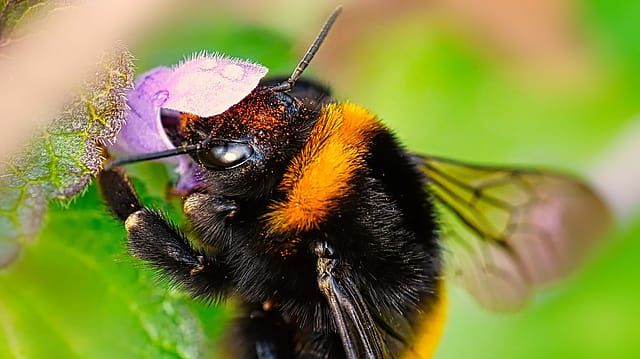
For decades, insects were dismissed as biological machines, hardwired and emotionally hollow. That assumption is now under serious scientific pressure.
A groundbreaking study has found that bumblebees display observable emotion-like behaviors through facial expressions, a trait previously documented only in mammals.
The findings have opened an uncomfortable question: if bees can feel, what does that mean for every other insect on the planet?
What Did the Study Find?
Led by professors Fei Peng and Cwyn Solvi of Southern Medical University in Guangzhou, China, researchers examined 18 colonies of bumblebees using slow-motion video, as per CBS19 news.
They found bees display distinctly different facial behaviors depending on what they consume, pointing to genuine evaluative responses rather than reflex.

Zeroing In on ECI
09 Oct 2026 - Vol 05 | Issue 41
Constitutional legitimacy versus political opportunism
Do Bumblebees 'Lick Their Lips'?
According to the study, published in the Proceedings of the National Academy of Sciences, bees extended their tongue-like glossa after consuming sweet liquids, closely resembling lip-licking behavior seen in mammals.
What Happens When They Taste Something Unpleasant?
When exposed to salty or bitter liquids, bumblebees displayed aversive head shaking and mouth wiping.
Researchers categorised these as "liking and disliking" behaviors rather than simple feeding reflexes.
Why Does This Matter Beyond Bees?
According to Dr Andrew Barron, a neuroethologist from Macquarie University in Sydney, the implications extend to all insect species.
He reportedly noted that in terms of brain organisation, there is no major difference between a bee and a fly, suggesting a far wider rethink of insect animal behavior may be necessary, as per CBS19 news.
Is a Bee's Brain Really Capable of Inner Experience?
The bumblebee brain weighs less than a milligram, yet evidence suggests it supports a form of inner life. This is a meaningful step toward understanding how brain activity connects to subjective experience.
Has Emotion-Like Behavior Been Seen in Insects Before?
No. According to the study, facial expressions as indicators of emotional states had never previously been observed outside of mammals, making this a first-of-its-kind finding in insect consciousness research.
What Could This Mean for How We Treat Insects?
If bumblebees evaluate experiences as pleasant or unpleasant, the scientific and moral frameworks governing how humans interact with insects may need significant revision.
The study does not claim bees are conscious in the human sense. What it establishes is that the line between robot-like insects and feeling creatures is far blurrier than science once believed.
(With inputs from yMedia)