Balochistan Sees House Demolitions, 82 Disappearances in January, Rights Groups Allege
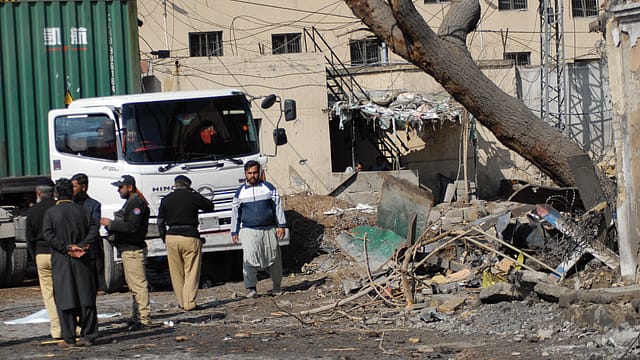
Reports emerging from multiple districts of Balochistan indicate that Pakistani military forces have demolished several houses allegedly linked to Baloch separatist militants, while residents have accused security personnel of carrying out raids and seizing valuables during ongoing operations, according to The Balochistan Post.
Citing details from the coastal district of Gwadar, the publication reported that security forces razed a house owned by a man identified as Mohammad in the Pasni Grani locality.
Local sources said the building was entirely demolished during the operation, and footage of the demolition was later circulated by Pakistani forces.
The report noted that this was the second such demolition in Gwadar district in recent weeks. On 13 February, a family home in the Panwan area of Gwadar was reportedly brought down with heavy machinery.
Comparable actions have also been reported from other regions of Balochistan. Earlier this month, security forces allegedly destroyed four houses in Noshki, including the ancestral residence of Bashir Zeb Baloch, identified as the chief of the Baloch Liberation Army.
Why are raids and detentions by Pakistani forces increasing across cities in Balochistan?

The Liberation of Bengal
05 Jun 2026 - Vol 04 | Issue 74
A silent revolution ends the reign of fear
In a separate incident in Tump, a house was reportedly demolished using heavy equipment and explosives.
Authorities have maintained that the demolished structures were connected to Baloch separatist fighters. However, several residents and local observers told The Balochistan Post that civilian homes were being targeted in what they described as collective punishment.
The publication also reported a recent surge in raids and detentions carried out by Pakistani forces across various cities in Balochistan. In some instances, residents claimed that cash and valuable items were taken during search operations.
In Noshki district, security personnel reportedly raided a residence where family members later alleged that gold jewellery belonging to a newlywed couple and nearly 250,000 Pakistani rupees in cash were removed during the search.
In another case from Gwadar, local sources claimed that a costly watch and approximately 130,000 rupees in cash were taken during a house raid.
What does Paank’s January 2026 report reveal about human rights violations in Balochistan?
Residents in Quetta's Sariab Road area similarly reported that valuables went missing from their homes during security searches.
According to The Balochistan Post, these incidents followed coordinated attacks claimed by the BLA on 31 January across several locations in Balochistan, including the provincial capital, Quetta.
Amid these developments, the human rights department of the Baloch National Movement, Paank, released its January 2026 report alleging that the new year began with continued grave human rights violations in Balochistan.
The report stated that multiple incidents of enforced disappearances and extrajudicial killings were recorded across various districts of Balochistan as well as in Karachi, Sindh, describing what it termed a worsening security and human rights environment.
Paank documented a total of 82 cases of enforced disappearance during January 2026, of which 44 individuals were reportedly released after enduring severe physical and psychological torture.
Which districts in Balochistan recorded the highest enforced disappearance cases in January 2026?
In the same period, the organisation recorded 12 confirmed cases of extrajudicial killings, which it said had further deepened the climate of fear and uncertainty prevailing in the region.
District-wise data cited in the report showed that Kech recorded 26 enforced disappearances, followed by Shaal with 16 and Gwadar with 15.
Kharan reported nine cases, Panjgur six, and Khuzdar four. Two cases each were documented in Lasbela and Karachi, while one case each was reported in Dera Bugti and Nushki.
The organisation alleged that many of these incidents involved home raids, arrests without warrants, and incommunicado detention at undisclosed locations where detainees were allegedly subjected to torture.
Paank stated that the continuing pattern of enforced disappearances and extrajudicial killings reflected a deteriorating human rights situation in Balochistan and said such practices had effectively become an unwritten law in the region.
Why are independent investigations into human rights violations in Balochistan being demanded?
It called for transparent and independent investigations into the reported incidents, identification of those responsible, and meaningful accountability measures to ensure justice for victims' families and to uphold the rule of law in Balochistan.
Separately, Dawn reported that the Human Rights Commission of Pakistan, following a recent fact-finding mission to the province, found that enforced disappearances and other human rights violations were exacerbating public alienation and contributing to political instability in Balochistan.
Despite mounting reports and allegations, Pakistani authorities have consistently denied involvement in enforced disappearances, often dismissing such claims as politically motivated or unverified.
The denial has complicated efforts to hold perpetrators accountable, leaving victims' families without justice and fuelling mistrust between the state and the local population.
(With inputs from ANI)