Australia Rules Out Gulf Deployment; South Korea, UK, and Canada Weigh Strait of Hormuz Mission
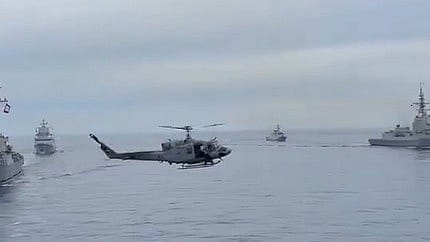
American allies have adopted a cautious stance or issued direct refusals following President Donald Trump's call for roughly seven nations to dispatch warships to the Strait of Hormuz.
Australia confirmed it will not provide naval support. Cabinet Minister Catherine King told the ABC, "We won't be sending a ship to the Strait of Hormuz. We know how incredibly important that is, but that's not something that we've been asked or that we're contributing to."
Japan has similarly maintained a hesitant stance.

Losing Memory
16 Oct 2026 - Vol 05 | Issue 42
The making of a medical and social emergency
South Korea indicated it remains in discussions with Washington, with the presidential office in Seoul noting any potential move would only occur after a thorough and "careful review" of the situation.
In London, Prime Minister Keir Starmer adopted a diplomatic approach. Downing Street stated that Starmer had discussed the necessity of reopening the strait to mitigate "global shipping disruptions" with Trump and consulted with Canadian Prime Minister Mark Carney to coordinate a Western response, agreeing to further deliberation on the crisis.
Which allied nations has Trump urged to send warships to the Strait of Hormuz?
Trump’s demand comes as the critical maritime oil route faces significant disruption amidst the ongoing conflict with Iran.
The US President urged several allied nations to dispatch warships to the Strait of Hormuz, emphasizing the critical importance of keeping the strategic maritime route open amidst ongoing tensions with Iran.
The Strait handles approximately one-fifth of the world’s oil, and global oil prices continue to rise amid concerns over potential disruption.
Trump revealed his appeal while speaking to reporters aboard Air Force One on Sunday, stating he has pressured nations with high dependency on Middle Eastern crude to assist in policing the waterway.
Will China join an international coalition to secure the Strait of Hormuz?
He argued that they should protect "their own territory" and highlighted China as a major stakeholder, noting that Beijing secures the majority of its oil supplies through Hormuz.
The President did not confirm whether China would participate in any international coalition.
Despite the President's public appeals and the strategic importance of the route, no concrete military commitments have been secured as global oil prices continue to rise.
Trump also issued a stern warning regarding NATO, suggesting the alliance could face a "very bad" outlook if member nations do not assist in securing the Strait of Hormuz.
In an interview with the Financial Times, he told European allies, "It’s only appropriate that people who are the beneficiaries of the Strait will help to make sure that nothing bad happens there."
"If there's no response or if it's a negative response, I think it will be very bad for the future of NATO,” he added.
Comparing the current situation with US support for Ukraine, Trump remarked, "We didn't have to help them with Ukraine. Now we'll see if they help us because I've long said that we'll be there for them, but they won't be there for us."
When asked about the type of assistance expected, he indicated "whatever it takes," including deploying minesweepers to the region and neutralizing threats from Iranian units along the coast using naval mines and drones.
The President expressed continued dissatisfaction with the UK’s response, stating, "The UK might be considered the No. 1 ally, the longest-serving, etc., and when I asked for them to come, they didn't want to come."
He criticized the timing of the British offer, saying, "And as soon as we basically wiped out the danger capacity from Iran, they said, 'Oh, well we'll send two ships,' and I said, 'We need these ships before we win, not after we win.' I've long said that NATO is a one-way street."
(With inputs from ANI)