Air India Under UK Scrutiny After Boeing 787 Fuel Switch Incident
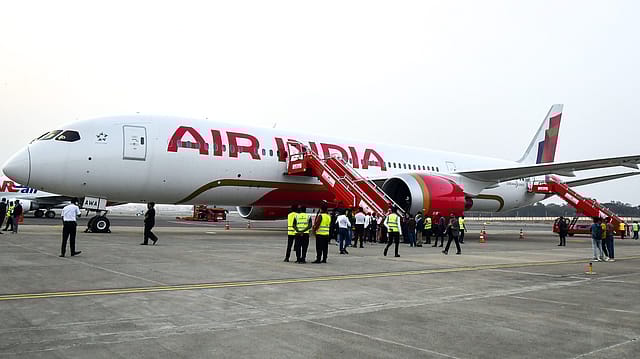
Britain’s aviation regulator has sought a formal explanation from Air India after a Boeing 787 Dreamliner flew out of London despite concerns over a potentially faulty fuel control switch, only to be grounded on arrival in India for safety checks.
In a letter dated February 3, the UK Civil Aviation Authority (CAA) warned Air India that regulatory action could be initiated against the airline and its Boeing 787 fleet if it fails to submit a complete response within a week, according to Reuters.
The intervention comes amid heightened scrutiny of Air India’s Dreamliner fleet following a report by one of its pilots flagging a possible defect in a fuel control switch earlier this week. An Air India Boeing 787-8 was subsequently grounded on Monday after the issue was raised, triggering fleet-wide inspections.
Air India confirmed that the pilot’s observation was escalated to India’s aviation regulator, the Directorate General of Civil Aviation (DGCA), and that the aircraft in question was immediately taken out of service. The airline said it is working with the original equipment manufacturer (OEM) to assess the issue on a priority basis.

India's Action Hero
27 Mar 2026 - Vol 04 | Issue 64
Riding the Dhurandhar Wave
“After receiving this initial information, we grounded the aircraft and began checks,” an Air India spokesperson said, adding that inspections of fuel control switches across the airline’s Boeing 787 fleet had already been carried out earlier under a DGCA directive, with no issues detected at the time.
However, the incident has revived concerns within pilot bodies. The Federation of Indian Pilots (FIP) has urged the DGCA and the Aircraft Accident Investigation Bureau (AAIB) to launch an immediate probe into potential electrical faults in Boeing 787 aircraft. FIP President Captain C.S. Randhawa said this was the third known instance of uncommanded movement of fuel control switches reported on the Dreamliner.
Adding another layer, the DGCA issued a clarification on Tuesday regarding an earlier episode involving the same aircraft, stating that a switch
movement from “RUN” to “CUTOFF” on January 1 was caused by external force applied in the wrong direction, not an inherent system malfunction.
Even so, the UK regulator’s intervention underscores the seriousness of the episode—placing Air India’s operational decision-making, Boeing 787 systems, and cross-border regulatory oversight firmly under the spotlight.
(With inputs from ANI)