2026, the Year of Mars: Conflicts That May Lead to Wars
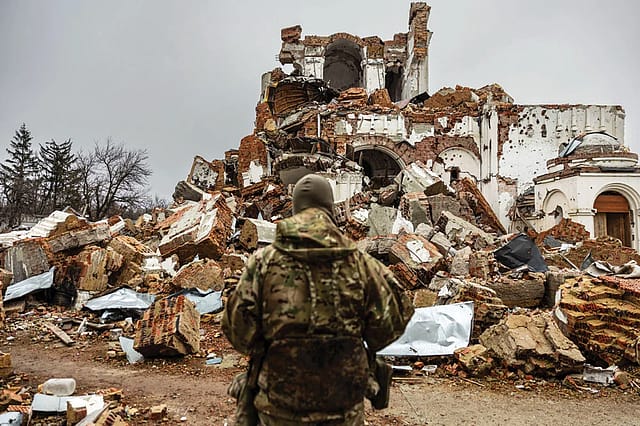
If there is one certainty that awaits the world in 2026, it is the spread of war and the decay of the norm against war to settle territorial claims and counterclaims. After a long period of quiescence, war is back as an option. The period of “long peace,” that prevailed for more than two decades, is over now.
Here is a list of conflicts that involve wars or are increasingly “hot”:
1) Russia and Ukraine: War since 2022
2) Thailand and Cambodia: Intermittent skirmishes in 2025
3) Venezuela and Guyana: Renewed conflict over territory since 2023
Then, there is a list of potential flare ups, some based on new “facts” and some due to intransigence of one or the other party in conflict.
1) American claims over Greenland. In late December, US President again renewed his “claim” over Greenland, currently a territory under legal control of Denmark. He went as far as appointing an “envoy” to take the plan further. This is in addition to US statements about “acquiring” Canada, a country with which the US has virtually no conflict.
2) Somaliland: Israeli recognition of Somaliland even as Somalia claims the territory belongs to it.

The Liberation of Bengal
05 Jun 2026 - Vol 04 | Issue 74
A silent revolution ends the reign of fear
3) Saudi Arabia-UAE: An unprecedented spat between two neighbours over supporting rival faction
4) India-Pakistan: Continued export of terror by Pakistan leaving India with no other alternative to alter Pakistan’s behaviour.
In addition, there are scores of intra-state or inter-state conflicts in different parts of the world. Some examples include: The Islamist insurgency in Mozambique’s Cabo Delgado province that is now spilling into other parts of the country; the conflict in its Eastern region (Kivu North and Kivu South provinces); Yemen and Sudan.
Data shows that between 1816 and 2025, forced acquisition of territories or exchange of territories on the basis of armed conflict dominated the first half of the 20th century. After 1950, this trend abated greatly. While wars continued, a norm of sorts against snatching territory cemented over time. This was as much a product of the experience of the two world wars and the end of the colonial era as it was about relative peace in a world dominated by two Great Powers.
Those conditions have altered dramatically in the 21st century. Some scholars claim that Russia broke that norm when it annexed Crimea in 2014 and the world did not respond except through very muted diplomatic and economic means. But another version of history can be sketched here: The American invasion of Afghanistan in 2001 and Iraq in 2003. Couched in terms of a “war on terror,” these violations of two sovereign countries, pre-date the Russian annexation of Crimea by more than a decade. The involvement of European countries through NATO may have given a patina of legitimacy to these military adventures but they remained what they were: violations of sovereignty. The heated debates over the Doctrine of Pre-emption, the dangers from terrorism and the controversy over Iraq’s weapons of mass destruction that it did not possess has continued ever since.
There is more at hand. On the very last day of 2025, China’s President Xi Jinping issued a thinly veiled warning to Taiwan: “We Chinese on both sides of the Taiwan Strait share a bond of blood and kinship. The reunification of our motherland, a trend of the times, is unstoppable.”
At the end of the year China launched a series of military exercises all around Taiwan. These are not simple “tensions” but carry much bigger risks. China’s unprecedented military modernisation, one that makes it a peer of the US when it comes to military power, has the potential to destabilise all of Asia. The danger that China will invade Taiwan cannot be ruled out and in fact the risk of that eventuality is increasing with every passing year.
Welcome to the year of Mars.