How AI Is Transforming India’s Gaming and Creative Industries
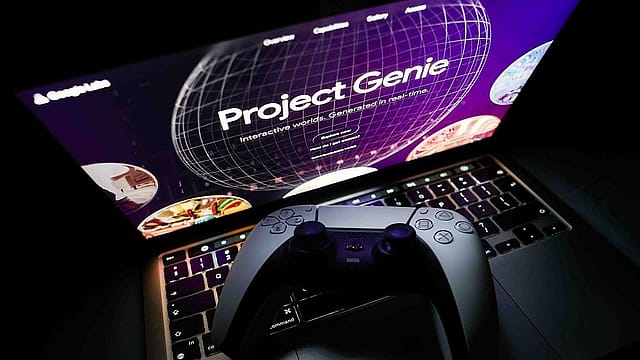
At the AI Impact Summit 2026 in New Delhi, Indian gaming startups stepped into the spotlight, showcasing how AI is transforming game design, commentary, hardware and immersive experiences for millions of players worldwide. The event has emerged as a major platform for showcasing how AI is influencing multiple industries. For gaming companies, the event offered a rare opportunity to present homegrown innovations to global investors, policymakers and technology leaders.
With gaming increasingly driven by AI-powered storytelling, graphics and player analytics, the summit reflected how India’s developers are moving beyond mobile-first entertainment to build sophisticated, globally competitive products.
Which are the Indian gaming startups in the spotlight?
Five Indian ventures stood out for their strong gaming and immersive technology focus: Yesgnome, Metasports, Koyozo, Youth Buzz and Evivve.
These startups demonstrated how AI is being embedded into every layer of gaming, from artwork and commentary to controllers and interactive formats. Their presence signalled India’s growing ambition to become a hub for AI-driven game development.

Zeroing In on ECI
09 Oct 2026 - Vol 05 | Issue 41
Constitutional legitimacy versus political opportunism
Is redefining game design with AI possible?
Yesgnome unveiled Sketly AI, a platform designed to simplify and speed up game art production. The tool helps studios generate characters, environments, and animation assets in minutes instead of weeks, while maintaining visual consistency across projects.
For indie developers and large studios alike, such tools reduce creative bottlenecks and lower production costs. This shift allows teams to focus more on gameplay and storytelling rather than repetitive design tasks.
The rise of AI-powered design platforms reflects a broader trend in gaming, where automation is helping smaller studios compete with global giants.
Does gameplay become more real with AI commentary?
Metasports showcased its popular cricket game Hitwicket, which has crossed 18 million users worldwide. At the summit, the company demonstrated a Generative AI-based real-time commentary engine that analyses gameplay and produces contextual voice narration.
The system personalises commentary for each match, creating a broadcast-style experience similar to live sports coverage. This blend of competitive gaming and AI storytelling enhances immersion and keeps players engaged for longer periods.
Such innovations highlight how AI is helping sports-based games evolve from simple simulations into interactive entertainment platforms.
Is turning smartphones into gaming consoles possible?
Koyozo introduced its integrated mobile gaming ecosystem aimed at upgrading smartphone gaming. Its Koyozo One controller features hall-effect joysticks, haptic feedback, and dual connectivity, supported by the Koyozo Club software platform.
The ecosystem offers automatic button mapping, remote play integration, and personalised control profiles, helping mobile gamers achieve console-like precision. This approach addresses India’s fragmented mobile gaming landscape, where high-end hardware is often unaffordable.
By bridging the gap between casual and competitive gaming, Koyozo is positioning smartphones as serious gaming devices.
What’s the experiment with new AI-driven gaming formats?
Youth Buzz presented “Man vs. GPT” on its Ourcadium platform, an interactive format where human players compete against adaptive AI opponents. The system studies player behaviour and adjusts strategies in real time.
This format gives audiences a simplified look at advanced AI models while offering an engaging competitive experience. Positioned as homegrown intellectual property, it reflects India’s push towards original, AI-native entertainment.
Such experiments suggest that future Indian games may blend Esports, AI research, and live entertainment into new hybrid formats.
While most startups focused on gameplay and tools, Evivve addressed the human and organisational side of AI adoption. Its Enterprise Cognitive AI Readiness Tool evaluates whether leadership teams are prepared for AI-driven transformation.
At the summit, Evivve conducted live simulations and released its “State of Cognition: India AI Snapshot 2026,” highlighting gaps in decision-making and digital readiness. For gaming studios, such insights are crucial as AI becomes central to production and operations.
Investment and Policy Support for Gaming Innovation
A special panel titled “The New Gold Rush: Investing in India’s AI-Powered Gaming Future” was organised in collaboration with the Game Developers Association of India. The discussion focused on funding trends, talent development, and AI-enabled production pipelines.
Industry leaders stressed that sustained investment and supportive regulations are essential for Indian studios to compete internationally. The panel also highlighted the need for stronger collaboration between startups, publishers, and policymakers.
What is the future of AI-driven gaming in India?
The strong presence of gaming-focused startups at the summit shows that India is moving from being primarily a consumer market to a creator of original gaming technology and intellectual property. AI-driven design, commentary, hardware, and immersive formats are laying the foundation for globally scalable products.
From February 16 to 20, the summit showcased India’s ambition to build an inclusive and competitive AI ecosystem. For the gaming sector, this translates into better tools, richer experiences, and stronger international visibility.
As these innovations mature, India’s gaming industry is poised to play a larger role in shaping next-generation interactive entertainment.
(With inputs from ANI)