How Slop Came to Define Artificial Intelligence in 2025
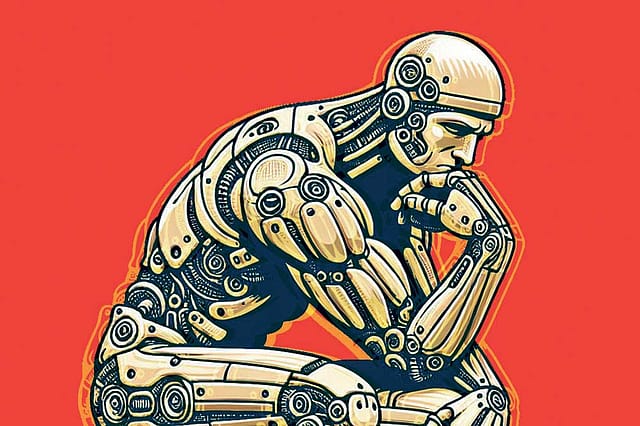
A label once used for mud and discarded food has come to define artificial intelligence to the extent that two august institutions, Merriam-Webster Dictionary and The Economist magazine, made it their word of the year. On December 15, Merriam-Webster, announcing it, wrote on their website: 'We define slop as “digital content of low quality that is produced usually in quantity by means of artificial intelligence.” All that stuff dumped on our screens, captured in just four letters: the English language came through again.'
The Economist had already anointed it earlier. On December 3, it explained its reasons: 'Our pick’s rise was spurred by OpenAI’s release of Sora, a generative artificial-intelligence (ai) platform that can create videos based on a prompt. Suddenly social media feeds were filled with such clips. A term that started circulating in the early years of generative AI is now everywhere: “slop”.'

Zeroing In on ECI
09 Oct 2026 - Vol 05 | Issue 41
Constitutional legitimacy versus political opportunism
Slop's beginnings go back hundreds of years ago when it was first used for slimy puddles. It hung on to the fringes of the language until generative AI breathed life into it. Content creation became ridiculously easy with AI because all you needed was to know English to give prompts. Much of it has no substance and is churned out furiously as more people become aware of what engines like ChatGPT and Gemini can do. These tools themselves are getting better. Slop creation saw a big uptick when a ChatGPT upgrade that led to a flood of Ghibli-style anime images.
Social media is now saturated with slop, and even though compared to spam, it holds a certain appeal. As Merriam-Webster wrote, 'The flood of slop in 2025 included absurd videos, off-kilter advertising images, cheesy propaganda, fake news that looks pretty real, junky AI-written books, “workslop” reports that waste coworkers’ time… and lots of talking cats. People found it annoying, and people ate it up.'