Ready, Set, Wait: Why Asian Games 2026 is Making the Wrong Headlines
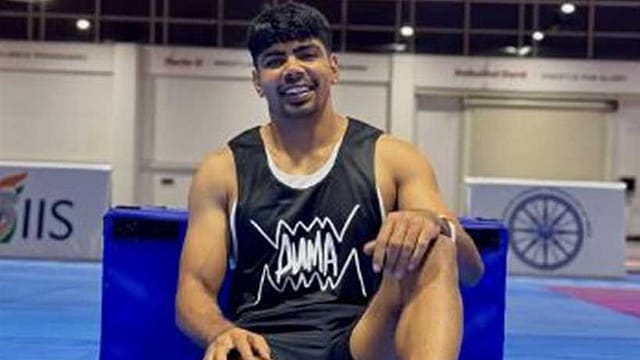
Varun Sanyal had reached Japan. Getting into the Asian Games system was another contest altogether.
The Indian mixed martial arts fighter reportedly said that officials could not find his details despite his having an accreditation card. He described being sent between three facilities, finding water but no food, and spending more than 10 hours trying to secure accommodation. Even after reaching a room, he said, two other Indian athletes arrived claiming it had been assigned to them.
“I was like a total ghost in their system,” he said. The room problem was eventually resolved. His account nevertheless captures the anxiety surrounding the Games before the opening ceremony: athletes arriving ready to compete, then spending precious preparation time trying to get checked in.
The Aichi-Nagoya Asian Games, scheduled from September 19 to October 4, have attracted complaints about accommodation, accreditation, transport and basic coordination. Indian officials have acknowledged problems. Other delegations have reported difficulties too, including the host nation.

Zeroing In on ECI
09 Oct 2026 - Vol 05 | Issue 41
Constitutional legitimacy versus political opportunism
Olympic boxing bronze medallist Vijender Singh gave the Indian frustration a public voice. “I don't know why the international media is silent,” he wrote on X.
His concern about athletes’ treatment has substantial reporting behind it.
Reuters has covered accommodation complaints and Japan’s own difficulties; the Associated Press has reported the organisers’ defence; Al Jazeera has published an accommodation-crisis explainer. Questions about the prominence or tone of coverage are open to debate. A blanket claim of silence is contradicted by the coverage itself.
The Indian complaints extend across sports. According to published reports, badminton players waited around six hours at the airport; weightlifter Mirabai Chanu and coach Vijay Sharma also faced lengthy arrival delays. Rowers reportedly waited nine to 10 hours to check into their cruise-ship accommodation and bought food themselves, while transport problems affected shooting practice.
Another report described gymnast Pranati Nayak and her male coach, Ashok Mishra, being allocated the same room after a long journey. Following intervention, separate arrangements were made late at night. Mishra then reportedly encountered a further hotel check-in delay because his surname had been entered incorrectly. The allegation concerns an inappropriate allocation that was subsequently corrected.
India’s chef de mission, Sahdev Yadav, provided official acknowledgement of the broader trouble. In the ANI account, he said the contingent’s accommodation quota had been reduced after arrival, forcing officials to find additional hotels quickly.
“We have already booked 18 rooms and will book another 10 today,” he said. “There is definitely a shortage of accommodation.”
Yadav also said everyone had accommodation and that India had arranged its own cars and hotels. Those statements describe both a problem and an emergency response: extra bookings can house a delegation while leaving legitimate questions about why they became necessary.
The sports ministry’s response illustrates the level of concern. According to ANI, it established a three-layer support arrangement involving airport and welcome-centre representatives, Indian officials and the diaspora. Approximately 2,000 Indian residents were said to be ready to open their homes if required.
Similar complaints have come from other delegations. Chinese athletes reportedly encountered a six-hour airport delay after accreditation records could not be located. Reporting drawing on Chinese media described teams waiting with inadequate access to food, followed by consular and community assistance with transport. The account points to an administrative bottleneck: vehicles being available did not help athletes whose processing remained stalled.
South Korea’s basketball delegation raised a different problem: whether accommodation was suitable for the people using it. Korea Basketball Association vice-president Jung Jae-yong complained that exceptionally tall players could not stretch out properly in their beds. Player Byeon Jun-hyeong posted footage of a leaking sink. An AFP report also quoted Philippine Olympic Committee president Abraham Tolentino saying athletes had rooms, while some coaches and officials were dispersed across hotels and Airbnb properties.
Even Japan’s delegation has faced difficulties. Reuters reported inappropriate room allocations involving male and female team members and accreditation-activation delays. Japanese Olympic Committee officials were exploring alternative accommodation and had backup hotels available. The hosts’ own complaints make this a wider operational issue.
Taken together, these accounts suggest recurring failures at the points where different systems must connect: passenger lists and accreditation, accreditation and transfers, room inventories and actual occupants. Establishing exactly which organisation failed at each point requires records beyond the public complaints.
The Games’ accommodation model is central to the argument. Organisers are using a combination of a cruise ship, temporary accommodation and hotels. Reuters reported that the Costa Serena would house roughly 4,000 people, with temporary units accommodating around 2,000. Accommodation manager Yuta Matsuo acknowledged dissatisfaction, and organisers said a round-the-clock resident centre would handle concerns. They maintained that accommodation was available for the approximately 17,000 athletes and officials expected.
The Olympic Council of Asia has defended the decision to avoid a conventional athletes’ village. Its argument is that an expensive development could become a “white elephant” after the Games, and that a purpose-built village is not mandatory. Officials have also pointed to growth in participation as a source of pressure.
There is a reasonable public-interest case for avoiding buildings with little long-term use. But a dispersed accommodation plan increases the importance of accurate allocations, reliable transport and clear responsibility when something goes wrong. Savings on construction do not remove those operational obligations.
The OCA said people registered by the July deadline had suitable Games accommodation, while late additions presented difficulties. That qualification deserves scrutiny alongside delegations’ accounts of reduced quotas and missing records. A room’s existence and an athlete’s ability to reach and use it are separate measures of preparedness.
The embarrassment has reached the ceremonies too. On September 18, North Korea’s anthem was played before South Korea’s men’s hockey match against Bangladesh. An announcer apologised. South Korea went on to win 5–0, but the mistake created an avoidable controversy involving two countries whose identities cannot casually be confused.
Separately, South Korean officials complained about a welcome performance featuring a character portraying Toyotomi Hideyoshi, who launched invasions of Korea in the 1590s. The Korean Sport and Olympic Committee raised the matter with organisers and the OCA. This was a dispute over historical sensitivity and ceremonial judgement, distinct from accommodation failures.
India and five other delegations also experienced a delay of more than an hour to a welcome flag-raising ceremony, reportedly because of miscommunication between the OCA and local organisers. This was a delegation welcome event, rather than the main opening ceremony.
India’s own administration also needs scrutiny. Shot-putter Tajinderpal Singh Toor’s replacement as flagbearer became another controversy. While the IOA cited technical issues, Toor told PTI that his official kit was still in India and would arrive too late for him to reach the ceremony as required. That account raises questions about Indian preparations and communication.
There were also reports that India’s karate athletes travelled without their dedicated coaches, and that equestrian riders’ support personnel faced accreditation difficulties amid approval delays. These cases involve Indian selection, sanctioning and administrative processes as well as Games access requirements. They cannot automatically be attributed to Japanese organisers.
Weather has added pressure. Heavy rain earlier in September caused flooding and a temporary evacuation involving about 400 people, including athletes and staff. Reuters reported that they returned and that no injuries were reported; Nagoya’s mayor subsequently said the opening was not threatened. A weather event alone does not establish mismanagement. The relevant questions concern preparation, protection and recovery.
Other hosts have suffered similarly damaging starts. Before the 2010 Commonwealth Games in Delhi, visiting delegations criticised the athletes’ village’s cleanliness and readiness. Commonwealth Games Federation president Michael Fennell sought urgent intervention, while Scotland raised concerns about accommodation conditions. The comparison is useful because basic living arrangements again became a test of the host’s credibility before sport could take centre stage.
At Rio 2016, Australia initially declined to move into the Olympic Village, citing problems including blocked toilets, leaking pipes and exposed wiring. The team subsequently moved in after remedial work. That sequence demonstrates both the seriousness of early failures and the possibility of correcting them.
Paris 2024 faced complaints about food supply and transport. Six South Korean swimmers moved to a hotel nearer their venue after complaints about long journeys in hot buses. Organisers increased food supplies and deployed reserve transport; Australia’s delegation subsequently said early problems had been addressed. Even a city with a functioning athletes’ village can struggle to deliver daily services.
These precedents offer a fair way to assess Aichi-Nagoya: document the failures, establish responsibility and track whether remedies work. They do not establish that every troubled opening produces a failed Games.
The next test is practical. Can accredited athletes reach their rooms promptly? Are allocations appropriate? Do buses get them to training? Are meals available when delayed arrivals need them? Can teams obtain help without calling consulates, booking emergency hotels or mobilising private households?
For an athlete, those services are part of the competition environment. Lost sleep, missed practice and hours spent in queues cannot simply be restored by an apology. Aichi-Nagoya still has time to change its story. The way to do that is to make the basics work.
With inputs from ANI & agencies