India’s World Cup Without Qualifying: Why the Blue Tigers Are Playing Panama, Brazil and New Zealand
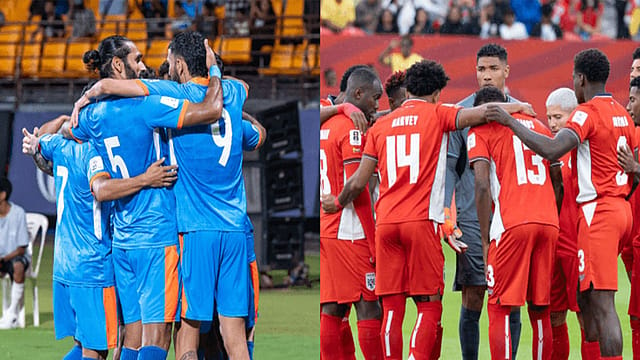
India did not qualify for the World Cup. So, the World Cup is coming to India.
Panama will arrive on September 26. Brazil will walk into Kolkata’s Salt Lake Stadium on October 3. New Zealand will face the Blue Tigers twice in November. Three countries. Four matches. Every opponent fresh from the 2026 FIFA World Cup.
For an Indian team sitting far outside football’s elite, this is an extraordinary calendar. Panama are ranked 44th. Brazil sit fifth. New Zealand bring the organisation and physical intensity of a side accustomed to carrying the Oceania challenge onto the world stage. India have never faced Panama or Brazil at the senior international level. The November tour will be the national team’s first visit to New Zealand. The matches will expose Khalid Jamil’s players to speed they rarely encounter, pressure that cannot be replicated in training and mistakes that stronger opponents will punish immediately.

Zeroing In on ECI
09 Oct 2026 - Vol 05 | Issue 41
Constitutional legitimacy versus political opportunism
They will also fill stadiums, attract broadcasters and generate social-media moments. But will they make India a better football team? That question became harder after the All India Football Federation withdrew from the inaugural FIFA ASEAN Cup to preserve the Brazil friendly. India surrendered competitive matches against Indonesia, Malaysia and Singapore for an opportunity to face the five-time world champions.
The decision captured one of Indian football’s oldest temptations: the glamour of meeting the world against the grind of catching Asia. Panama may now help the AIFF argue that Brazil is not an isolated exhibition but part of a deliberately demanding programme. Yet exposure becomes development only when the lessons survive the final whistle.
Why is Panama more important than it sounds?
Panama must not be reduced to Brazil’s warm-up act. The Central American side competed at the 2026 World Cup and remain inside the world’s top 50 despite dropping ten positions after the tournament. Their current ranking of 44 is still 94 places above India, who are ranked 138th.
Panama have grown from regional outsiders into regular contenders within CONCACAF, the confederation covering North America, Central America and the Caribbean. They qualified for their first World Cup in 2018 and returned to the tournament in 2026. Their football combines athleticism, organised defending, fast transitions and the ability to compete physically. That makes them a potentially valuable bridge between India’s regular opposition and the extreme difficulty presented by Brazil.
Brazil may dominate India so completely that the Blue Tigers spend much of the match defending near their own penalty area. Panama can stretch India across the pitch while still offering Khalid Jamil’s side a realistic chance to construct attacks, hold possession and test tactical ideas. The fixture will also be India’s first against Panama and only its ninth against a CONCACAF opponent. Developmentally, it may prove more instructive than the glamorous match that follows.
Why is India suddenly playing World Cup teams?
The AIFF says the purpose is exposure. India have spent much of their international history playing within a relatively narrow band of South Asian, West Asian and lower-ranked opposition. Such matches can produce victories and ranking points without revealing whether Indian players can withstand a stronger press, make decisions at greater speed or defend against technically superior attackers.
Panama, Brazil and New Zealand remove that comfort. Panama will punish loose passes. Brazil will test whether India’s defensive structure can survive prolonged pressure. New Zealand, particularly in two away matches, will challenge India’s physical resilience, aerial defending and ability to adapt while travelling.
The sequence also offers a useful progression. India begin at home against a top-50 side, face one of football’s greatest nations a week later and then travel to New Zealand for two matches on November 12 and 15. Jamil will have four opportunities to examine how the same group responds to different footballing cultures. The commercial explanation is equally important.
Brazil in Kolkata is an event, not merely a fixture. The city has adored Brazilian football for generations, and the Brazilian Football Confederation has described India as the national team’s largest international fanbase. A sold-out Salt Lake Stadium will generate ticketing, sponsorship, broadcasting and tourism value. Panama becomes the preparation. New Zealand extends the footballing experiment into another international window. It is sporting ambition married to event economics.
Why did India withdraw from the FIFA ASEAN Cup?
India had accepted an invitation to the inaugural FIFA ASEAN Cup and were drawn in Division 1 alongside Indonesia, Malaysia and Singapore. The tournament was scheduled within the September 21-October 6 international window. Its concluding stages overlapped with the Brazil fixture on October 3.
The AIFF initially considered fielding separate squads, allowing one group to compete in the ASEAN Cup while another remained in India for Brazil. Former India captain Bhaichung Bhutia opposed the proposal and argued that the country should send its strongest team to a competitive tournament. FIFA regulations and logistical complications made the two-team arrangement difficult. The federation eventually withdrew from the ASEAN Cup and decided to use the window for international friendlies. Panama has now filled part of the space created by that decision. The withdrawal means Brazil did not simply appear on India’s calendar. India made room for Brazil by removing a competition.
Was abandoning the ASEAN Cup the correct decision?
There is no simple answer. Facing Brazil gives Indian footballers an experience they may never receive again. Brazil are the highest-ranked opposition India will have faced since the FIFA ranking system was introduced in 1992. The match will also mark the first meeting between the two senior national teams.
An Indian defender who spends 90 minutes tracking a Brazilian forward will encounter technical quality and decision-making speed that cannot be reproduced in a domestic training camp. The match may inspire players, supporters and children watching across the country.
The ASEAN Cup, however, offered something friendlies cannot fully recreate: tournament pressure. Indonesia and Malaysia represent rising forces in Asian football. Singapore are closer to India’s level and know exactly how to exploit Indian weaknesses. They eliminated India from the 2027 Asian Cup qualification race by coming from behind to win 2-1 in Goa in October 2025.
India finished that campaign with five points from six matches: one victory, two draws and three defeats. The solitary win arrived in the final game, after qualification had already disappeared. Matches against Indonesia, Malaysia and Singapore would have tested India’s ability to chase points, manage a group and win against regional opposition. Those are the skills required to reach an Asian Cup or advance through World Cup qualifying. Brazil offers a benchmark. The ASEAN Cup offered a ladder. Indian football needs both. The AIFF chose the benchmark.
Can playing much stronger opponents improve India?
Yes, provided the matches belong to a larger plan. A superior opponent exposes weaknesses with brutal clarity. Analysts can measure how quickly India lose possession, where the defensive shape breaks, whether midfielders can escape pressure and how fitness levels hold up when the team spends long periods without the ball. Players also discover how little time international football allows. A pass that appears available against lower-ranked opposition may disappear against Panama. A heavy first touch can become a Brazilian counterattack. A moment of hesitation while defending a cross may be punished by New Zealand.
That information is valuable. But a mismatch can also teach very little. If India defend with almost the entire team behind the ball, rarely cross the halfway line and finish without constructing an attack, the evening becomes an exercise in damage limitation.
Exposure must be calibrated. That is why Panama and New Zealand may offer more developmental value than Brazil. They are substantially stronger without occupying football’s most distant tier. India may be able to test attacking patterns against them rather than merely resist. The lessons must then return to training, player selection, youth development and the domestic league. Otherwise, exposure becomes a polite word for defeat.
What can Khalid Jamil actually test?
The four matches allow Jamil to examine much more than the final score. Can India play out from defence when pressed? Can the midfield retain the ball for more than a few passes? Can the team defend without collapsing into its penalty area? Can the full-backs advance without leaving enormous spaces behind them? Can Indian attackers create chances against World Cup defenders?
The Panama and Brazil matches, separated by seven days, also give the coach an opportunity to make immediate corrections. Problems exposed on September 26 can be addressed before October 3. The two New Zealand fixtures provide another useful experiment. Because India will face the same opponent twice within four days, Jamil can alter personnel or tactics and see whether the changes work. That resembles a small Test series. The second match will reveal whether India can learn faster than the opposition adapts.
Do friendly results affect the FIFA rankings?
Yes. FIFA uses a points-based calculation that considers the strength of the two teams, the expected outcome, the actual result and the importance of the match. Friendlies played within an international window carry ranking weight, although less than qualifiers and major tournament matches.
India, therefore, can gain points by performing above expectation, particularly against much higher-ranked opponents. But ranking mathematics should not become the central justification for the schedule. The disparity is so large that victories against Brazil or Panama would represent historic shocks. The more realistic gains will be tactical and psychological. Friendlies also permit more experimentation than qualifiers. Coaches can use substitutes, try younger players and change formations without risking elimination.
That freedom is useful, but it reduces the pressure that defines competitive football. A team’s maturity is ultimately tested when the result determines whether it advances or goes home.
Why is the Brazil game such a huge event?
Kolkata’s relationship with Brazilian football predates the fixture by decades. Pelé’s New York Cosmos played Mohun Bagan at Eden Gardens in September 1977 before a crowd estimated at more than 80,000. The match ended 2-2 and became part of the city’s football folklore.
During World Cups, Kolkata neighbourhoods routinely dress themselves in Brazil’s yellow and Argentina’s blue and white. Giant flags, murals and cut-outs transform local streets into declarations of allegiance. That passion was again visible during the 2026 World Cup. Reuters documented one Kolkata lane that residents had transformed into “FIFA Gully”, filling it with murals and giant images of international players.
Brazil’s senior national team has never played in India. Its arrival will turn affection watched through television screens into a physical encounter. For the AIFF, the commercial opportunity is obvious. The real challenge will be ensuring that the occasion remains a football match rather than becoming a celebrity viewing exercise in which the Indian team is treated as background scenery.
What does India stand to gain beyond the pitch?
A successful run of international fixtures could make India more attractive to foreign federations and promoters. India possesses a vast football audience, strong pockets of support in Kolkata, Kerala, Goa and the Northeast, and stadiums capable of accommodating large crowds. What it has lacked is a consistent place on the touring calendar of leading national teams.
If Panama, Brazil and New Zealand produce strong audiences and professional organisation, more federations may consider India for future friendlies. The matches could also attract sponsors and broadcasters who are less interested in routine fixtures against familiar regional opponents.
But hosting great teams cannot be confused with becoming one. The commercial success of India-Brazil will mean little to the national programme if India continue struggling against Asian teams when qualification points are at stake.
What should success look like?
Success should not be defined as defeating Brazil. India must instead become progressively harder to play against across the four matches. Can the team hold its shape for longer? Can it reduce unforced errors? Can it create chances rather than wait for isolated counterattacks? Can younger players cope with the speed? Can India take lessons from Panama into Brazil and from the first New Zealand match into the second?
The more important examination will arrive after November. Does the AIFF continue arranging difficult fixtures? Does India return to competitive regional tournaments? Are strong Asian opponents added to the calendar? Do the lessons influence domestic coaching, player development and squad selection? One glamorous international window can produce photographs and memories. A difficult schedule repeated over several years can produce a football team.
Is this India’s World Cup after the World Cup?
In one sense, yes. India failed to reach the 2026 tournament after losing 2-1 to Qatar in June 2024, a result that ended its hopes of entering the third qualifying round. The Blue Tigers then failed to reach the 2027 Asian Cup.
Now they will face teams that achieved what they could not. Panama changes the meaning of the Brazil match. Without Panama and New Zealand, Brazil could be dismissed as one spectacular exhibition. With four matches against World Cup participants, the AIFF can argue that it is constructing a high-intensity development programme.
The ASEAN Cup withdrawal prevents the story from becoming an uncomplicated celebration. India has chosen to borrow the World Cup’s difficulty without earning its qualification. The coming matches will reveal whether that difficulty becomes a bridge towards competitive progress or a brightly lit detour from it. The World Cup is coming to India. The real question is whether India can learn enough to travel there one day.
(With inputs from ANI)