From 0–3 Down to Champion: How Rybakina Won the Australian Open
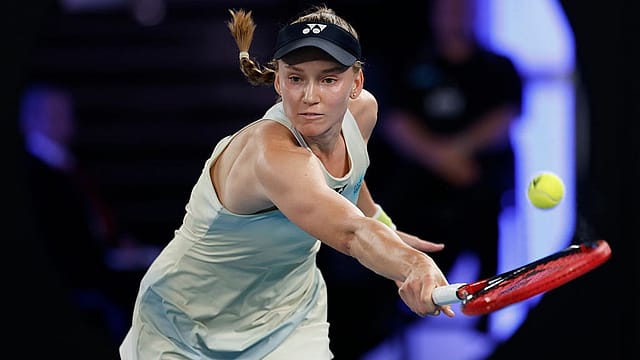
At 0–3 in the final set, the Australian Open title was slipping away from Elena Rybakina.
Aryna Sabalenka, the world No. 1, was surging. The momentum had turned. Rod Laver Arena felt ready for another coronation. Instead, Rybakina reached inward and changed the match.
With a stunning run of five consecutive games, the 26-year-old from Kazakhstan completed a 6-4, 4-6, 6-4 comeback to win her first Australian Open title, becoming the first Kazakh player—man or woman—to lift the trophy in Melbourne.
It was history, forged under pressure.
A final of equals until nerve mattered
Both players arrived at the final without dropping a set, a rarity not seen at the Australian Open since 2004. This was their 15th meeting, a rivalry defined by raw power and narrow margins.
Rybakina struck first, breaking Sabalenka in the opening game and dictating with clean, fearless ball-striking. Her serve—already one of the most feared on tour—separated the pair in key moments as she claimed the first set.
Sabalenka responded like a champion. She absorbed pressure, waited for her opening, and finally broke late in the second set to force a decider. When she surged to a 3–0 lead in the third, the match seemed to tilt decisively in her favour.

The BJP Nation
08 May 2026 - Vol 04 | Issue 70
Now all of India is in his thrall
It didn’t.
The comeback that defined the champion
Rybakina didn’t rush. She didn’t panic. She reset.
As Sabalenka’s unforced errors crept in, Rybakina found depth, precision and belief. She broke back, held firm, then broke again as the top seed tightened at the finish line.
Serving for the championship, Rybakina stared down pressure at 30–30 and answered with two commanding serves, sealing victory in two hours and 18 minutes, capped by an ace.
Sabalenka, towel over her head, could only watch.
More than a title, this win makes Rybakina the first Kazakh to win the Australian Open, a two-time Grand Slam champion, after Wimbledon 2022, just the sixth woman in the Open Era to win her first two majors on different surfaces, and the first since Naomi Osaka (2019) to win the title by beating three top-10 players from the quarter-finals onward. She defeated Iga Swiatek, Jessica Pegula, and Sabalenka—the elite of the sport—on her way to the trophy.
A form player, finally fulfilled
Rybakina’s triumph also felt like a culmination.
Long admired for her talent but questioned for her consistency in the biggest moments, she has now won 10 straight matches against top-10 players and more matches than anyone on the WTA Tour since last Wimbledon.
Off-court turbulence, including a controversial coaching suspension last year, threatened to derail her momentum. Instead, clarity returned—and so did her best tennis.
She is no longer knocking on the door of the elite. She is firmly inside.
For Sabalenka, this was another painful final—her third loss in four Grand Slam finals. Still dominant, still No. 1, but increasingly vulnerable against one opponent.
Rybakina has now beaten her in seven of their last nine hard-court meetings. Call it match-up. Call it belief. Call it nerve.
The moment that mattered
At 0–3 down in the final set, Elena Rybakina could have faded. Instead, she chose to fight.
And in doing so, she didn’t just win a title. She announced herself as the defining force in women’s tennis right now.
(With inputs from ANI)