DC vs RCB: A Classic IPL Contest That Kept Viewers On Edge Of Their Seats
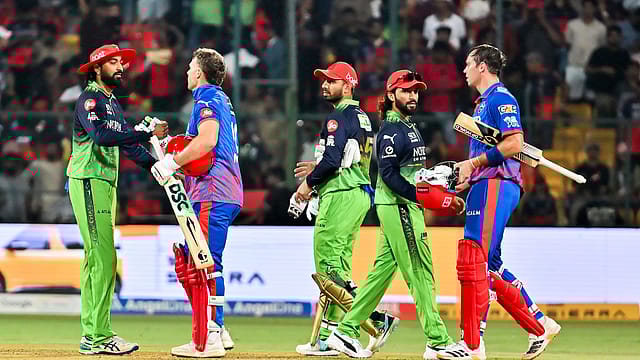
This clash in Bengaluru had all the elements of a classic IPL finish.
Chasing 176, Delhi Capitals looked in deep trouble early but recovered through composed batting before a final-over explosion sealed victory with just one ball to spare.
The momentum swung repeatedly. Royal Challengers Bengaluru had control during the powerplay and again in the death overs, but couldn’t close it out when it mattered most.
How did RCB set up their innings?
Batting first, RCB posted 175/8—competitive but not imposing on a batting-friendly surface. Phil Salt was the standout performer, scoring 63 off 38 balls and anchoring the innings while wickets fell around him.
Virat Kohli and Devdutt Padikkal got starts but couldn’t convert, while Tim David added a brisk 26. However, a sluggish finish—particularly from the lower middle order—meant RCB fell short of a 190-plus total.
Delhi’s bowlers shared the load, with Kuldeep Yadav, Axar Patel, and Lungi Ngidi picking up two wickets each to keep things in check.
Why did DC struggle early in the chase?
The chase began disastrously for DC. Bhuvneshwar Kumar produced a brilliant opening spell, reducing them to 18/3 within three overs.
Top-order batters Pathum Nissanka, Karun Nair, and Sameer Rizvi fell cheaply, leaving DC on the brink of collapse.

The BJP Nation
08 May 2026 - Vol 04 | Issue 70
Now all of India is in his thrall
At that stage, RCB seemed firmly in control.
How did KL Rahul and Tristan Stubbs rebuild the innings?
The recovery began with KL Rahul, who counterattacked smartly to relieve pressure. His 57 off 34 balls combined timing with calculated aggression, especially against the spinners.
At the other end, Tristan Stubbs played the perfect anchor role. While Rahul accelerated, Stubbs ensured stability, rotating strike and building partnerships.
Their stand brought DC back into the game, taking them past the halfway mark with momentum restored.
What changed after Rahul’s dismissal?
Rahul’s wicket at 87/4 could have tilted the game back toward RCB. Krunal Pandya struck at a crucial moment, and RCB’s bowlers tightened the screws.
For a stretch, boundaries dried up completely, with tight overs from Bhuvneshwar and Josh Hazlewood building pressure.
However, Stubbs held firm and gradually shifted gears, reaching his half-century and keeping DC within striking distance.
How did David Miller finish the game?
With 25 needed off two overs and then 15 off the final over, the game was still in the balance. That’s when David Miller stepped in.
Facing Romario Shepherd in the final over, Miller delivered a masterclass in finishing—smashing two sixes and a four to seal the chase with a ball to spare.
His unbeaten 22 off 10 balls turned the match decisively in DC’s favour.
What does this result mean for the points table?
The win lifted Delhi Capitals to fourth place with three wins in five matches, taking them to six points. Royal Challengers Bengaluru, despite the loss, remained second with eight points from six games.
Why is this match significant?
This game underlined the importance of composure in T20 cricket. DC showed resilience after a top-order collapse, while RCB’s inability to capitalise on key moments—especially in the death overs—proved costly.
It also highlighted the growing impact of finishers like Miller, who continue to redefine how chases are closed under pressure.
(With inputs from ANI)