Reluctant allies join SC march to show solidarity, oppose 'brutal' crackdown
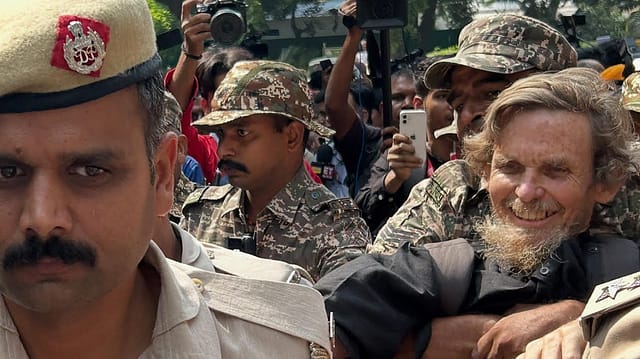
Several members of the I.N.D.I.A. bloc, which met on October 12 at New Delhi’s Constitution Club, one of their several meetings since September 30 to discuss alleged irregularities in the Special Intensive Revision (SIR) of electoral rolls conducted by the Election Commission of India (ECI), said they decided to take part in the march from Mandi House to the Supreme Court for the sake of unity of the anti-Bharatiya Janata Party (BJP) alliance.
At least three members who took part in the meeting said that they didn’t agree fully with the idea of marching to the apex court, especially after Chief Justice Surya Kant declined the request for a meeting with the bloc’s leaders, citing legal reasons and propriety.
“I am not in favour of marching to the Supreme Court because the CJI has not agreed to meet us. Had he agreed, that would have been fine. I am fundamentally opposed to this decision, but decided to go with the flow for the sake of opposition unity,” said one of the allies who took part in the march.

Zeroing In on ECI
09 Oct 2026 - Vol 05 | Issue 41
Constitutional legitimacy versus political opportunism
The bloc leaders wanted to submit a memorandum to Surya Kant over alleged ‘vote chori’ (theft).
After the I.N.D.I.A. bloc met on September 30 following an exposé by the Indian Express on the reported division within the poll panel, with two members questioning the authoritarian ways of its chief Gyanesh Kumar, they tried marching from Parliament to the Election Commission office (Nirvachan Sadan) on October 6 but were stopped by the forces and detained.
Congress leader Rahul Gandhi and Priyanka Gandhi Vadra were among those taken into custody by the police. On October 7, they met at the Sagar Ratna restaurant for lunch and a day later at Moets in Connaught Place, following which the Opposition leaders gathered at Mahatma Gandhi’s memorial at Rajghat for a sit-in protest.
The next day, on October 9, a 10-member I.N.D.I.A. bloc delegation met President Droupadi Murmu at Rashtrapati Bhavan, making a raft of demands, including the resignation of Gyanesh Kumar and rollback of SIR, among others.
The “Chalo Dilli” Supreme Court March today follows a series of assaults on young protesters, journalists and even senior leaders of allies by Delhi Police and CPRF forces after denying permission to the Cockroach Janata Party for holding a protest at Jantar Mantar on October 10.
Another leader of a party in the I.N.D.I.A. bloc told Open that he agreed to this march to the Supreme Court only because of what he described as a “brutal” crackdown on students as well as leaders, some of whom had not even broken the law.
“The forces, including the Delhi Police and other paramilitary entities, are behaving like occupying forces,” he said. For its part, the government had said that it wanted to stop the national capital from falling into anarchy.
Meanwhile, the Centre has announced that Jantar Mantar, which has been a designated protest area since the early 1990s, will no longer be a protest venue, but three others will continue to remain so.
Central Delhi has seen a massive deployment of forces notwithstanding a verdict by the Supreme Court in a special sitting on October 11 when it said that there shall be no action or detention of peaceful and unarmed people beyond the area where Section 163 BNSS prohibitory orders were in operation.The Opposition and the agitating youth led by CJP and Leftist student organisations such as SFI, AISF, AISA and others were met with force over trying to organise protests – many of them were reportedly carried away in vans, detained and beaten up. They hit the streets outraged also by what they describe as a blatant “lie” by the ECI that the modified Form 6, meaning the new declaration attached to Form 6, was approved by the Supreme Court’s May 2026 judgement on Bihar SIR. The court, however, has clearly stated that it did not approve it.