Garment Workers Clash With Police in Dhaka as Wage Protests Enter Fourth Day
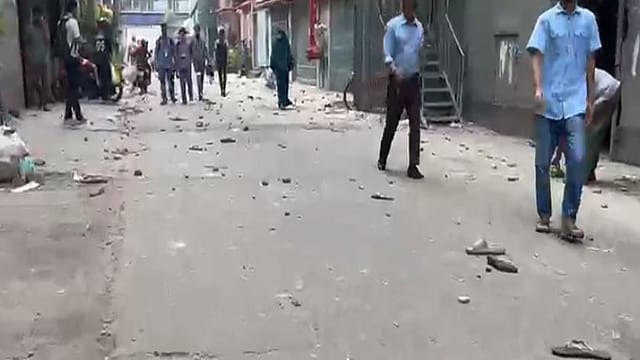
Garment workers and police clashed in Dhaka’s Mirpur area on Tuesday, the fourth day of protests over wages, with police firing tear gas and using baton charges to disperse crowds.
The clashes came hours after several factories, especially in Mirpur, partly resumed work in the morning and some workers returned. Tension flared again when workers came out of the factories and took to the streets. By the afternoon, the situation was described as more or less under control, with police patrolling the area.
A police officer told ANI at the spot that no garment workers were present and that those gathered were troublemakers trying to create instability.

The Era of Forever Wars
30 Oct 2026 - Vol 05 | Issue 44
Coping with an explosive Middle East
THE DEMAND
Workers are demanding that the minimum monthly wage be raised to 30,000 taka, about $241, from the current 12,500 taka. Kalpona Akter of the Bangladesh Centre for Workers Solidarity says workers actually earn about 13,000 taka a month. The protests have spread to industrial areas near Dhaka, including Gazipur’s Konabari and Chandra and the Ashulia belt, where thousands of workers blocked a major highway and set fire to a police vehicle on Monday. Several factory owners suspended operations out of fear of attacks.
THE GOVERNMENT’S RESPONSE
The government set up a minimum wage board on Sunday. The six-member board includes representatives of the government, workers and factory owners, and is to decide a new wage. The Home Minister, Salahuddin Ahmed, said the existing three-year wage review period ends in December and the revised structure would be determined through discussions.
Protesters have kept up the pressure despite the board, and labour leaders say their grievances go beyond it, citing inflation and rising household costs. “We were not prepared for this unrest either, as the wage board has already been formed,” Salahuddin said.
“INDUSTRIALISTS LINKED TO THE AWAMI LEAGUE”
After meeting leaders of the Bangladesh Garment Manufacturers and Exporters Association (BGMEA) and the Bangladesh Knitwear Manufacturers and Exporters Association (BKMEA) at the Secretariat on Monday, Salahuddin alleged that industrialists and factory owners linked to the former Awami League government were instigating the unrest, according to The Daily Star.
“Some of them were MPs, ministers or state ministers at different times. We have information that these industrialists are behind the unrest, and it has been established,” he said.
He claimed that supporters of the ousted regime were using workers to cause instability through highway blockades, arson and violence, and that some people acting under the banner of labour groups were involved. The government has video footage, audio recordings and other evidence, he said, and some individuals have already been brought to justice.
Salahuddin also alleged that some owners had deliberately shut their factories to inflame the situation. BGMEA and BKMEA leaders agreed to give the government a list of factories closed with ulterior motives, and the authorities sought details of labour leaders and groups suspected of inciting the unrest. Genuine garment workers and their organisations were not involved in the violence, the minister said, since they would not risk their livelihoods.
The government had first tried dialogue despite intelligence warnings of possible unrest, he said, but law enforcement agencies have now been told to act firmly against attempts to incite violence or disrupt order.
FACTORIES CLOSED, ORDERS FALLING
Factories in Gazipur and Kaliakair that had been shut for a day reopened on Monday, Salahuddin said. Several other units remain closed for reasons he said were unrelated to the protests, including financial difficulties and falling export orders. Labour and Employment Minister Ariful Haque Chowdhury has warned that prolonged closures could delay shipments and payments from international buyers.
WHY IT MATTERS
Bangladesh is the world’s second-largest garment exporter after China, and the industry employs millions and generates most of the country’s export earnings. It has a history of wage unrest. After clashes in 2023, the government raised the minimum wage from 8,000 to 12,500 taka, with effect from December 1 that year, well below the 23,000 taka unions had sought, which they rejected as inadequate. A smaller increase, from 5,300 to 8,000 taka, followed protests in 2018 and 2019.
With inputs from ANI