Delhi Opposition Rally: Can Ramlila Maidan Crowds Translate Into Votes Against BJP?
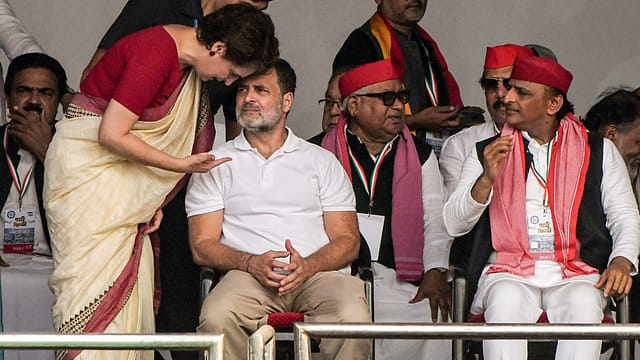
The gathering at New Delhi’s Ramlila Maidan on Sunday was impressive by any measure. The number of political parties participating in the show of strength testified Opposition unity even as the crowd turnout tested the limits of what could be packed in that space in Central Delhi.
From the perspective of the organizers, the show marks another turn of the political screw against the BJP-led government at the Centre. The timing of the show was odd as national elections are 2.5 years away, but the rally was understandable: unless pressure is ratcheted almost on a daily basis, there is no reasonable hope to keep the BJP at bay.
To that end, such shows are part of the emerging division of labour among Opposition parties: the established parties do the “big ticket” things such as large rallies, while the “new” parts of the coalition, such as the “cockroaches” and the young brigade of the All-India Students’ Association (AISA) provide the street-level numbers needed to build the political momentum.

The Era of Forever Wars
30 Oct 2026 - Vol 05 | Issue 44
Coping with an explosive Middle East
So far so good.
The trouble is that the metric of success is not street-level mobilisation or even a large one in the National Capital. It is the ability to wrest power from the ruling coalition. There is no sign of that. In fact, there has been none since 2014. The Opposition keeps on winning at the states level but has never come anywhere close to muscling the requisite numbers in the Lok Sabha. The results of the recently concluded elections to the second chambers of various state legislative assemblies are pointed as a signal of changing times. That is a poor measure of what is needed. Comparing a handful of those seats against the mass of victories in Parliamentary elections is delusional. But that is ok: big goals often have a delusional start.
If such comparisons are the be made, then the other side of the political ledger should also be tallied. There, the political equation changes. In May, the BJP pulled off a shock win in West Bengal and formed the government there after defeating the erstwhile Trinamul Congress (TMC)—now splintered into different factions—a victory everyone thought was the stuff of dreams.
At the level where politics matters, the electoral level, the story is very different. It remains relatively unchanged and has been so for a long time.
Instead, the show at Ramlila Maidan showed teeming hurry to dislodge the BJP by any means. A day earlier, the Chief Election Commissioner (CEC), Gyanesh Kumar, was “impeached” in a mock Parliament. This is the stuff of psychological projections and not politics geared for change. If Kumar has to be removed, then the forum is Parliament and not some mock representation of it. Speaking in Lucknow on Friday, Union Home Minister Amit Shah said the government was ready to discuss the issue in Parliament. But the Opposition is unlikely to do so. It is understandable why: there must be a beyond reasonable ground to kick off impeachment proceedings against the CEC. The Opposition does not have what is necessary to do that. Hence the kangaroo-court like mock proceedings outside Parliament.
The trouble for the Opposition is not mustering numbers—the show at Ramlila Maidan and the street-level anarchy by AISA and the cockroaches testifies that—but lies in convincing Indians to change their opinion at the electoral level. On that front, there is nothing but failure. Why the Opposition has been unable to do that is a longer story. That inability is the real reason for the failure. Blaming constitutional functionaries for some imaginary crimes will not further the Opposition’s cause.