Besides Muslim consolidation, poor succession planning also hurt the Left in Kerala: Scholar
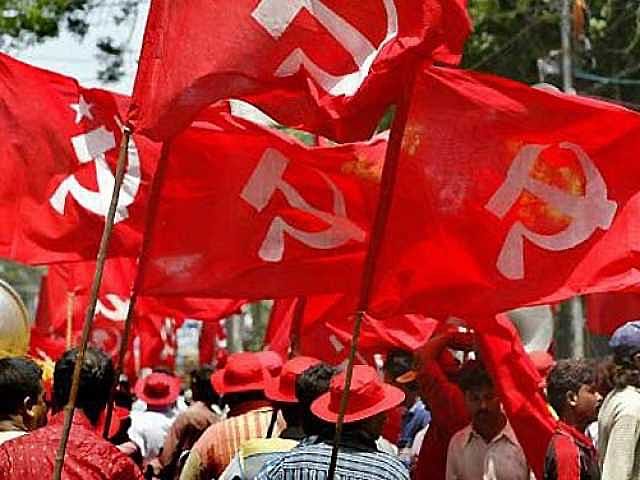
Dr Ravi Raman, author and member of the Kerala State Planning Board, speaks to Open about a subject right up his alley: the Indian Left. Formerly a senior fellow at the Nehru Memorial Museum and Library, Raman reflects on the achievements and crises confronting the Left movement, both nationally and in Kerala. Discussing the decline of the Indian Left, he argues that a revival is more plausible in Kerala than in former bastions such as West Bengal and Tripura, owing to a range of historical and political factors.
Raman, who co-authored Kerala, 1956 to the Present: India’s Miracle State with Tirthankar Roy, laments the absence of a coherent secular political project capable of countering the Hindutva movement. At the same time, he believes declarations about the demise of the Left in India are premature. “The Left movement in Kerala was built around a campaign to redress inequality and advance egalitarianism, drawing inspiration from renaissance ideals of freedom, justice and equality,” he says.
A former visiting fellow at the University of Oxford, the University of Cambridge and the University of Manchester, Raman argues that the Left in Kerala is likely to recover faster because it possesses deeper institutional roots, stronger grassroots organisational strength, and a less violent political culture than its counterparts elsewhere. He was an honorary research fellow in the Department of Development Studies at SOAS University of London, an affiliated researcher on Egalitarianism at the University of Bergen, and a visiting research fellow at the Centre for Development Studies. Edited excerpts from the interview:
What does the Left’s diminished electoral presence following the setback in Kerala signify, not only as a political force but also as an intellectual one?

Open Minds 2026
26 Jun 2026 - Vol 05 | Issue 26
The power of ideas and arguments in 50 portraits
It was undoubtedly the “New Left” that was responsible for the second turnaround of the Kerala economy (the first being in the 1980s, driven by remittances), with the old Left being reimagined in terms of strategies by embracing ideology as an organising principle rather than as a fantasy. The outcome was straightforward: the state’s per capita income rose to more than fifty per cent higher than the national average; it ranks at the top in almost all sustainable development indices, runs extensive welfare programmes, and, more importantly, established a combination of infrastructure and private investment that generates employment, including for educated youth. Yet, the Left government faced a massive setback in the Assembly elections. The single most important reason for the defeat is the increased consolidation of minority communities along religious lines -- Muslims and Christians locking arms -- and their unilateral rallying behind the UDF, thereby ending the small possibility of the Left regime returning with a hat-trick victory.
While cause-and-effect dialectics do not work all the time, the Left cannot deny its own role in attracting this minority consolidation, as it has not been keen on cultivating a coherent secular political agenda and, more importantly, has promoted its own brand of soft Hindutva, which played a role in alienating minorities. Several other reasons for the defeat of the Left Front must also be considered, including the silent revolt from within the party’s supporters, including cadres, and a significant section of subaltern groups who demanded what was due to them, both materially and politically. A number of other factors contributed to the defeat, including poor candidate-selection strategies, an arrogant leadership at all levels (including branch and local levels), and a democratic deficit in everyday functioning. This does not, however, mean that the Left has lost its political power or intellectual energy forever.
Both West Bengal and Kerala could be affected by the absence of politics proper, but Kerala’s Left is more institutionalised and embedded in civil society since the formation of the state, so Left forces are likely to survive and regenerate. This is particularly because the Left in Kerala tends to become more politically active when in opposition. It is also worth noting that while leftist ideology has been on the wane across the world, Kerala remained an exception, and for good reason. The Left movement in Kerala was built around a campaign to redress inequality and advance egalitarianism, drawing inspiration from renaissance ideals of freedom, justice, and equality. From the start, the movement’s leaders understood that inequality in this part of India was not based on class alone, but on class mixed with caste-based discrimination and deprivation. However, they did not always agree on what the response should be. That agenda made the Communist Party in the state different from its counterparts elsewhere. This distinctive feature of the movement was one reason behind its endurance. But as its agricultural base declined, the old voting trends no longer held, and the class politics based on the needs of workers and peasants could not be sustained, as has been noted in my joint work with Tirthankar Roy. When the agenda of land reforms had run its course, the only option open to the party was to reinvent itself in terms of strategies and programmes -- and that is what happened in Kerala, to the benefit of the entire economy, thanks to the way in which the Left was reimagined.
What are the key reasons for the Left’s long-term decline in India?
There are three reasons. Firstly, the Indian Left fails to recognise that economies differ from state to state, and that a one-size-fits-all strategy is not politically sound. This is particularly true in the case of West Bengal and Kerala, which are two economies with varying levels of development and widely differing party formations. While the party in West Bengal is generally under the grip of the urban bhadralok, in Kerala it is structurally and socially more spread out, without any discernible rural-urban divide, and draws its vote share from marginalised communities, workers, and peasants, primarily from communities such as the Ezhavas, Dalits, and Adivasis. Yet the increasing servitude of the party in Kerala to caste Hindus – broadly, a caste Hindu bias -- generates its own contradictions, reflecting skewed power relations that extend to almost all institutions, public, aided, and private alike, not sparing even the cabinet, the political and legal decision-making body. This further reinforces the weaknesses of the party owing to the absence of any coherent and consistent notion of secularism as the ultimate political project.
Secondly, the very idea of treating ideology as something only to be imagined has cost the Indian Left its comparative advantages in states with differing issues, despite some significant and impactful initial interventions. In West Bengal, the move towards an investment-friendly political strategy was opposed by Mamata Banerjee, but the absence of investments left the present generation jobless, and this eventually hurt Mamata as well. It is also true that Hindutva strategies, including the manipulation of SIR, played a key role in the continuous annihilation of the Left in West Bengal. The erstwhile Left Front government in West Bengal completely missed the fact that the old Left agenda of discouraging private capital investment was becoming obsolete globally and regionally. More importantly, it failed to learn from the Left in Kerala, which had been experimenting with and reinventing itself as the New Left. Kerala’s Left, however, has now suffered defeat too, though for different reasons, as cited above.
It is important to look beyond economic intelligence alone and recognise the importance of cultural intelligence in political strategising. This should have prompted the communists to avoid alienating minorities through their failure to maintain a coherent secular political project capable of countering Hindutva majoritarianism in cahoots with corporate oligarchies. This requires, first of all, a deeper understanding of the realities of caste life in India — not class life alone — and the power relations associated with it, because it is in this context that actual oppression and underrepresentation operate. “Love the lefties” — as I call the potential emerging movement for regenerating Left forces — could become meaningful only when the Left is ready to address caste realities and their gender intersectionalities in varying forms. For this, a combined reading of Ambedkar, Marx, Ayyankali, Sree Narayana Guru, Vakkom Maulavi, and other renaissance texts becomes important.
Third, again in the context of Kerala, another strategic deficit was the absence of meaningful succession planning within the Left, compelling the party to project an 82-year-old as its future chief minister and leader, however impressive his past leadership may have been. Pinarayi Vijayan worked diligently for the people of Kerala for an entire decade, but in the absence of proper advisory resources and secular intellectual insiders, neither were his thoughts adequately directed against the corporate-Hindutva state nor effectively negotiated with emerging identity-driven politics from Left perspectives. As the party failed to engage in meaningful succession planning -- a challenge likely to continue haunting it -- it carried on relying on an ageing stalwart. This reflects more on the party and coalition than on Pinarayi himself.
As we argued in my book Kerala, 1956 to the Present, jointly written with Tirthankar Roy of the LSE, global capitalism helped communism in two ways. First, in the 2000s, the revival of regional market activities as part of global market expansion delivered greater revenues to the state, improving its financial capacity. Second, from the 2000s onwards, the state had more space to prioritise infrastructure development without reducing social-sector expenditure because private providers were also contributing to education and health. Private schools, engineering and management colleges, hospitals, and medical service providers expanded so rapidly that the state could focus more on corruption-free governance and decentralised planning, making inclusive development more sustainable and democratic. In my view, Kerala’s Left should develop its own form of democratic socialism that combines the economic rationality of “hybrid developmentalism” — high social development combined with state-of-the-art infrastructure — with the cultural rationality of representative democracy on equal terms. While the first is being realised, the second remains long overdue.
How can the Left regain some of the influence it has lost over time? More broadly, has there been a persistent absence of a coherent secular political project capable of countering the Hindutva project?
Yes, there has been an absence of a coherent secular political project capable of countering the Hindutva project, and this owes partly to the Left’s belief that social change can be achieved only by acquiring power. It has yet to realise its potential as an opposition force. Because the Left in Kerala has deeper institutional roots, stronger grassroots organisational power, and a non-violent political culture compared with elsewhere, it is likely to recover faster. However, if it does not reconstruct existing power relations, it will fail to make politics truly political. In contrast to West Bengal, Kerala does not suffer from a major problem of political violence, thanks to high levels of literacy and the presence of a substantial middle class. A return is therefore always possible, and much depends not only on the Left’s own reinvention but also on the credibility of the Congress-led coalition, its governance record, and whether people come to see the Left once again as a coherent secular political project.
Kerala’s Left politics now faces a complex route to revival and rejuvenation. In contrast to the decades-old bipolar politics of the state, there is now a third force: the Hindutva-driven BJP. Securing three seats in the Assembly polls is not insignificant, as it has opened up the possibility of a tripolar contest for the first time in Kerala’s history. More importantly, this comes at a time when the BJP is also making gains in the former Left bastion of West Bengal. The future therefore depends on how effectively the Left can accommodate minorities within its fold. It is now clear that minorities in Kerala consolidated behind the UDF, while a significant section of traditional Ezhava votes also distanced themselves from the party and moved towards the BJP. The LDF must recognise the importance of regaining the confidence of minorities and traditional supporters by offering them a safe and dignified political space. This can only be realised by sharing power with them — not exercising power over them — and by extending the same principle to subaltern identities through a broader vision of enlightened secularism, where different faiths coexist peacefully while aiming for a higher level of human existence.
If the Left is genuinely interested in regaining the trust of alienated minorities, it must once again undertake a radical reinvention. This time, however, it should begin with recognising caste life as the single most important social reality in India — a foundational epistemic priority. That recognition could lead to nothing less than a movement for a comprehensive caste census, which would expose the otherwise hidden contradictions embedded in existing power relations.