Lakmē Fashion Week: Is Indian Fashion Really Reinventing Craft?
Fashion loves a heritage story. Handwoven silk, intricate embroidery and traditional techniques offer designers a ready vocabulary of Indian identity. But putting craft on a runway is one thing; making it relevant to consumers, commercially viable for brands and economically rewarding for artisans is another.
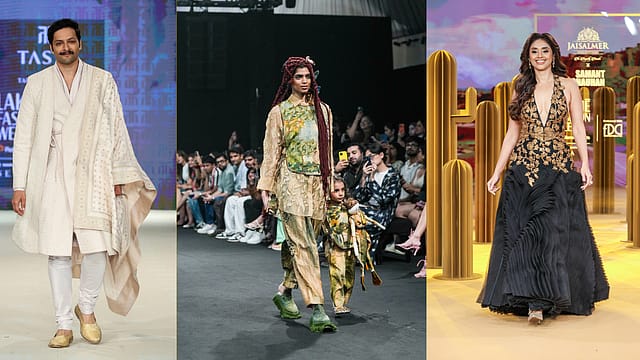
At Lakmē Fashion Week in partnership with the Fashion Design Council of India (FDCI), held in New Delhi from October 13 to 18, 2026, that distinction emerged across several showcases. Tasva by Tarun Tahiliani reworked traditional menswear for modern weddings, Anurag Gupta explored water hyacinth as a craft material, and TIL experimented with discarded textiles. A collaboration between designer Samant Chauhan and Jaisalmer Indian Craft Gin extended the idea of craftsmanship into luxury experiences.
The approaches were different, but each raised a question beyond aesthetics: what happens when heritage becomes both a design resource and a selling point?
Does the modern groom want something different?
For Tasva by Tarun Tahiliani, the starting point was the Indian groom's changing wardrobe. Its collection, presented with actor Ali Fazal as showstopper, combined classic sherwanis with dinner jackets and Indo-Western ensembles. Asymmetrical details and sharper tailoring updated familiar silhouettes, while Aari work, Zardozi, mirror work, appliqué and pearl embellishments retained the richness associated with Indian occasionwear.

Zeroing In on ECI
09 Oct 2026 - Vol 05 | Issue 41
Constitutional legitimacy versus political opportunism

The colours ranged from ivory, lilac, salmon and jade for daytime celebrations to deeper jewel tones for evening functions. References to the Tree of Life, Lipan Art and paisleys appeared in floral and geometric patterns.
Designer Tarun Tahiliani said the aim was to make occasionwear relevant to how men dress and celebrate today.
“This collection brings together the beauty of traditional craftsmanship with a more contemporary understanding of silhouette, comfort and individuality,” he said.
The proposition is easy to understand. Indian weddings involve multiple functions, and a groom's wardrobe must often accommodate different settings. But more contemporary silhouettes do not necessarily mean a fundamental change in buying behaviour. Are consumers seeking clothes they can wear again, more comfortable alternatives to conventional ceremonial attire, or simply more options for the wedding calendar?
The distinction matters to brands competing in the occasionwear market. A collection can offer more variety without necessarily changing the reasons people buy expensive wedding clothes. The real test lies in whether design changes translate into greater utility, a stronger preference for the brand or a willingness to pay for its interpretation of tradition.
Sunil Sethi, chairman of FDCI, described Tasva's collection as a dialogue between India's sartorial heritage and the changing preferences of the modern Indian man. The dialogue is visible on the runway. Whether it translates into a lasting shift in the consumer's wardrobe is a question the collection alone cannot answer.
Can an environmental problem become a business opportunity?
Anurag Gupta's Artisanal collection began with a less conventional material: Jalkumbhi, or water hyacinth. Rooted in his hometown of Biskohar in Uttar Pradesh, the collection used the plant to explore raw woven textures, structured tailoring and architectural silhouettes.
Water hyacinth is invasive in many Indian water bodies, making its use in craft an intriguing proposition. Turning it into a usable material could connect environmental management with artisanal production. But the journey from an interesting raw material to a commercially viable textile involves questions of processing, consistency, durability, cost and supply.
Gupta's presentation was linked to Project Biskohar, an initiative intended to create alternative livelihoods for women through craft-based employment and skills development.
The idea carries a social ambition, but its success cannot be measured by the collection's appearance alone. How much material can be processed? Can production generate reliable incomes? Will brands place repeat orders, and will consumers accept the finished products at a price that supports the makers?
These are the questions that separate a promising design experiment from a sustainable business model.
TIL, led by designer Ankur Verma, approached material reuse from another direction. Its collection, STILL BECOMING, drew inspiration from moss and the changing human body, using discarded threads and fabric remnants to create textured surfaces and intricate textile landscapes. Children also walked the runway, reflecting the collection's themes of growth and individuality.
Repurposing textile waste offers designers another source of material, but the word sustainable should not end the discussion. Collecting, sorting and reworking discarded fabric can require considerable labour. The environmental benefit also depends on what material is reused, how it is processed and what it replaces.
The commercial question is equally important: will consumers pay for products made from reclaimed textiles, and can designers produce them consistently without costs becoming prohibitive?
Gupta and TIL are working with different materials, but their collections point to the same gap between concept and execution. Fashion week can demonstrate what is possible. Proving that it works at scale requires evidence beyond the runway.
When heritage becomes a luxury selling point
Craft also provided the basis for a collaboration between Samant Chauhan and Jaisalmer Indian Craft Gin, a brand from Radico Khaitan.
Chauhan has worked with Bhagalpur silk since establishing his label in 2006, adapting the region's weaving traditions for contemporary silhouettes. At fashion week, the partnership brought together his textile heritage and Jaisalmer's Indian botanical identity through a Crafted Bar and special collectibles.
The gin uses 11 botanicals, seven sourced from India, including Darjeeling green tea, lemongrass and cubeb pepper. The collaboration connected the ingredients and their provenance with Chauhan's work in textiles, extending the craft narrative from clothing to hospitality.
For Kunal Madan, chief marketing officer at Radico Khaitan, the association offered a way to build connections beyond the product itself.
“Our collaboration with Samant Chauhan brings together two worlds that share a deep appreciation for detail, provenance and the stories behind what we create,” he said.
Chauhan, meanwhile, emphasised the people behind the textile. “Bhagalpur silk represents a living tradition, sustained by the knowledge and skill of its weaving communities,” he said.
For brands, such collaborations can help distinguish a product in a crowded premium market. Provenance, cultural associations and design can give consumers additional reasons to engage with a brand. But there is a difference between drawing attention to a craft tradition and creating lasting value for the people who sustain it.
Does the partnership deepen awareness of Bhagalpur's weaving heritage, or does the heritage primarily lend cultural appeal to a luxury experience? The answer depends on what the collaboration delivers beyond the event, including its visibility for the craft and the benefits accruing to its practitioners.
Beyond the runway
The four showcases illustrate different ways of working with Indian craftsmanship. Tasva seeks to update occasionwear, Gupta experiments with an unconventional material, TIL explores textile reuse, and Jaisalmer and Chauhan bring craft into a luxury collaboration.
But innovation is not established simply by using traditional techniques, unfamiliar materials or the language of sustainability. Nor does a designer's intention automatically translate into consumer demand or social impact.
The next test is commercial and practical. Will consumers buy the products? Can brands produce them at viable costs? Can material innovations move beyond limited collections? And will artisans and local communities benefit as their skills become part of a larger fashion business?
India's craft traditions offer designers a deep reservoir of techniques and materials. The opportunity lies in finding new uses for them. The harder task is ensuring that reinvention amounts to more than a fresh aesthetic or a persuasive marketing story.