Performative Politics: Steel in her writing and softness in her hospitality
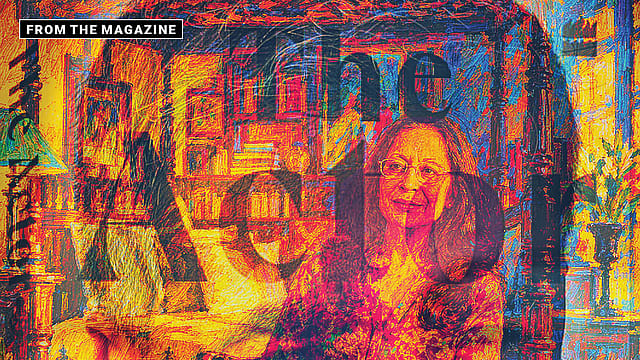
I first met Tavleen Singh through my own column in the Indian Express. She read it, shared it generously and encouraged my writing. Then she invited me, a stranger she had come to know through the page, to her home for a meal.
I came alone and was welcomed with instinctive, generous warmth. Tavleen is principal-like, exacting and tough-minded; she is also a woman who loves dogs, cooking, good conversation and spirited exchange. I encountered something larger than gracious hosting: a Punjabi-ism, a Sikh hospitality, a diler welcome offered with an unfettered heart and soul. You can hear it in her voice, see it at her table, feel it in the warmth with which she invites you back. The invitation is not merely polite. It is a way of making room.
Knowing I lived alone in Bombay, she made sure I knew there would always be a place for me, in Delhi or over a meal in Bombay. Parathas or something elaborate, lunch or dinner—the details mattered less than the feeling: come, sit, eat, talk. Her generosity leaves you feeling received.
We did not meet her son, but she spoke of him with a mother’s fierce tenderness. She advised me that the next time I negotiated a column, I must keep the headline in my own hands, not surrender it to a newspaper or magazine. A headline, she said, could make a piece salacious when the column itself was nothing of the sort. She felt the treatment of her son’s writing had taken something from his life. I have carried her advice with me. A writ er’s words matter; so does the frame some one else puts around them.
That conviction—that words can wound, distort and defend—runs through Tavleen’s columns. She has been especially unsparing about Congress, returning to the 1984 killing of Sikhs in Delhi as a moral failure that, in her view, made the party’s claims to secularism ring hollow. But her politics cannot be reduced to that wound. She has also criticised dynastic power, poor governance and the old political establishment. She once welcomed Narendra Modi as a possible break with that order. In recent years, she has turned a sharp eye on his government too, criticising hate speech, the treatment of dissent and the weakening of democratic life. She calls herself proudly secular, insisting secularism must be honest and consistent.
Now, in her first novel The Actor, she takes these questions into fiction. Amit Singh, a Bollywood star whose career is faltering, is drawn into politics by his childhood friend Naresh, who is trying to build a new party in a future India tilting towards religious autocracy. Amit’s education takes him beyond celebrity, into villages and lives glamour keeps out of sight. The novel asks what happens when the performance of power overwhelms democracy—and whether a man trained to act can learn to take a stand.
Tavleen says the imagined prime minister is not Narendra Modi, though the novel warns of where India might be headed. Beside her columns, the book carries forward her abiding concern: power must be questioned, and opposition must offer more than inherited names and old slogans.
But I remember most clearly the woman who read my work, urged me to protect its title, and opened her home and table to me. There is steel in her writing and softness in her hospitality. Both are real. Both belong to Tavleen Singh.