Why India’s Snakebite Crisis Keeps Claiming Young Lives
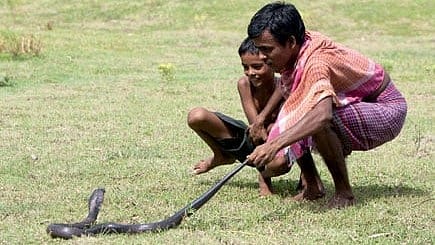
They were asleep when the snake struck. Three tribal schoolgirls died after being bitten by a venomous snake while sleeping on the floor of their residential school hostel in Maharashtra’s Gadchiroli district. Three other girls were hospitalised, according to reports, and the incident has triggered an investigation into conditions at the school.
The Maharashtra government has since moved against the school, with reports saying its recognition has been revoked and action initiated against those responsible for its management. But the tragedy is bigger than one hostel, one snake or one night. It puts the spotlight back on one of India’s most persistent yet under-recognised public-health problems: snakebite.

Rise of the Pivotal Power
18 Sep 2026 - Vol 05 | Issue 38
The BRICS declaration is a strategic victory for Modi
Why are snakebites such a big problem in India?
Because risk and vulnerability overlap. Snakebite disproportionately affects people in rural communities, agricultural workers, children and families living in poorly constructed housing, according to the World Health Organization. Limited access to healthcare makes the consequences worse. WHO cites a nationally representative study that estimated around 45,900 snakebite deaths annually in India, although under-reporting remains a major problem because many victims never reach hospitals or health centres.
Why are children particularly vulnerable?
Body size matters. WHO says children can suffer more severe effects from the same quantity of venom because of their smaller body mass. Young people and children in underprivileged rural areas also suffer disproportionately because of poor access to healthcare and appropriate antivenom. The Gadchiroli tragedy adds another dimension: living conditions. The girls were reportedly sleeping on the floor when they were bitten.
Why can reaching a hospital become a race against time?
Venomous snakebites can rapidly cause paralysis, severe bleeding, kidney failure and extensive tissue damage. Effective antivenom can prevent or reverse many of those effects, but WHO says access remains inadequate in many places. Distance from healthcare, poor infrastructure, lack of appropriate antivenom and delays in seeking medical treatment can turn a survivable bite into a fatal one. That is why snakebite is as much an access-to-healthcare problem as a wildlife problem.
Does India have the right antivenom?
India’s antivenom strategy has traditionally focused heavily on the “Big Four”: the common krait, Indian cobra, Russell’s viper and saw-scaled viper. WHO says these four species account for around 90% of snakebites in India. But the broader challenge includes ensuring the right antivenom is available where it is needed, maintaining quality and getting patients treated quickly.
How big is the global snakebite crisis?
Enormous. WHO estimates that 4.5 million to 5.4 million people are bitten by snakes each year. Around 1.8 million to 2.7 million develop envenoming, while 81,000 to 138,000 die. Hundreds of thousands more are left with amputations or permanent disabilities. WHO formally placed snakebite envenoming on its priority list of neglected tropical diseases in 2017. That word, neglected, matters. The people most likely to be bitten are often precisely those with the least access to rapid, high-quality healthcare.
What is India doing about it?
India has a National Action Plan for Prevention and Control of Snakebite Envenoming, aligned with the broader goal of reducing snakebite deaths and disabilities by 50% by 2030. The strategy recognises that the answer cannot simply be “more antivenom”. It requires better surveillance, quicker referral and treatment, stronger health systems, community awareness and improved access to effective care. And that brings the story back to Gadchiroli. Three children went to sleep in their school hostel. They never imagined that where they slept, how quickly help could reach them and whether the system around them was prepared for a snakebite could become questions of life and death. That is why this is more than a freak tragedy. It is a reminder of why snakebite remains one of India’s most unforgiving rural health emergencies.
(With inputs from yMedia)