India’s Growth Outlook Rises to 7%, But Will Your Pocket Benefit?
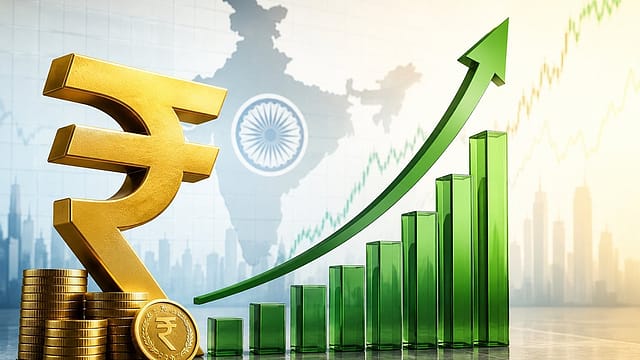
India’s economy is expected to grow faster than previously anticipated, but a stronger GDP forecast does not necessarily mean more money in people’s pockets. The latest projection from S&P Global offers a reason for optimism about economic activity, while raising a more immediate question for households: will the benefits of growth keep pace with the cost of everyday life?
S&P Global has raised its forecast for India’s gross domestic product (GDP) growth in FY27, the financial year ending March 31, 2027, to 7 per cent from 6.6 per cent previously. The revision follows stronger-than-expected economic performance in the April-June quarter, supported by robust industrial activity, healthy consumption, strong goods exports and accelerating government investment.

Losing Memory
16 Oct 2026 - Vol 05 | Issue 42
The making of a medical and social emergency
But the agency expects growth to ease in the second half of the fiscal year as the benefits of GST rationalisation and income tax cuts fade. It has also flagged risks from below-normal rainfall, higher energy prices and food inflation, while anticipating a possible interest rate increase.
For households, the distinction matters. GDP measures the expansion of economic activity across a country, but it does not tell the whole story of what people can afford. That depends on how incomes, employment, prices and borrowing costs move alongside growth.
The 7 per cent projection is therefore not a promise of immediate financial relief for every household. It is an indication of economic momentum, with the impact on everyday finances depending on how that momentum translates into earnings, prices and spending.
A growing economy does not automatically mean a fuller wallet
The June-quarter performance provides the foundation for S&P Global’s upgraded outlook. Strong consumption, industrial activity, exports and government investment helped the economy perform better than the agency had anticipated.
Consumption is particularly relevant because it reflects demand for goods and services. When people spend, businesses receive revenue, which can support production and economic activity. Investment in infrastructure and industry can also generate demand across sectors, while exports contribute to economic output.
However, the benefits of growth do not reach every household in the same way or at the same time. A growing economy can create opportunities for businesses and workers, but the impact on individual incomes depends on where growth occurs, how employment develops and whether earnings rise alongside prices.
This is why the second-half outlook deserves attention. S&P Global expects some of the benefits from GST rationalisation and income tax cuts to fade as FY27 progresses.
Tax relief can leave households with more disposable income or reduce the tax burden on certain purchases. The extent of the benefit, however, varies according to income, spending patterns and eligibility. If the initial boost to consumption weakens, businesses may also face a different demand environment.
The agency’s forecast does not establish that household spending will fall. Rather, it suggests that some of the support behind recent economic activity may become less pronounced.
Why oil and food prices could matter more than the GDP number
For many households, the more immediate economic question is not how quickly GDP is growing, but how much everyday essentials cost.
S&P Global has identified higher energy prices as an inflation risk for India. When international oil prices rise, the effects can extend beyond fuel itself, influencing transportation and production costs. How much of that increase reaches consumers depends on market conditions, pricing decisions and government policy.
Food prices present another uncertainty. S&P Global noted that cumulative rainfall was 15 per cent below normal through September 9, 2026, identifying agricultural output and food inflation as key variables to watch.
A weaker monsoon can affect agricultural production, although the eventual impact depends on rainfall distribution, crop conditions, irrigation and other factors. The rainfall shortfall alone does not establish that food prices will rise sharply.
S&P Global also warned that El Niño could add to food-price pressures. At the same time, it said preparedness measures could prevent acute supply shortages and limit the broader economic impact.
For households, the concern is purchasing power. If the cost of essentials rises faster than income, families may have less room in their budgets for discretionary spending, even when the broader economy is expanding.
That is the disconnect at the heart of the growth story: a higher GDP forecast can coexist with financial pressure for some consumers.
Could a stronger economy also mean costlier loans?
S&P Global expects the Reserve Bank of India to raise its policy rate by 25 basis points in the remainder of 2026. The agency links the prospect of monetary tightening to higher energy prices, inflationary pressure and currency concerns.
A basis point is one-hundredth of a percentage point, so 25 basis points equals 0.25 percentage points.
The report also points to developments beyond India. Several Asia-Pacific central banks have raised policy rates in 2026, while interest rates across the region remain below US levels. S&P Global says this leaves economies vulnerable to capital outflows as US interest rates rise.
It noted that the currencies of India, Indonesia, the Philippines and Thailand had depreciated by more than 5 per cent through mid-September, despite easing depreciation pressures across the region in the third quarter.
A weaker rupee can make imported commodities such as oil more expensive in domestic currency terms, potentially adding to inflation. This creates a challenge for monetary policymakers, who must weigh price stability against the need to support economic activity.
For borrowers, the possible impact of higher policy rates depends on how banks and lenders respond. A policy rate increase does not automatically translate into an immediate rise in every loan’s interest rate. The effect depends on the type of loan, its benchmark, reset schedule and the lender’s decisions.
Nevertheless, higher borrowing costs could affect households with floating-rate loans if lending rates rise. They could also influence decisions about taking new loans for homes, vehicles or other purchases.
S&P Global cautioned that higher inflation driven by elevated oil prices and greater currency pressure from rising US interest rates could lead to larger rate increases than it currently anticipates.
What the 7% forecast means for households
The latest S&P Global projection offers a stronger outlook for India’s economy, supported by better-than-expected activity in the June quarter. But the forecast also highlights why headline growth alone cannot answer whether households will feel better off.
The second half of FY27 will bring several variables into focus: whether consumption remains resilient as tax-related benefits fade, how agricultural output responds to monsoon conditions, whether oil prices add to inflation and how monetary policy responds.
For households, the practical test will be whether earnings and employment opportunities improve enough to keep pace with everyday costs and borrowing expenses.
India’s growth outlook has improved. Whether that improvement reaches people’s pockets will depend not only on how much the economy produces, but also on what households earn, what they pay and how much they can afford to spend.
(With inputs from ANI