Beyond Basmati: What India’s 200-Variety Rice Showcase Wants to Achieve
A buyer arrives looking for Basmati. Could that visit end with an enquiry about Manipur’s black rice, Assam’s Joha or Kashmir’s Mushbudji?
That is the opportunity Indian rice exporters hope to create with a Global Rice Archive at the Bharat International Rice Conference (BIRC) 2026. Scheduled for October 23–25 at Bharat Mandapam in New Delhi, the showcase will bring together around 200 commercially relevant Indian and international rice varieties, according to the Indian Rice Exporters’ Federation (IREF).
The ambition is to expand the range of Indian rice that overseas buyers consider purchasing. Here is how the proposed showcase is meant to work—and what will determine its commercial value.
What exactly is the Global Rice Archive?
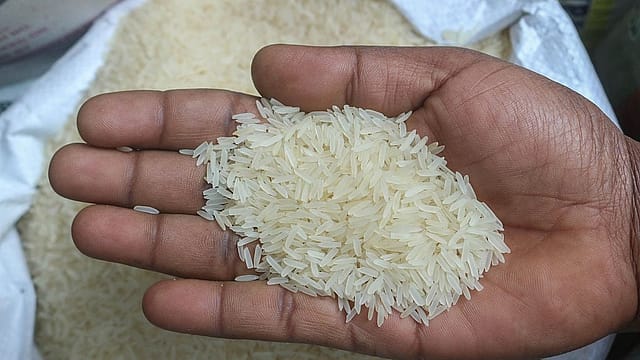
It is a planned display that will allow buyers to compare rice by grain characteristics, appearance, processing format and origin before meeting exporters and producers. Developed around the theme “200 Varieties. One Cultural Landscape”, it will be one of nine Experience Zones at BIRC 2026. Despite its name, the initiative described by IREF is primarily an exhibition and product-discovery platform. The announcement does not establish it as a scientific seed bank or a long-term conservation facility. Each selected grain will be displayed individually in miniature jute sacks and traditional weighing scales, or tarazus.

Zeroing In on ECI
09 Oct 2026 - Vol 05 | Issue 41
Constitutional legitimacy versus political opportunism
Why look beyond the varieties buyers already know?
IREF wants buyers who currently purchase a limited selection of Indian rice to explore speciality, aromatic and non-Basmati offerings suited to their markets. “Rice is purchased not only by price but by grain characteristics, cooking behaviour, cuisine and consumer preference,” said Dev Garg, speaking on behalf of IREF. The commercial argument is that different buyers need different grains. Putting more options before them could help exporters find demand for varieties that receive less attention in existing trade relationships. That remains an intended outcome. The announcement does not provide export targets or confirmed orders arising from the archive.
Which Indian grains will feature?
The commercial offerings will include Basmati entries such as 1121, 1718, 1509 and 1401, alongside rice sold as Sugandha, Sharbati, PR-11, PR-14, Parmal and Sona Masoori. The regional selection stretches across the country: Kerala’s Navara and Rakthashali; Tamil Nadu’s Seeraga Samba, Mappillai Samba and Karuppu Kavuni; and Chhattisgarh’s Dubraj. Other entries include West Bengal’s Tulaipanji, Manipur’s Chakhao Black Rice, Assam’s Joha, Uttar Pradesh’s Kalanamak, Madhya Pradesh’s Chinnor, Maharashtra’s Ambemohar and Kashmir’s Mushbudji. The selection gives buyers a chance to connect a grain with its region and culinary context.
Why are Arborio, Jasmine and sushi rice included?
The archive will also feature Italy’s Arborio, Thailand’s Jasmine and Glutinous RD6, and a Japanese sushi-rice entry. Their inclusion makes the exhibition a broader comparison of rice used across different food cultures. For Indian suppliers, that could help frame discussions around the characteristics overseas buyers seek. However, displaying an international variety does not establish that it is grown in India or available for export from an Indian supplier. Buyers would need to confirm origin and availability during discussions.
Are raw, steam and sella different rice varieties?
The announcement lists raw, steam, sella and golden-sella as processing formats, separately from the rice varieties themselves. That distinction matters when comparing products. A buyer needs to identify both the grain being offered and the form in which it has been processed. The archive plans to display commercial offerings across these formats, allowing discussions to move beyond a variety’s name to the actual product available.
How does looking at rice turn into an export deal?
The archive will sit alongside the conference’s structured business-to-business programme. The proposed sequence is straightforward: discover a grain, compare its characteristics, identify a supplier and discuss a transaction. IREF hopes the proximity of the display to exporters and producers will make that process easier. But a display is only the beginning. A commercial deal still depends on whether the supplier can meet the buyer’s requirements on quality, quantity, price and delivery.
What would count as success?
The strongest evidence would be buyers sourcing a wider range of Indian rice, exporters securing repeat business and regional varieties finding commercially sustainable markets. Visitor numbers and an attractive display would show interest. Orders and repeat purchases would show whether that interest has become demand. The archive will be unveiled alongside the Rice Sector Vision 2047. BIRC’s wider programme will include knowledge sessions, innovation showcases, buyer-seller meetings and a Rice Festival. For the exporters, the challenge begins after a grain catches someone’s eye: giving the buyer a reason—and a reliable way—to put it on the purchase list.
With inputs from ANI