Why India Cannot Become a Sporting Nation While Sport Remains an ‘Extra’
The choice arrives early for an Indian athlete. Classroom or court. Examination or tournament. Attendance or training. Degree or dream.
For decades, education and sport have occupied separate worlds. One belonged inside the timetable. The other was squeezed into whatever remained after it. A child who did well in mathematics was considered promising. A child who ran faster, jumped higher or wielded a racquet better than her classmates was often told to finish her homework first.
Then India began dreaming bigger. It wants more Olympic medals. It wants to become a global sporting power. It has created national competitions from the school to the university level, invested in high-performance training and begun preparing a bid to host the 2036 Olympic and Paralympic Games.
The ambition has moved faster than the culture.

Zeroing In on ECI
09 Oct 2026 - Vol 05 | Issue 41
Constitutional legitimacy versus political opportunism
For many students, sport remains an “extra”: extracurricular, extra effort and, frequently, an extra risk. Training hours collide with classes. Competitions threaten attendance. Examinations do not wait for tournaments. A young athlete can be celebrated for winning a medal and penalised for missing the lectures she skipped to win it. India wants the podium. Its education system still struggles to accommodate the journey.
The contradiction becomes sharper at university. The years between 18 and 25 can decide how far an athlete travels in competitive sport. They are also the years in which families expect young Indians to acquire a degree, prepare for employment and secure their future. The student is frequently asked to choose at precisely the age when both ambitions demand complete commitment.
A country becomes a sporting nation when playing is normal, facilities are accessible and athletic achievement carries academic and professional legitimacy. It happens when parents can support a talented child without fearing that one injury will erase her future. It happens when educational institutions see athletes as students with a different set of demands rather than absentees seeking concessions. India’s policy establishment has begun to recognise this gap. The National Sports Policy 2025 calls for sport to be integrated with education and for young athletes to have viable dual-career pathways. The Khelo India University Games have given thousands of student-athletes a national stage. But policy can create a pathway only if institutions are willing to rebuild themselves around it.
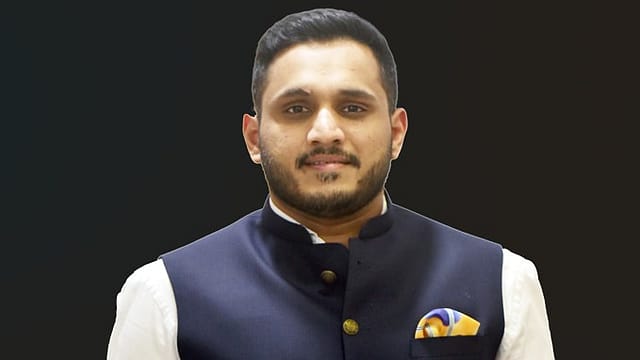
Viraj Sagar Das has a view from both sides of the divide. As Pro-Chancellor of Babu Banarasi Das University and President of the BBD Group, he works with students preparing for professional careers. As Vice President of the Badminton Association of India and President of the Uttar Pradesh Olympic Association, he is involved in expanding sporting opportunities from the grassroots to the elite level.
His two worlds raise one urgent question: what if Indian universities stopped treating sport as recreation and began viewing themselves as nurseries for the country’s athletic future? In an interview with Open Digital, Das explains why education and sport must stop competing for a young person’s future, why institutions need to develop character alongside careers and why India’s journey to the Olympic podium must begin by creating opportunities much closer to home.
India wants to become a global sporting power. Can that happen while sport continues to be treated as an extracurricular activity in much of the education system?
Sport cannot remain an activity that is considered secondary to education. Education and sport are both powerful instruments for developing individuals, strengthening communities and building the nation. They develop different abilities, but they share many of the same values: discipline, resilience, teamwork, leadership and the ability to respond to success and failure.
The purpose of education extends beyond conferring degrees or preparing students for employment. It must develop character, compassion and responsible leadership. Sport contributes directly to that development. Educational institutions therefore need to create an environment in which academic excellence, sporting participation and personal growth reinforce one another. If India wants to become a sporting nation, young people must have opportunities to play and compete as a normal part of their education. Sport cannot be something they pursue only after completing everything considered more important.
Why are education and competitive sport so often presented as rival ambitions to a young Indian?
For a long time, success in education has been understood primarily through marks, degrees and employment. Sport has often been viewed as recreation or as a highly uncertain career available to a very small number of exceptional athletes. That way of thinking has to evolve. Young people have different abilities and aspirations. An institution must help them discover and develop those abilities while ensuring they receive a strong education. A student should not have to abandon learning in order to compete, and an athlete should not be made to feel that sporting ambition represents a rejection of education.
Our responsibility as educationists and sports administrators is to create opportunities and pathways. Students need academic support, exposure, infrastructure, competition and guidance. When institutions recognise sporting excellence as an important form of achievement, education and sport can become parts of the same journey.
What role can universities play in turning India’s large population of young people into a genuine sporting pipeline?
Universities bring together young people at an important stage in their lives. They have infrastructure, teachers, mentors, professional networks and the ability to create structured programmes. This makes them natural spaces for identifying talent, providing regular opportunities to compete and helping athletes develop without losing access to education.
The university experience should be holistic. Alongside classrooms and laboratories, students need sporting facilities, cultural exposure, leadership opportunities, competitions and community engagement. National-level tournaments and university competitions can give young athletes visibility and experience.
Collaborations with sporting bodies and professional organisations can further strengthen the pathway. Universities also have a responsibility towards students who may not become elite athletes. Sport builds confidence, health, teamwork and discipline. A sporting university is therefore not one that produces only champions. It is one that encourages participation while creating stronger pathways for those capable of progressing further.
India has built stadiums and academies, yet a great deal of talent is still lost before reaching the national stage. What is missing between infrastructure and opportunity?
Infrastructure is important, but infrastructure by itself cannot create an athlete. Young players need regular competition, good coaching, mentoring, visibility and a clear path from one level to the next. Talent can emerge from any district, town or community. The challenge is to ensure that a promising player is identified early and receives repeated opportunities to test herself against stronger competition. State, national and international events are important because they expose athletes to different standards and allow coaches and selectors to see talent in competitive conditions.
We must strengthen the journey from grassroots participation to elite performance. Sporting infrastructure has to be active, accessible and connected to competitions. A court that exists but is not supported by coaching or regular play cannot fulfil its purpose.
You have proposed an Uttar Pradesh State Badminton League. What problem is such a league intended to solve?
The idea is to create a competitive platform for players at the grassroots and give them greater visibility. Uttar Pradesh has a large population and considerable sporting potential. Many talented players require opportunities to compete at a higher level, attract attention and understand the standards expected in national competition.
A structured state league can bring players, coaches, institutions, organisers and audiences together. It can provide regular competitive exposure and create a bridge between local talent and the national stage. It can also help generate greater public interest in badminton beyond major international tournaments. Leagues should not be viewed only as events. When designed properly, they can become part of the athlete-development pathway. They can reveal talent, increase participation and give young players something tangible to work towards.
India often celebrates athletes after they win. How do we build a culture that supports them before the medal arrives?
Recognition after victory is important, but an athlete’s journey begins many years before a medal. Support has to reach the stage when the talent is still emerging and the outcome is uncertain. That means creating opportunities at the grassroots, organising regular competitions, strengthening infrastructure and ensuring that young people can participate irrespective of their social or economic background. Educational institutions, sports associations, governments and communities all have a role.
We must also encourage families to see sport as a source of development and opportunity. When young athletes have visible pathways, institutional support and examples they can follow, families gain greater confidence in allowing them to pursue sport seriously. A sporting culture is created through participation. Medals inspire a country, but the system beneath those medals is built through thousands of children receiving the opportunity to play.
You speak frequently about education, sport and service together. What connects these three areas?
All three are concerned with building people and strengthening communities. Education equips individuals with knowledge and judgement. Sport develops discipline, courage, teamwork and resilience. Public service reminds us that our abilities must also contribute to the lives of others.
Institutions should prepare successful professionals, but they should also develop responsible citizens. Students must understand that leadership includes empathy, integrity and a willingness to serve. Community initiatives in healthcare, legal aid, education, environmental protection and assistance for underserved families allow young people to see that learning has a purpose beyond personal advancement. Sustainable development requires education, healthcare, sport and community welfare to progress together. None of these can be isolated from the others if we want to build a stronger society.
What would convince you that India had finally become a sporting nation?
It would be a country in which every young person has the opportunity to participate in sport, talent is not lost because of geography or economic circumstances, and athletes do not have to sacrifice education to compete. It would also mean that sport is valued for more than medals. Elite achievement will always matter and international success inspires the entire country. But a sporting nation must also value fitness, participation, discipline and the social bonds created through sport.
India has enormous talent and ambition. The task is to create institutions and pathways that allow both to grow. When education and sport begin working together, we will produce better athletes, healthier young people and more confident leaders. That is when sport will stop being an “extra” and become part of how the country develops its next generation.