What Is Behind the Major Split Within the Trinamool Congress?
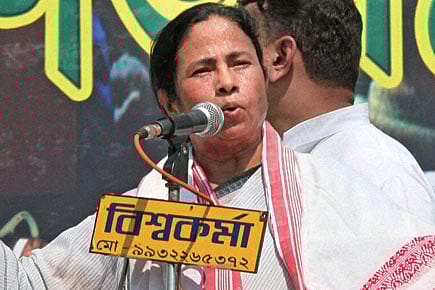
West Bengal's political landscape could be heading for a significant realignment after rebel Trinamool Congress (TMC) MP Kakoli Ghosh Dastidar claimed that 20 party MPs have formally expressed their desire to support the Bharatiya Janata Party (BJP)-led National Democratic Alliance (NDA).
The claim, if validated, could trigger one of the biggest parliamentary challenges faced by the TMC in recent years and potentially reshape political equations both in West Bengal and at the national level.
However, the party leadership has strongly rejected the rebels' claims and questioned the legitimacy of the purported move.
What Exactly Has Kakoli Ghosh Dastidar Claimed?
According to Dastidar, a sizeable section of TMC parliamentarians has decided to distance itself from the party's current political direction.
Confirming the development to ANI, Dastidar responded with a "Thumbs Up" emoji and said:

Losing Memory
16 Oct 2026 - Vol 05 | Issue 42
The making of a medical and social emergency
"A total of 20 TMC Members of Parliament have formally addressed a letter to Lok Sabha Speaker Om Birla, expressing their desire to extend support to the NDA, signalling a potential shift in the political landscape of West Bengal and national parliamentary dynamics."
The claim suggests that a substantial bloc within the party is exploring a formal alignment with the BJP-led alliance.
Why Is the Number 20 So Important?
The figure is politically significant because of India's anti-defection law.
Under the Tenth Schedule of the Constitution, legislators can avoid disqualification if at least two-thirds of a party's parliamentary strength supports a merger or similar realignment.
With the TMC holding 28 Lok Sabha seats, a rebel faction would require the backing of at least 19 MPs to cross the two-thirds threshold.
The rebels' claim of having 20 MPs is therefore crucial because it would potentially make any shift towards the NDA legally viable and provide protection under the merger provisions of the anti-defection framework.
What Events Triggered the Current Crisis?
The reported rebellion comes against the backdrop of political turmoil following the TMC's defeat in the West Bengal Assembly elections and the formation of a BJP government led by Chief Minister Suvendu Adhikari.
The divide within the party became publicly visible on Monday.
While TMC chief Mamata Banerjee, national general secretary Abhishek Banerjee and other loyalist leaders attended an INDIA bloc meeting at the Constitution Club in New Delhi, dissident leaders gathered separately.
The rebel faction reportedly met at the Motilal Nehru Marg residence of Union Minister and BJP West Bengal election in-charge Bhupender Yadav. West Bengal Chief Minister Suvendu Adhikari was also present at the meeting.
The parallel meetings highlighted the widening rift within the party.
Who Are the Key Leaders Involved?
Kakoli Ghosh Dastidar has emerged as one of the most prominent faces of the rebellion.
The dissident camp also includes Rajya Sabha MP Sukhendu Shekhar Ray, who submitted his resignation earlier on Monday.
The rebellion follows earlier developments in the state assembly, where expelled TMC MLA Ritabrata Banerjee formed a separate faction with the support of 58 MLAs. Banerjee was subsequently elected Leader of Opposition, replacing Sobhandev Chattopadhyay.
These developments indicate that the internal crisis extends beyond Parliament and has roots in broader organisational divisions within the party.
How Has the TMC Leadership Responded?
The All India Trinamool Congress (AITC) has firmly challenged the claims made by Dastidar and questioned her authority within the party.
The party said Dastidar is no longer the Chief Whip and pointed to a formal communication sent to Lok Sabha Speaker Om Birla appointing Kalyan Banerjee to the position.
Highlighting the appointment, the party stated:
"This is the letter to the Speaker on the appointment of Kalyan as Chief Whip sent last month. In the current scenario, Kakoli's letter holds no value."
The party's response seeks to undermine the procedural legitimacy of any communication purportedly sent by Dastidar on behalf of TMC parliamentarians.
What Did Mamata Banerjee Tell the Speaker?
The TMC leadership released details of a letter sent by party chairperson Mamata Banerjee to Lok Sabha Speaker Om Birla on May 20, 2026.
The letter stated:
"I write to you as the Founder Chairperson of the All India Trinamool Congress, and the Chairperson of the All India Trinamool Congress Parliamentary Party. This is to inform you that Kalyan Banerjee has been appointed as Chief Whip of the All India Trinamool Congress in the Lok Sabha with immediate effect. This is for your information and necessary action. Thank you so much for your cooperation."
The communication forms the basis of the party's argument that Kalyan Banerjee remains the officially recognised Chief Whip.
Why Is the Authenticity of the Rebels' Letter Being Questioned?
The TMC leadership has also challenged the dissident group's claim that a letter has been submitted to the Speaker.
Questioning the existence of any officially signed document, the party asked:
"Also, where is the letter along with signatures to the Speaker written by the 'so-called rebel group'?"
The remark reflects the party's strategy of contesting not only the political claim but also the procedural validity of the alleged move.
What Earlier Signs of Rebellion Were Visible?
The current crisis did not emerge suddenly.
On May 28, Kakoli Ghosh Dastidar resigned as president of the All India Trinamool Mahila Congress, citing concerns about alleged "misogynistic behaviour" within the party and several issues that she said troubled her conscience.
Her resignation was widely viewed as an indication of growing dissatisfaction within sections of the organisation.
The latest developments suggest that those differences may now have evolved into a full-fledged political challenge to the party leadership.
What Could Happen Next?
The immediate focus will be on whether parliamentary authorities receive and recognise any formal communication from the dissident MPs.
If the rebels can demonstrate support from at least two-thirds of the party's parliamentary strength, they could seek protection under the anti-defection law and formally move towards the NDA.
However, if the party leadership successfully challenges the authenticity or legality of the move, the rebels could face significant procedural and political hurdles.
For now, the competing claims have created uncertainty within one of India's most influential regional parties and opened a potentially transformative chapter in West Bengal politics.
(With inputs from ANI)