Why is a 107-Year-Old Delhi Club Facing Eviction? Explained
It opened in 1919. It survived the Raj, Independence and more than a century of Delhi changing around it. Now, the Central Secretariat Club is fighting to keep its home.
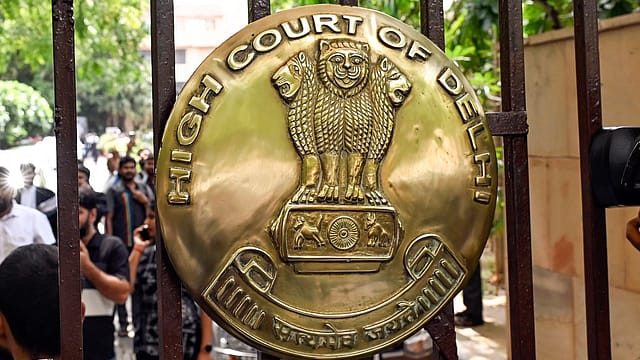
The 107-year-old institution, originally known as the Talkatora Club, has taken the Centre to the Delhi High Court after the Department of Personnel and Training withdrew its recognition and the Directorate of Estates moved to evict it from its government-allotted premises.
The Delhi High Court on Thursday issued notice to the Centre and sought a short response. The matter will be heard again on August 24. So, how did one of Delhi's oldest clubs end up fighting for its existence?
What exactly is the Central Secretariat Club?
Established in 1919, the club operates from Park Street near Talkatora Road in central Delhi and traditionally caters to serving and retired Central government employees. Its own website describes it as an institution created to foster community among secretarial professionals. Hindustan Times reports that it occupies around 2.8 acres of government-owned land and has historically functioned as a recreational and welfare institution for government employees. Its relationship with the government goes back decades. Parliamentary records from 1997 list the Central Secretariat Club at 7-10 Park Street among organisations allotted government accommodation.

Rise of the Pivotal Power
18 Sep 2026 - Vol 05 | Issue 38
The BRICS declaration is a strategic victory for Modi
Why did the government derecognise it?
This is where the battle gets messy. The DoPT first withdrew the club's recognition on February 24, 2026. According to Hindustan Times, the government cited alleged violations and irregularities including governance problems, withholding of information and financial misappropriation. The government's case goes further. The Tribune reported that the DoPT cited the absence of fresh elections after the elected executive committee's tenure ended, along with allegations involving gambling, an unauthorised canteen, encroachments, denial of CCTV access to DoPT nominees and discrimination against outsourced workers. Crucially, the government also argued that the club was no longer adequately serving its original staff-welfare purpose, saying its membership had effectively become restricted rather than benefiting the wider Central government employee community.
What does the club say went wrong?
The club tells a very different story. According to its petition, an ad hoc committee created in March 2023 ostensibly for two months to conduct elections remained in control for nearly two years. The club alleges that during this period there were problems involving delayed GST returns, electricity dues, bar operations, liquor records, statutory wages, tax filings, procurement and other administrative matters. It says these concerns were repeatedly brought to the authorities' attention. More importantly, the club argues that the original derecognition came without a show-cause notice or proper opportunity to be heard.
Has the High Court intervened before?
Yes, and that's an important part of the story. After the February derecognition, the club approached the Delhi High Court. The court directed that the government's earlier order be treated as a notice and allowed the club to present its case. Hindustan Times reported that a three-member committee subsequently reconsidered the matter and upheld the withdrawal of recognition as “fair and justified”. The DoPT then issued a fresh derecognition order on July 14. Three days later came the eviction order. The club is now challenging both.
Why does derecognition threaten the club's home?
Because the two are intimately connected. The club occupies government property. Once its official recognition was withdrawn, the government moved to cancel its allotment and treat it as an unauthorised occupant. That turns what might appear to be an internal governance dispute into something existential. Lose recognition, and the club could lose the land on which it has operated for generations.
Has the club faced derecognition before?
Interestingly, yes. The Tribune, citing the government's memorandum, reported that the club was derecognised in 1971 following complaints of irregularities before recognition was restored in 1972. It was derecognised again in 1983, before eventually being recognised again in December 2005. So, the current battle isn't the first time its official status has been threatened.
What has the Delhi High Court done now?
For the moment, it has asked questions rather than stopped the eviction. The club sought an interim order maintaining the status quo, arguing through Senior Advocate Diya Kapur that the derecognition decision was legally flawed and that it had not received a fair hearing. Justice Swarana Kanta Sharma issued notice to the Centre and asked for a short reply, but did not grant interim protection at this stage. The case returns on August 24. For a club founded in 1919, this is therefore about considerably more than another bureaucratic order. After 107 years, the Central Secretariat Club is fighting not merely for recognition, but for the right to remain at the address it has called home for generations.
(With inputs from ANI)