India’s UNSC Bid: More Backers, Still No Permanent Seat. What is Blocking It?
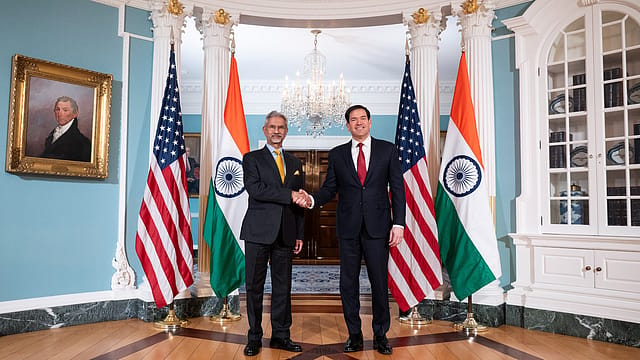
India has secured another endorsement for a chair that does not yet exist.
Poland, Hungary, Slovakia and the Czech Republic have backed India’s inclusion as a permanent member of the United Nations Security Council. Speaking after the first Visegrád Group–India foreign ministers’ meeting in New York, Slovak Foreign Minister Juraj Blanár said India “must be at the table”.
The backing adds a collective Central European voice to India’s campaign. The meeting also produced plans for annual ministerial engagements, a business forum and deeper cooperation across technology, defence and education. But an endorsement cannot create a permanent seat. That requires countries to agree on a new distribution of power—and persuade the current permanent members to ratify it.

Zeroing In on ECI
09 Oct 2026 - Vol 05 | Issue 41
Constitutional legitimacy versus political opportunism
Here is what the V4 announcement changes, what it leaves unresolved and why India’s campaign remains entangled in a much larger argument about the UN.
What exactly have the V4 countries supported?
They have supported permanent membership for India. According to the supplied ANI account, Blanár spoke on behalf of all four countries after their inaugural foreign ministers’ meeting with External Affairs Minister S Jaishankar on September 21.
He linked India’s claim to its role in the Global South and its growing weight in the Indo-Pacific. The V4 is a grouping of Poland, Hungary, Slovakia and the Czech Republic. Its collective endorsement gives India another forum through which to build support. It should not be read as a decision by the European Union as a whole.
Nor does the reported announcement specify the size of a reformed Council, a complete list of new permanent members or whether those members would receive veto powers. Those details determine whether supporters can ultimately agree on the same reform.
Why does a permanent seat matter?
The Security Council has primary responsibility for international peace and security. It can impose sanctions and authorise the use of force; UN members are obligated under the Charter to carry out its decisions. Membership therefore brings influence over measures with consequences far beyond diplomatic statements.
The Council has 15 members: five permanent and ten elected for two-year terms. The permanent five, or P5, are China, France, Russia, the United Kingdom and the United States. India has served eight elected terms, most recently in 2021–22. A permanent seat would give India continuous participation, institutional continuity and a vote without having to win successive elected terms. It would also bring sustained responsibility for decisions on conflicts, sanctions and international security.
It would not allow India to dictate outcomes on its own. Council decisions still depend on other members’ votes and the rules governing adoption.
Can enough countries simply vote India in?
There is no vacant permanent seat for India to contest under the existing rules. Creating one requires amending the UN Charter.
Article 108 establishes two hurdles: adoption by two-thirds of the General Assembly’s members, followed by ratification through national constitutional processes by two-thirds of UN members, including all five permanent Security Council members. A favourable Assembly vote alone is insufficient. This gives every existing permanent member decisive leverage over an amendment’s entry into force. Technically, that is a ratification requirement, distinct from casting a veto on an ordinary Council resolution.
The political implication is stark: the states being asked to share permanent power must agree to the terms on which they share it.
Is China the only obstacle?
China is a central obstacle to India’s bid, but reducing the entire reform impasse to Beijing misses other disagreements.
The US, UK, France and Russia have expressed support for India’s permanent membership; China has not offered equivalent backing. That distinction was reflected in reporting on Britain’s reaffirmation of support in 2025. Even an endorsement from a P5 capital does not settle how many seats should be added, which other countries should enter, what powers they should receive or whether the government will ratify the eventual package.
India thus needs both a broadly acceptable reform model and the cooperation of the existing permanent members. A collection of supportive statements is a starting point for that negotiation, rather than its conclusion.
Who else wants a seat—and who opposes new permanent members?
India works with Brazil, Germany and Japan in the G4, whose members support one another’s permanent-seat aspirations. This is a different grouping from the V4 that has just met Jaishankar.
Other countries favour expanding elected membership instead. The Uniting for Consensus group argues that more elected seats, including longer-term non-permanent seats, would improve representation and accountability. Its September 2025 statement explicitly supports increasing only elected membership.
The dispute is, therefore, about the design of reform as well as individual candidates. Should the UN create more states with permanent privileges, or give more countries a recurring chance to serve?
Why is Africa central to the bargain?
No African country holds a permanent seat. Neither does a country from Latin America. That absence makes geographical representation central to the reform debate.
The African Union’s common position seeks at least two permanent seats and five non-permanent seats for Africa. It opposes the veto in principle but argues that, while the privilege exists, new permanent members should have it too. The AU would select Africa’s representatives. For India, the implication is that its own campaign must fit into a credible wider settlement. A reform presented as correcting global underrepresentation would struggle for legitimacy if it left Africa’s demands unresolved.
Would India automatically get a veto?
That would depend on the adopted reform.
Today, substantive Council decisions require at least nine affirmative votes and no veto from a permanent member. A P5 abstention does not, by itself, block adoption. Procedural decisions are not subject to the veto.
A permanent seat and the power to block a resolution are distinct benefits. Reform negotiators must determine whether any new permanent members receive the same rights as the existing five.
An expanded Council without additional vetoes could increase participation while preserving the P5’s special blocking power. Extending the veto would create more potential points of obstruction. The V4 statement, as reported, does not resolve that choice.
Has the Security Council ever expanded?
Yes. An amendment adopted in 1963 came into force in 1965, expanding the Council from 11 to 15 members. Elected membership increased; the permanent category remained unchanged.
That precedent establishes that expansion is possible. It does not establish that adding permanent members would be equally achievable. Such a change would alter the long-term distribution of influence in a way that additional rotating seats do not.
So what should India look for after the V4 endorsement?
The practical test is whether supporters move towards a common, negotiable proposal.
Progress would mean agreement on the Council’s eventual size, the allocation of seats, selection arrangements, veto rights and the amendments needed to implement the deal. It would then require a coalition capable of carrying that agreement through adoption and national ratification.
The V4+India meeting has value beyond the Security Council campaign. According to ANI, annual foreign ministers’ meetings and a business forum are intended to turn the new format into regular cooperation. Technology, research, defence, connectivity and mobility provide areas where the countries can act without waiting for UN reform.
That makes the endorsement diplomatically useful even while the permanent seat remains distant. It builds a relationship through which India can seek more specific commitments over time.
Blanár says India must be at the table. The next question is whether its supporters can agree on the table’s new shape—and get the current five permanent occupants to sign off on it.
With inputs from ANI