Delhi post-Diwali: ‘I am surprised we are still alive’, AIIMS doctor warns of toxic air
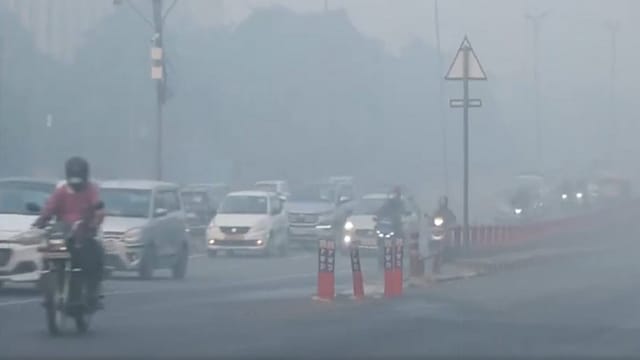
The celebrations may be over, but Delhi is still paying the price for Diwali. A thick layer of pollution has settled over the national capital, and the consequences are no longer limited to people with asthma or existing heart and lung conditions. Doctors say otherwise healthy residents, including those in their twenties, thirties and forties, are reporting respiratory discomfort, irritated throats and persistent coughing.
At AIIMS, Professor Vijay Hadda from the Department of Pulmonary Medicine and Sleep Disorders warned that the air people are breathing has become increasingly dangerous. He also questioned how much protection so-called green crackers actually offer.
"These green crackers reduce emissions by only 30%. As far as the gases and particulate matter are concerned, 70% of the emissions remain the same as those from conventional firecrackers. The AQI, which used to be in three digits, has now reached four digits. If you compare Delhi's air quality with that of other cities, you will find that there is almost a 50% difference. Obviously, life is not going to be easy for the people living her," Dr Hadda told ANI.

The Wealth Issue 2026
06 Nov 2026 - Vol 05 | Issue 45
Portraits of Dreamers and Doers under 35
Delhi AQI after Diwali: Why a slight improvement does not mean clean air
The official readings offer little reason to relax. Delhi recorded an AQI of 376 on Diwali, November 8, and the figure stood at 371 on Monday morning. On Tuesday, November 10, the Central Pollution Control Board recorded an AQI of 307 at 7 am, keeping the city in the very poor category. Some later readings showed a marginal improvement, but several neighbourhoods continued to report very poor air.
A Hindustan Times analysis published on Tuesday also raised questions about missing pollution-monitoring data during Diwali night. It found that PM2.5 concentrations at some stations had reached 3,744 micrograms per cubic metre, while the worst-hour average across stations with complete readings was 1,480 micrograms per cubic metre. These are particulate-matter concentrations, not AQI figures.
AIIMS and Apollo doctors report respiratory symptoms among healthy people
Hadda said the exposure was affecting people around him, including colleagues without known health problems. "Many of my colleagues who are otherwise completely healthy have been calling me and saying, "I am unable to get rid of this irritation. It feels as though something is stuck in my throat."
Apollo Hospitals' senior consultant in internal medicine, Dr S Chatterjee, said younger people were also seeking medical advice. "Healthy people with no underlying illnesses are complaining of symptoms. Young people in the 20–50 age group are also experiencing these problems, and that is what worries me."
The concern is reflected in hospital reports. Down To Earth reported that Majeedia Hospital's respiratory OPD recorded 42 patients with breathing difficulties on November 9. Healthcare workers there estimated that respiratory patient numbers could rise by 60–70% during periods of high pollution.
Delhi pollution health warning: Why the next few days matter
Doctors caution that symptoms may not appear immediately after exposure. Chatterjee said otherwise healthy people could begin experiencing problems within four to six hours of exposure to severe pollution, with effects continuing beyond that period.
He advised residents to avoid unnecessary outdoor activity and exercise, particularly when pollution levels are high.
"Therefore, the next few days are going to be very important for the healthcare system...Avoid going out unnecessarily, whether for shopping or other activities. You should also avoid exercising outdoors when pollution levels are high..."
The immediate advice is simple: reduce exposure, pay attention to persistent symptoms and seek medical guidance when needed. Delhi's AQI may fluctuate, but the pollution already inhaled does not disappear when the numbers begin to fall.
(With inputs from ANI)