Wandhama Massacre Reopened: Can 1998 Kashmiri Pandit Killings and Other Old Cases Still Stand Up in Court?
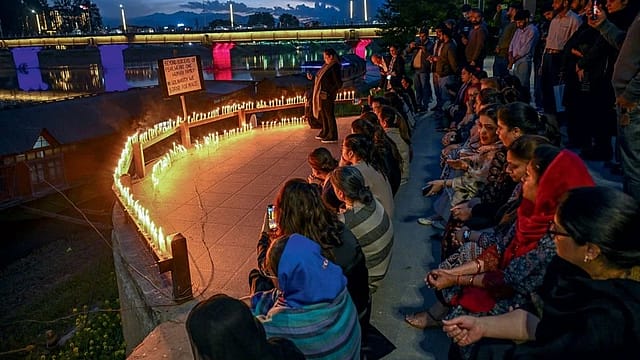
A criminal file can be reopened. A crime scene cannot.
Twenty-eight years after gunmen killed 23 Kashmiri Pandits in Wandhama, the Jammu and Kashmir State Investigation Agency has returned to a case that appeared to have reached the end of its investigative life. The agency is also pursuing a cluster of killings from the opening years of militancy: lawyer and BJP leader Tika Lal Taploo, retired judge Neelkanth Ganjoo, poet Sarwanand Koul Premi and his son Virender, and SKIMS nurse Sarla Bhat.
These are not merely five old police files. Together, they form part of the chronology through which fear entered the daily lives of Kashmiri Pandits and contributed to the community’s mass displacement from the Valley.
The renewed investigations arrive beside an unsettling present-day development. A purported threat poster circulating online has named Kashmiri Pandit employees, published personal details and triggered demands for greater protection. Its provenance and authenticity remain under investigation, but security has been increased in Pandit residential areas and government accommodation. Jammu and Kashmir Chief Minister Omar Abdullah has called the threats “highly concerning” and urged security agencies to determine where they originated. Some employees have reportedly been permitted to work from home.

Zeroing In on ECI
09 Oct 2026 - Vol 05 | Issue 41
Constitutional legitimacy versus political opportunism
The two developments create an uncomfortable symmetry. Investigators are trying to establish who threatened and killed Pandits three decades ago while the administration is again being asked to protect community members whose names have appeared on a threatening list. The question now is whether historical reckoning can move beyond searches, announcements and reopened wounds to evidence that survives in court.
What happened at Wandhama in 1998?
On the night of January 25, 1998, armed men entered Wandhama, a village in Ganderbal district where several Kashmiri Pandit families had remained despite years of militancy and migration. According to accounts of the attack, the assailants approached homes on the pretext of asking for tea. They then opened fire, killing 23 people, including women and children. The date added to the horror. The massacre took place on the eve of Republic Day and during Shab-e-Qadr, one of the holiest nights of Ramzan.
The attack almost erased the village’s remaining Pandit presence. Police investigations at the time attributed the massacre to Harkat-ul-Ansar. Security forces subsequently killed several foreign militants in operations around Ganderbal. An injured militant was reported to have admitted involvement and identified others before his death.
Omar Abdullah, while serving as Jammu and Kashmir chief minister, said in 2014 that the case had not been ignored. He stated that six suspected Harkat-ul-Ansar militants were killed in an operation in February 1998 and that more alleged participants were killed during subsequent operations. Police eventually closed the case on the ground that the identified militants had been eliminated. That account did not satisfy sections of the Kashmiri Pandit community.
In 2012, the Kashmiri Pandit Sangharsh Samiti sought a fresh inquiry from the State Human Rights Commission. It asked police to produce the FIRs, encounter records, identities and burial details supporting the claim that those responsible for Wandhama had been killed.
The distinction is important. A counterterrorism operation may neutralise suspected attackers. A criminal investigation must identify each participant, preserve admissible evidence, determine individual roles and place the case before a court. The reopening suggests that the SIA believes unanswered questions remain about the attackers, their local assistance or the wider conspiracy. It does not automatically mean the original police version was false. It means the agency is no longer treating that version as the final word.
Which other Kashmiri Pandit killing cases are being examined?
The renewed effort reaches back to 1989, when the insurgency was beginning to transform Kashmir.
Tika Lal Taploo, a lawyer and senior BJP leader in Jammu and Kashmir, was shot dead in Srinagar in September 1989. His killing is widely remembered as one of the earliest prominent targeted assassinations preceding the Pandit exodus. Taploo had reportedly received threats and moved his family to Delhi. He returned to Srinagar and was attacked by masked gunmen days later. His murder sent a message far beyond one political party: visibility could be fatal.
Retired judge Neelkanth Ganjoo was killed in Srinagar on November 4, 1989. Ganjoo had presided over the trial in which Jammu and Kashmir Liberation Front founder Maqbool Bhat was sentenced to death for the murder of police officer Amar Chand. The SIA publicly reopened Ganjoo’s murder investigation in 2023 and invited anyone with direct or indirect knowledge to come forward. His daughter told The Indian Express that the family had little new information to provide after 34 years. His granddaughter welcomed the investigation but warned that it needed a clear timeline rather than another indefinite wait.
Sarwanand Koul Premi was a poet, teacher, translator and social worker known for advocating communal harmony. He remained in Soaf Shali near Kokernag when militancy intensified, reportedly believing his relationships within the community would protect him.
On the night of April 29, 1990, armed men entered his home and took him away. His young son Virender went with him. Their tortured bodies were found two days later. The SIA conducted searches at nine locations across Jammu and Kashmir in August 2026 in connection with FIR No. 45 of 1990, originally registered at Dooru police station. The agency has not publicly disclosed what those searches recovered or whom it now considers responsible. That restraint matters. A raid establishes investigative activity, not guilt. The most advanced of the revived cases is the killing of Sarla Bhat.
Why is the Sarla Bhat case the test case?
Because it has already moved from reopening to prosecution.
Sarla Bhat, a 27-year-old nurse at the Sher-e-Kashmir Institute of Medical Sciences in Srinagar, was abducted from her hostel in April 1990. Her body was found days later.
The case remained dormant for decades before being transferred to the SIA in March 2024. In June 2026, the agency filed a 737-page chargesheet naming jailed JKLF leader Yasin Malik and four others. The chargesheet alleges that the killing formed part of a wider conspiracy of targeted violence intended to terrorise civilians, particularly Kashmiri Pandits.
These remain prosecution allegations and will have to be tested in court. Malik’s guilt in this case cannot be presumed from his conviction or incarceration in separate proceedings. According to the SIA, the reconstructed case draws upon protected witnesses, independent eyewitness accounts, medical material, ballistic and forensic evidence, documentary records and electronic evidence. Three of the other named accused are dead, while Khursheed Ahmad Chalkoo is believed to be in Pakistan-administered Kashmir.
The chargesheet is significant for one reason: it demonstrates how the SIA intends to build cases after more than three decades. Investigators are not relying on a miraculous new murder weapon recovered from an untouched scene. They are trying to reassemble fragments that survived in different places: an old medical report, ballistic records, contemporaneous documents, statements that witnesses were previously afraid to give and electronic material capable of corroborating parts of the prosecution narrative.
Whether those fragments prove guilt beyond reasonable doubt is for the trial court to decide. But Sarla Bhat’s case has crossed a threshold that Wandhama, Taploo and Premi have not yet crossed. It has produced named accused and a chargesheet.
What does “reopening” a case legally mean?
It can mean several things.
An FIR does not disappear merely because an investigation becomes dormant. In a murder or terrorism case, the passage of time does not by itself erase criminal liability. India does not impose a limitation period that allows an alleged murderer to become immune from prosecution after a fixed number of years.
If a case was closed through an untraced or closure report, investigators may seek to examine fresh material. If an earlier report was filed, further investigation can be undertaken subject to the applicable legal procedure and judicial oversight. The government may also transfer the case from a local police station to a specialised agency such as the SIA, which can review the original case diary, locate witnesses, conduct searches and reconstruct financial, organisational or conspiratorial links.
Reopening does not cancel the rights of the accused. The prosecution must still establish that the person being tried participated in the crime or conspiracy. Searches, intelligence assessments and membership of an organisation cannot substitute for admissible evidence connecting an accused to a particular offence. Nor does an official declaration that a case has been “solved” amount to a conviction. Courts require proof that can be examined, challenged and tested through cross-examination.
Why were these investigations dormant for so long?
The early years of militancy produced conditions hostile to ordinary criminal investigation.
Police institutions were under severe pressure. Witnesses feared retaliation. Officers were attacked. Records were poorly preserved or scattered. Families fled Kashmir, frequently without returning to participate in investigations. Some suspected perpetrators crossed the Line of Control. Others were killed in encounters or died over the intervening decades. Witnesses grew old, memories faded and investigating officers retired.
The state’s priorities also tilted towards immediate counterterrorism: preventing the next attack and locating active militants. The painstaking work of building prosecutable cases for individual murders often fell behind.
For Pandit families, however, administrative explanation does not erase institutional failure. Many have argued that successive governments treated their cases as part of a large political tragedy instead of prosecuting each killing as a distinct crime. A massacre can occupy national memory while its FIR gathers dust. That is the gap the SIA now says it wants to close.
Didn’t the Supreme Court reject an attempt to reopen these cases?
In 2017, the Supreme Court declined to entertain a petition filed by Roots in Kashmir seeking investigation into 215 cases involving the alleged killings of more than 700 Kashmiri Pandits.
The Bench questioned how reliable evidence could be recovered 27 years after the events and why the petition had been filed so late. “Now tell us from where the evidence will come,” the court observed, according to The Indian Express. The decision exposed the central dilemma of historical justice. Delay is frequently the reason victims seek extraordinary intervention. The same delay can make successful prosecution less likely.
The present investigations are different in form. Rather than asking the Supreme Court to order a sweeping reinvestigation of hundreds of cases through a public-interest petition, the Jammu and Kashmir administration is transferring or reviving specific FIRs through its investigating machinery. The agencies will still confront the evidentiary problem identified by the court. They must answer it case by case. The Sarla Bhat chargesheet is the government’s first substantial argument that evidence can, in some instances, still be found.
Can witnesses be trusted after 30 years?
A witness does not become legally useless merely because decades have passed. Courts regularly consider testimony in delayed cases, especially when the prosecution explains why the witness could not or would not speak earlier. Fear, displacement and the breakdown of law enforcement can provide context.
But delay creates vulnerabilities.
Human memory is reconstructive. Dates blur. Subsequent reporting can influence recollection. A witness may honestly remember the emotional truth of an event while confusing individual details. The defence can challenge delayed testimony by comparing it with earlier statements, medical records, police documents and other contemporaneous evidence. If a witness introduces a crucial allegation for the first time after 35 years, the court will want to know why it was absent before.
That makes corroboration vital.
A protected witness supported by medical records, an old claim note, ballistic evidence and independently authenticated material is more valuable than an isolated recollection. The SIA’s emphasis on combining oral, documentary, forensic and electronic evidence appears designed to address precisely this weakness. The burden remains high. Historical pain cannot lower the standard of proof in a criminal trial.
What happens if the suspected attackers are dead?
A dead accused cannot be prosecuted or convicted. That may be the reality in a number of these cases. Some suspects were reportedly killed in counterterrorism operations. Others may have died naturally. Some may be outside Indian jurisdiction. The investigation can still pursue living conspirators, facilitators or individuals who helped with reconnaissance, shelter, weapons, transport or concealment. Conspiracy cases do not necessarily end with the gunman.
However, investigators cannot use the death of a suspect to avoid evidentiary scrutiny. Declaring that a dead militant committed an atrocity may offer an official narrative, but the dead person cannot contest the allegation and a court cannot try him. A credible reinvestigation must distinguish between intelligence, investigative suspicion and judicially established fact.
That is particularly important in Wandhama, where the original closure was linked to claims that the participating militants had been killed. If the SIA finds no living prosecutable accused but establishes a clearer factual record, families may still value the truth. It should not be presented as equivalent to a conviction.
Why do the fresh threats matter to the old cases?
Because they show that intimidation is not merely a historical explanation.
The purported poster attributed to a little-known group calling itself the United Liberation Council reportedly includes names, phone numbers, workplaces and other details of Kashmiri Pandit employees appointed under the Prime Minister’s rehabilitation package. Police are examining the source and authenticity of the material. Until that investigation is complete, claims about the organisation’s identity or operational capability should be treated cautiously.
The poster may represent a genuine operational threat. It may also be psychological warfare designed to frighten employees, disrupt return policies and amplify insecurity through social media.
Either possibility is serious. If private information was obtained through surveillance, compromised records or local reconnaissance, authorities must establish how. If the material is fabricated, investigators must trace the digital network distributing it. Security has reportedly been increased around Pandit colonies and government accommodation, with additional patrolling, surveillance and CCTV monitoring. Some employees have been temporarily allowed to work from home.
The episode also reveals the limits of a purely historical justice project. Reopening a 1990 murder case carries little meaning if people from the same community feel exposed in 2026. Accountability for the past and protection in the present cannot be separated.
Is the reopening about justice or politics?
It can carry elements of both. For displaced Pandits, the failure to prosecute killings has remained a wound across governments and political parties. Reopening cases responds to a legitimate demand that murder should not be absorbed into a vague narrative of “turmoil”.
The administration also gains politically from presenting itself as the government finally willing to act where predecessors failed. That does not invalidate the investigations. Political motivation and legitimate prosecution can coexist.
The real test is institutional. Are cases selected according to the availability of credible evidence or their symbolic value? Are accused persons given due process? Are searches producing material that can withstand judicial scrutiny? Will investigators pursue all responsible individuals regardless of political utility? Will families receive regular information instead of learning about their cases through press releases? A prosecution that survives cross-examination will carry greater moral force than a hundred announcements about reopened files.
Can there really be justice after 36 years?
There can be accountability, but it will be incomplete. Some accused are dead. Some witnesses are gone. Families have spent decades away from their homes. No verdict can restore the years during which their cases appeared abandoned. Yet delay cannot become a reward for intimidation. If witnesses remained silent because armed groups made speaking dangerous, allowing the passage of time to erase the crime would permit that fear to succeed twice: first by suppressing evidence, then by creating impunity.
The SIA must now do something harder than opening old trunks. It must convert memory into evidence, evidence into charges and charges into trials that respect both the victims and the rights of the accused.
Wandhama will be the severe test. The massacre killed 23 people, but the original investigation ended without a public criminal trial establishing individual responsibility. Nearly three decades later, the agency must determine whether a prosecutable case survived the violence, the encounters, the migrations and the long official silence. Reopening the file is an act of intent. Justice begins only when the evidence enters court.
(With inputs from ANI)