VVS Laxman on India's Injury Crisis: “CoE Is Not a Rehab Centre”
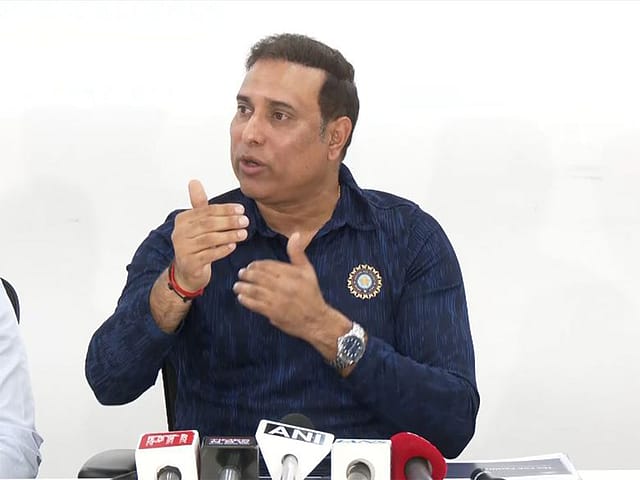
The questions were coming thick and fast.
Why are so many Indian cricketers getting injured? Who takes responsibility when a player is selected, marked "subject to fitness" and then fails to recover? And is the BCCI's Centre of Excellence doing enough?
VVS Laxman had a blunt answer to the first question. Don't look for a scapegoat. "CoE is not a rehab centre," Laxman said at a press conference in Bengaluru on Sunday. "There's a bigger responsibility and mandate given by the BCCI."
His intervention came as India's injury list continues to grow ahead of the two-Test series against Sri Lanka, beginning August 15. Jasprit Bumrah and Sai Sudharsan have been ruled out after initially being selected subject to fitness clearance, while Harshit Rana, Nitish Kumar Reddy and Washington Sundar are also dealing with injuries. Captain Shubman Gill has emerged as another fitness concern after hurting his finger during training.
Rise of the Pivotal Power
18 Sep 2026 - Vol 05 | Issue 38
The BRICS declaration is a strategic victory for Modi
For Laxman, however, the word "blame" is itself part of the problem. "Injuries are part and parcel of any player's career," he said, arguing that the focus should instead be on monitoring players continuously and managing their progression through rehabilitation.
So, what actually happens when a player is marked "subject to fitness"?
Laxman offered a glimpse into the machinery behind that seemingly vague phrase. The selectors approach the CoE for a player's latest fitness report. The facility assesses the player's condition and sends the report to the selection committee chairperson, with copies to the relevant head coach and the BCCI. If the player is progressing slowly, that information is communicated back to the selectors and team management.
That was precisely the situation with Bumrah and Sudharsan. Both were selected for the Sri Lanka series with an asterisk next to their names. The asterisk meant one thing: subject to fitness. They were not being declared fit. They were being given time.
As Laxman explained it, players move through rehabilitation stage by stage. If the progression is slower than expected, the CoE communicates that to the selection committee and coaches. That process, he insisted, was happening "seamlessly".
BCCI secretary Devajit Saikia offered the practical reason for the system. Selection meetings happen three to four weeks before a team travels. Nobody can know with certainty what a player's body will look like three weeks later. "Nobody can predict that," Saikia said. The human body, he added, "is not a machine." That is why a player isn't necessarily discarded at selection simply because he is injured that day.
But there is a bigger problem inside the CoE. The facility is currently without a permanent Head of Sports Science and Medicine, a position that became vacant after Nitin Patel's departure. Laxman acknowledged that replacing him has proved difficult. The BCCI had shortlisted five candidates. The preferred candidate, an Australian, eventually withdrew because he could not relocate to Bengaluru. Another professional, the head of the All Blacks' medical setup, also backed out.
The problem, Laxman suggested, isn't simply finding someone with an impressive résumé. The person needs stature and experience, but also an understanding of Indian cricketers and their specific requirements. Until the position is filled, the CoE's vertical heads have stepped up to shoulder the additional responsibility.
And what about Virat Kohli? In the middle of the injury debate, Laxman was also asked about one of India's most closely watched cricketers. His response was unequivocal. "Virat is an exemplary professional," he said, praising Kohli for the standards he sets for himself every time he plays. According to Laxman, that consistency is precisely why younger players want to emulate him.
It was a reminder that the CoE's job, in Laxman's telling, extends well beyond getting injured players back onto the field. Its mandate is excellence. Its job is monitoring. And, increasingly, it is being asked to manage the enormous physical demands placed on modern Indian cricketers. That is why Laxman doesn't want the conversation reduced to who failed when a player got injured. "Always it's player-centric and team-centric," he said.
For the CoE chief, the more important question is not who is to blame? It is whether the system is communicating early enough, monitoring closely enough and giving every player the best possible chance of getting back to the field safely.
(With inputs from ANI)