Are India’s Biggest Cities Hoarding the Best Jobs? Sridhar Vembu Wants Change
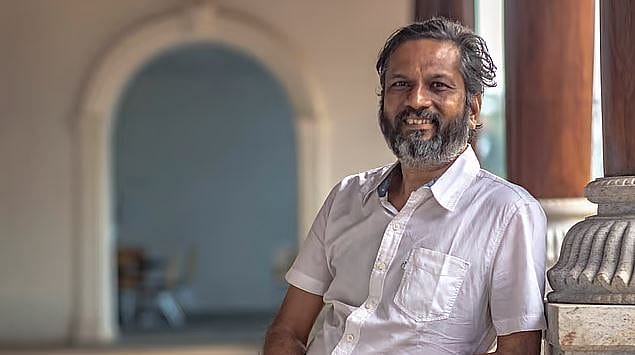
For many young Indians, building a career often comes with an unspoken condition: leave home and move to a major city. Chennai, Bengaluru, Pune, Mumbai and Delhi have become magnets for people seeking better professional opportunities, while smaller towns and rural districts struggle to attract the same concentration of high-value work.
Zoho co-founder and Chief Scientist Sridhar Vembu wants India to rethink that model. Speaking to ANI on the sidelines of Zoholics India 2026, Vembu called for a more decentralised approach to development, with research and development (R&D) investment and sophisticated manufacturing reaching district-level economies.
His argument raises a larger question about India’s growth story: if talent is spread across the country, why should access to the best jobs remain concentrated in a few urban centres?

Zeroing In on ECI
09 Oct 2026 - Vol 05 | Issue 41
Constitutional legitimacy versus political opportunism
Vembu’s proposal is not simply about moving offices out of cities. He is arguing for a different geography of economic opportunity, one in which smaller districts can become sites of technological work and advanced production rather than sending their young people elsewhere in search of employment.
Why should good jobs be concentrated in big cities?
“R&D jobs also can drive rural development by investing in sophisticated smaller scale manufacturing,” Vembu told ANI.
The distinction is important. Rural development is often discussed through agriculture, infrastructure and welfare, but Vembu is pointing towards a model in which districts also participate in higher-value economic activity. His vision links research with manufacturing, suggesting that technological work need not be confined to large corporate campuses in metropolitan areas.
He also argued that India needs greater investment to build domestic capabilities across critical technologies, and not only artificial intelligence. Vembu welcomed the current focus on R&D but said the country needed to invest much more to master the technologies on which it depends.
That emphasis broadens the debate beyond where jobs are located. It also concerns what kind of work India wants to create, what capabilities it wants to develop domestically, and whether those opportunities can be distributed more widely.
Vembu said the limited reach of R&D investment in rural districts was one reason to pursue a more decentralised model. He argued that such a shift could also help the cities themselves, which currently attract young people seeking the best jobs.
“We have to have a much more decentralized model,” he said, adding that India needed to focus on “district level development”.
The proposal challenges the assumption that economic progress must mean moving towards a major city. But it also leaves a practical question: what would it take for districts to support sophisticated manufacturing and R&D at a scale that creates stable, high-quality employment?
The migration question behind India’s growth story
Vembu’s concern is that young people feel compelled to migrate to a handful of cities to access better work. He named Chennai, Bengaluru, Pune, Mumbai and Delhi as destinations that attract youth seeking the best employment opportunities.
The issue is not that cities should stop growing or that people should not move for work. Rather, his comments draw attention to the uneven distribution of opportunity. If high-value jobs are concentrated in a few urban centres, migration becomes a necessity for some workers rather than one choice among many.
A district-level development model could, in principle, bring employment closer to where people live. Yet creating such opportunities would require more than relocating existing businesses. It would depend on investment, skills, infrastructure and the ability of local economies to sustain specialised work.
Vembu’s remarks do not offer a detailed implementation plan, but they put a clear priority on the table: build economic activity at the district level so that young people have access to good jobs without necessarily having to leave their regions.
AI anxiety, skills and the jobs of tomorrow
Vembu also addressed concerns about technology-led job disruption, acknowledging that new technologies often create fear. His response was to stress the need for people to remain adaptable, skilled and capable of reinventing themselves.
“Jobs will happen, but we have to be ready, skilled, adaptive to get the jobs,” he said.
That message connects the geography of employment with the changing nature of work. Even if more R&D and manufacturing activity reaches smaller districts, workers will still need the skills to participate in those industries. Decentralisation alone cannot guarantee that people will be prepared for new roles, particularly as technology changes the tasks businesses require.
His emphasis on critical thinking and flexibility also suggests that the challenge is not limited to training people for one particular technology. It is about building the capacity to adapt as industries evolve.
Can India grow by relying more on its domestic market?
Vembu’s argument for decentralised development is also linked to his view of India’s broader economic strategy. He said the country should not assume it can simply reproduce the export-led model followed by China, arguing that Western markets would not necessarily repeat the conditions that enabled that path.
Instead, he pointed to India’s large domestic market as a potential source of demand for its own production.
“The good news is we have a vast domestic market that can absorb our own production,” he said, making the case for a more domestic-centric growth model.
The idea connects manufacturing, technology and local employment. If Indian production can serve domestic demand, Vembu’s argument suggests, there may be room to develop economic activity beyond the country’s largest cities. But a large market does not automatically ensure that production or high-value jobs will spread evenly across districts. That would still depend on where investment flows and where businesses find the conditions to operate.
For Vembu, the priority is to combine greater R&D investment with a more decentralised approach to development. The larger debate is whether India can create a growth model in which access to opportunity is less dependent on geography.
His comments do not establish that the biggest cities are deliberately “hoarding” jobs. They do, however, question a development pattern in which young people are drawn towards a limited number of urban centres for high-quality employment.
The challenge is to make district-level development more than a slogan: to build the technological capabilities, manufacturing activity and skilled workforce that can support meaningful work beyond the metros.