Union Budget 2026: FM pitches technology as engine of growth across sectors
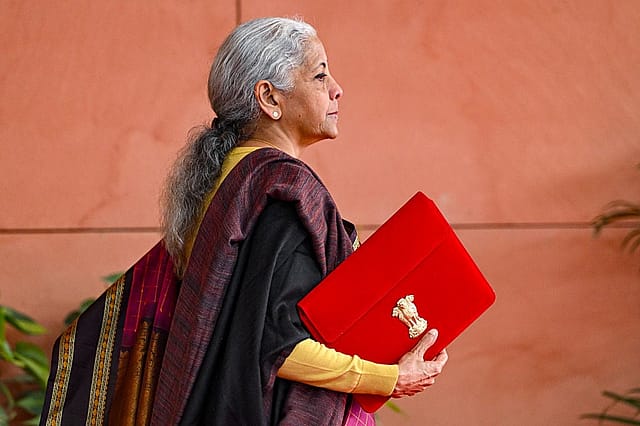
The Union Budget presented by Nirmala Sitharaman prioritised growth in the services sector through the rapid adoption of AI and other cutting-edge technologies, as the country seeks to sustain its growth momentum through structural reforms. Her speech outlined these preferences from the outset, emphasising an approach focused on consolidating recent gains by strengthening the financial sector and deploying state-of-the-art technologies as force multipliers to improve governance.
The speech stressed the role of technology and innovation across sectors, from healthcare and education to manufacturing and tourism. Addressing health challenges, the finance minister noted that India is witnessing a shift towards non-communicable diseases such as diabetes, cancer and autoimmune disorders, and that technology would be central to addressing this emerging burden.

The Health and Wellness Issue
25 Sep 2026 - Vol 05 | Issue 39
“Biologic medicines are key to longevity and quality of life at affordable costs. To develop India as a global biopharma manufacturing hub, I propose the Biopharma SHAKTI with an outlay of ₹10,000 crore over the next five years. This will build the ecosystem for domestic production of biologics and biosimilars,” she said, adding that three new National Institutes of Pharmaceutical Education and Research (NIPERs) would be set up while seven existing ones would be upgraded.
To enhance the country’s chipmaking capabilities, Sitharaman announced the launch of ISM 2.0. “We will produce equipment and materials, design full-stack Indian IP, and fortify supply chains. We will also focus on industry-led research and training centres to develop technology and a skilled workforce,” she said.
The speech also promised additional funding for the electronics sector, alongside a renewed push for rare earth development. “A Scheme for Rare Earth Permanent Magnets was launched in November 2025. We now propose to support the mineral-rich States of Odisha, Kerala, Andhra Pradesh and Tamil Nadu to establish dedicated Rare Earth Corridors to promote mining, processing, research and manufacturing,” she said.
Reiterating the centrality of technology in the current century, Sitharaman said the government’s approach was rooted in inclusive adoption. “Technology adoption is for the benefit of all—farmers in the field, women in STEM, and youth keen to upskill for newer opportunities. The Government has taken several steps to support emerging technologies through the AI Mission, National Quantum Mission, Anusandhan National Research Fund, and the Research, Development and Innovation Fund.”
The Budget also announced that existing institutions for Allied Health Professionals (AHPs) would be upgraded, and new AHP institutions established in both the private and government sectors. “This will cover 10 selected disciplines, including optometry, radiology, anaesthesia, OT technology, applied psychology and behavioural health, and add 100,000 AHPs over the next five years,” she said.
In the hospitality and tourism sector, Sitharaman proposed the creation of a National Institute of Hospitality by upgrading the National Council for Hotel Management and Catering Technology. “It will function as a bridge between academia, industry and government. I also propose a pilot scheme to upskill 10,000 guides across 20 iconic tourist sites through a standardised, high-quality 12-week hybrid training programme, in collaboration with an Indian Institute of Management,” she said. A National Destination Digital Knowledge Grid will also be established to digitally document cultural, spiritual and heritage sites, creating new employment opportunities for local researchers, historians, content creators and technology partners.
The finance minister added that technology adoption would extend to sectors such as sports and small and medium enterprises. The Budget also committed to assessing the impact of emerging technologies, including AI, on jobs and skill requirements, while outlining specific measures to introduce AI at the school level and upskill engineers to meet Industry 4.0 demands.
Additionally, there is good news for any corporate entity investing in data centres in India and global players using them. “Recognising the need to enable critical infrastructure and boost investment in data centres, I propose to provide tax holiday till 2047 to any foreign company that provides cloud services to customers globally by using data centre services from India. It will, however, need to provide services to Indian customers through an Indian reseller entity.”