Totaliser in Indian Elections: How Cluster Counting Could Protect Booth-Level Secrecy and Voters from Intimidation
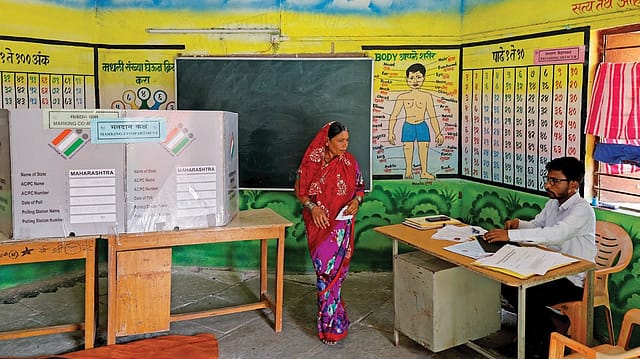
The vote you cast in an Indian election is secret. The political preference of your polling booth is not. When votes are counted, the result stored in each electronic voting machine’s control unit can reveal how many votes every candidate received at the corresponding polling station. Nobody can ordinarily identify an individual voter’s choice, but political parties can discover how a village, neighbourhood, housing cluster or small community voted.
A totaliser is designed to break that connection.
On September 1, the Supreme Court asked the Union government to state its position on petitions seeking the introduction of totalisers. The Election Commission of India had supported the idea earlier, as had the Law Commission. Yet it has remained trapped between technology, election law and political resistance.
Zeroing In on ECI
09 Oct 2026 - Vol 05 | Issue 41
Constitutional legitimacy versus political opportunism
Here is what the device does, why parties have opposed it and what India might gain or lose by adopting it.
What exactly is a totaliser?
A totaliser is a counting device that combines the votes recorded in multiple EVM control units and displays one consolidated candidate-wise result. Instead of revealing that Candidate A received 420 votes at one polling station and Candidate B received 110, the totaliser could connect several control units and announce only their collective result. The model proposed by the Election Commission was designed to combine as many as 14 control units at a time.
This is why the proposal is also described as “cluster counting”. The votes are not transferred from one EVM to another. Nor are they mixed before polling. The totaliser aggregates the results during counting so that the voting preference of an individual polling station cannot be reconstructed from the declared count.
How are EVM votes counted today?
Under the existing system, the result button on each EVM control unit is pressed separately. The machine displays the total votes polled and the number received by each candidate. Fourteen EVMs are ordinarily taken up during a counting round, but their results remain individually available before being entered into the constituency’s cumulative total. Counting agents representing candidates can observe the process and record the figures.
The similarity in the number 14 can cause confusion. Counting 14 EVMs during one round is not the same as totalising them. Under the present system, each polling station’s result remains identifiable. Under a totaliser system, only the combined result of the cluster would be displayed. The present counting procedure is explained in the Election Commission’s handbook and summarised by PRS Legislative Research.
Is an Indian voter’s ballot not already secret?
An individual voter’s choice is secret. Booth-wise counting, however, can expose what might be called the collective political identity of a small area. Suppose a polling station serves a particular village, residential colony, caste cluster, religious community or tribal settlement. Once its result becomes available, political parties may be able to infer which candidate the community overwhelmingly supported. The ballot remains individually anonymous but becomes geographically legible. A totaliser therefore does not create individual ballot secrecy from scratch. It extends secrecy from the individual voter to a larger group of voters.
Why do petitioners want booth-level results hidden?
They argue that booth-wise results can become an instrument of intimidation and retaliation. A politician may threaten an area before an election by claiming that its access to roads, water, electricity or welfare will depend on how it votes. After counting, the booth result can be used to determine whether the threat “worked”. Even without an explicit threat, a ruling party or powerful local politician may allegedly discriminate against an area that voted heavily for an opponent. In closely knit communities, the disclosure can also increase the risk of social pressure or post-poll violence. The totaliser would weaken this mechanism by making it impossible to establish how one particular booth voted. A candidate would know the result of a larger cluster but not the preference of each village or neighbourhood within it.
Have such threats actually been made?
The longstanding litigation arose partly from public concerns that politicians could use booth-wise results to reward supporters and punish opponents. The Supreme Court examined the totaliser question in Yogesh Gupta versus Election Commission of India after the petitioner cited alleged political threats involving the withdrawal of public amenities from areas that failed to support a particular candidate. The concern is not limited to whether retaliation can ultimately be proved. If voters believe politicians can identify the political preference of their locality, that perception itself can make a pre-election threat more effective. The argument for totalisation is, therefore, preventive: democratic choice should not have to wait for victimisation before receiving protection.
Who first proposed the totaliser?
The Election Commission has considered versions of the idea since the late 1990s and subsequently recommended the use of a totaliser to the Union government. Manufacturers of India’s EVMs developed the device at the Commission’s request, and demonstrations were conducted. The proposal nevertheless required changes to the election rules before it could be used generally. The Election Commission told the Supreme Court in earlier proceedings that totalisation formed part of its proposed electoral reforms. In 2018, it again supported replacing booth-wise counting with totalised counting to protect voting patterns, according to The New Indian Express.
What did the Law Commission recommend?
The Law Commission endorsed totalisers in its 255th Report on electoral reforms in 2015. It concluded that revealing booth-wise voting patterns could expose voters to intimidation and victimisation. It proposed inserting a new Rule 66A into the Conduct of Elections Rules, 1961, empowering the Election Commission to determine when and where totalisers should be used. Crucially, the recommendation did not necessarily demand automatic totalisation across every constituency. It contemplated giving the Election Commission discretion after considering the circumstances of an election and the risk of coercion or retaliation. The recommendation is recorded in the Law Commission’s electoral-reforms report and was summarised by the Press Information Bureau.
Does Indian election law already allow votes to be mixed?
Yes, but the existing provision concerns ballot papers rather than ordinary EVM counting. Rule 59A of the Conduct of Elections Rules, 1961, permits ballot papers from different ballot boxes to be mixed before counting when the Election Commission considers this necessary in view of intimidation, victimisation or other circumstances. For votes recorded electronically, the Law Commission proposed an analogous Rule 66A governing the use of totalisers. The legal gap exists because paper ballots can physically be mixed under Rule 59A, while EVM control units ordinarily disclose their results separately under the rules governing machine counting.
Why has the Union government resisted the proposal?
The government’s earlier objections rested on transparency, political participation and public interest. A group of ministers reportedly concluded that booth-wise data allowed candidates and parties to identify places where they had performed poorly and work harder in those areas. It also questioned whether intimidation or victimisation occurred on a scale sufficient to justify abandoning the existing system.
There were additional concerns about the integrity of the machines, leakage of booth-level data, costs, counting procedures and the ability of candidates’ representatives to scrutinise the process. This produces an uncomfortable question. When a candidate discovers that an area voted against the party, does that knowledge encourage better representation or create an opportunity for punishment? The same data can be used for democratic diagnosis or political revenge. The machine cannot determine the intention of the person reading it.
Would a totaliser make counting less transparent?
Not necessarily, but it would change what is transparent. Candidates and counting agents would still be able to observe the devices, seals, connections and consolidated result. The constituency-wide count would remain public. What disappears is the candidate-wise result of each polling station within the totalised cluster.
Critics may argue that individual EVM results provide an additional layer of granular scrutiny. If an unusual result, malfunction or discrepancy arises at a particular polling station, booth-specific data can help identify it. The answer may lie in procedural design. Election authorities could preserve machine-level audit information securely for dispute resolution without routinely releasing the political preference of every booth. But that would require detailed rules covering access, recounts, challenges, VVPAT verification and the presence of counting agents.
The Supreme Court is, therefore, right to treat totalisation as more than the simple addition of a machine. It requires redesigning part of the counting process.
What did the Supreme Court mean by “participation”?
The phrase can easily be misunderstood. The tension identified during the hearing is not necessarily between voter turnout and voter anonymity. The concern appears to involve the ability of candidates and their counting agents to participate meaningfully in, observe and challenge the counting process when several EVM results are aggregated. A totaliser protects the voter by withholding booth-level information. But any new system must still allow candidates to verify that the correct control units were connected, the machines were properly sealed and the consolidated totals were accurately produced. The democratic balance is therefore between collective voter anonymity and granular candidate scrutiny, rather than anonymity and the voter’s physical participation in polling.
Would totalisation interfere with VVPAT verification?
It need not, but the rules would have to specify how the two processes interact. VVPAT verification is tied to particular polling stations because the paper slips from a selected booth are compared with that booth’s electronic result. Totalisation, meanwhile, seeks to prevent the routine public disclosure of booth-wise candidate totals. A carefully designed system could retain booth-specific verification for audit purposes while releasing only the aggregated cluster result. But procedures would be needed to ensure that a discrepancy can be investigated without unnecessarily revealing every booth’s political preference. This is one of the practical questions the government and Election Commission would have to resolve before nationwide implementation.
Why can the Supreme Court not simply order its use?
The court can examine whether the existing system inadequately protects free voting and ballot secrecy. It can also ask the government to explain years of inaction. But introducing totalisers may require amendments to the Conduct of Elections Rules, procurement of equipment, expenditure, technical standards and a complete operating protocol. Those are ordinarily matters for the Union government and Election Commission. The bench therefore sought the Centre’s formal response instead of treating the Election Commission’s earlier recommendation as sufficient. Even judicial agreement with the principle does not automatically produce the legal and administrative machinery needed to implement it.
Could totalisers be used only in vulnerable areas?
That may become the most workable compromise. The Law Commission’s proposed Rule 66A would have allowed the Election Commission to choose the constituencies and polling stations where totalisation was warranted after considering threats of intimidation or victimisation. Such a model would mirror the logic behind Rule 59A for paper ballots. It could protect communities facing a demonstrable risk without immediately replacing booth-wise counting nationwide.
The difficulty is obvious: waiting for a locality to be officially classified as vulnerable may require evidence of precisely the coercion that anonymity is meant to prevent. Selective use could also reveal that the booths placed in a particular cluster were considered politically sensitive. Universal totalisation offers stronger anonymity. Targeted totalisation is cheaper and easier to introduce. Neither choice is free of complications.
What happens next?
The Union government must place its position before the Supreme Court. The court will then consider whether the executive should be directed to decide the proposal, whether existing safeguards are adequate and how far judges can go in ordering a counting reform carrying technical and financial consequences. The totaliser debate ultimately asks what the secret ballot is supposed to conceal. If secrecy protects only the individual voter, India’s present system largely provides it. If secrecy must also protect a village, neighbourhood or vulnerable community from being politically marked, booth-wise counting leaves a revealing trail. A totaliser would erase that trail. The harder question is whether India’s political system wants it erased.
With inputs from ANI