Mumbai’s Clean-Up Crisis: Court-Ordered Drive Exposes BMC’s Failure on Garbage, Plastic and Civic Responsibility
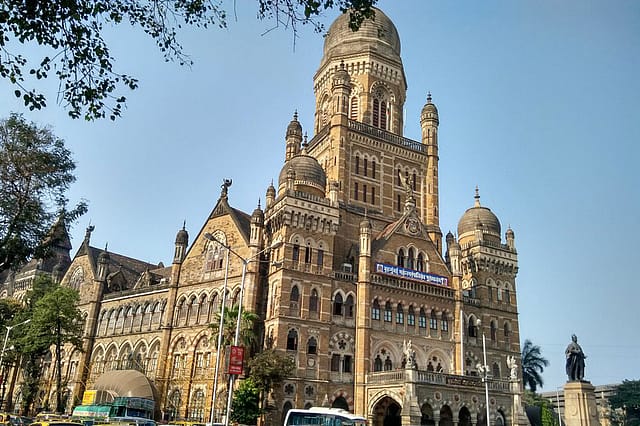
Mumbai has decided to clean itself up. That is not an easy ask but a court forced the hand of the municipal body, Brihanmumbai Municipal Corporation (BMC). The court first took up a petition of residents near a big dumping ground and then extended it citywide. The BMC now plans a number of measures, including CCTV cameras at points where garbage accumulation is concentrated. All this however does not presage any certainty of success. The BMC claims that the responsibility needs to be shared between citizens and the corporation, and the reality is that neither of them will do it.
You can see the problem of cleanliness in the dumpster trucks that drive around taking the garbage to the dumping grounds. They will be half open, the trash visible, a foul smell emanating, occasionally bits of it will fall away. The civic body swings into action intermittently and then goes back to its mean efficiency. A decade ago they got serious about separating garbage into wet and dry. Housing societies were told to do it and most even complied. But within a few months, the system collapsed under the weight of its own callousness. Households saw that the effort they took didn’t translate into visible change. They also had little idea about sifting it themselves, and the waste was arbitrarily separated.
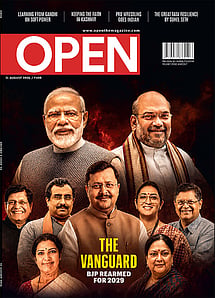
The Vanguard
21 Aug 2026 - Vol 05 | Issue 34
BJP Rearmed for 2029
And a decade before that the state banned all plastic below a certain micron level. And for a few months, you saw shopkeepers and hawkers in Mumbai doing the needful, and slightly thicker bags everywhere. Now if you go to a bhelpuriwallah and take a parcel, it will be the thinnest of plastics that continues to clog the drains.
What these episodes tell you is that change is possible but only so long as there is a microscope being held to every layer of the process. After a while, from the top to the bottom, from the government to the citizens, everyone just gives up on it. What is left behind is the easiest thing to do, which is a new regulation on paper increasing fines or punishments whose only deterrent value is in the slight increase in bribes that it translates into.
The present drive itself is an indication of how topsy-turvy making the city better can get. It should, after all, not need a court order to remind a municipality to keep a city clean. That is its regular full-time job.