IIT Student Suicides: Why India Still Lacks a Complete Count After 75 Years
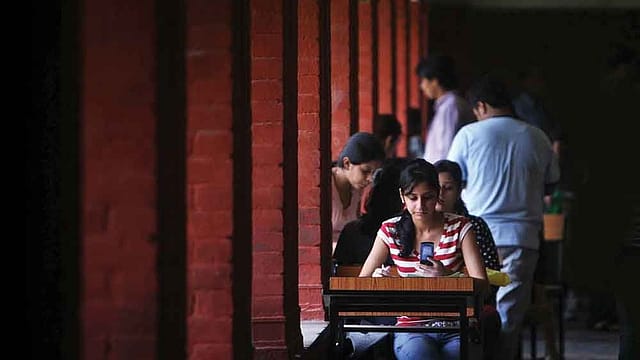
A student enters one of India’s most closely guarded campuses at 8 am. He walks to the Lecture Hall Complex, takes the lift to the sixth floor and, barely half an hour later, is found grievously injured below.
The 31-year-old MSc Physics student was taken to the IIT Delhi campus hospital, where doctors declared him dead. Delhi Police said no suicide note had been found. Investigators recovered his mobile phone and are seeking counselling records and other information from the institute. Until that inquiry is completed, the circumstances surrounding his death must remain precisely what they are: under investigation.
But the death has returned India to two questions it has confronted repeatedly and answered only in fragments. How many IIT students have died by suicide? And what happens after students who survive one of the world’s fiercest entrance examinations finally enter the institution they have fought so hard to reach?

Zeroing In on ECI
09 Oct 2026 - Vol 05 | Issue 41
Constitutional legitimacy versus political opportunism
The honest answer to the first question is disturbing for a reason beyond the number itself. India does not know.
A 75-Year-Old System Without a 75-Year Record
The first Indian Institute of Technology was established at Kharagpur in 1951. India now has 23 IITs, institutions that have come to represent academic brilliance, social mobility and access to some of the most coveted careers in the country.
Yet there is no publicly accessible, consolidated record of student suicides covering the IIT system’s 75-year history.
Parliament has been given figures for selected periods. The Supreme Court has been presented with another set of numbers. Alumni groups and researchers have tried to construct longer timelines from government replies, information gathered from individual IITs and published reports.
Each dataset reveals a part of the crisis. None gives India the complete count.
According to figures supplied by former Union Education Minister Dharmendra Pradhan in the Lok Sabha, 34 IIT students died by suicide between 2014 and 2021. The number formed part of a larger total of 122 student suicides across IITs, IIMs, central universities and other centrally funded institutions during the period, PTI reported.
Of those 122 students, 24 belonged to Scheduled Castes, three to Scheduled Tribes and 41 to Other Backward Classes. That meant 68 of the students whose deaths were reported came from SC, ST or OBC communities.
Then came another official count. In March 2023, the Ministry of Education informed the Rajya Sabha that 33 students had died by suicide across the IITs since 2018. The year-wise figures were seven in 2018, eight in 2019, three in 2020, four in 2021, eight in 2022 and three in the opening months of 2023, according to The Indian Express.
Should 34 and 33 be added to arrive at 67? No. The two periods overlap substantially. Adding them would count several deaths twice. That is precisely where the problem begins. India keeps receiving snapshots when it needs a continuous record.
From 34 to 39 to 65
When the student-suicide crisis reached the Supreme Court, the data before it indicated that 98 students had died by suicide in premier central institutions since 2018. IITs reportedly accounted for 39 of those deaths, followed by 25 each at NITs and central universities, four at IIMs, three at IISERs and two at IIITs.
The Supreme Court responded by constituting a National Task Force chaired by former judge Justice S Ravindra Bhat. Its mandate included examining the causes of student suicides, assessing existing regulations and recommending measures to make educational institutions safer and more accountable.
Here is one detail that deserves attention. According to the Ministry of Education, one of the Task Force’s early agenda items was developing a portal for data collection.
Think about that for a moment. After decades of reported deaths, the process of constructing a central mechanism to collect the data was still being discussed in 2025.
Meanwhile, an IIT alumni group was building its own record. Figures maintained by the Global IIT Alumni Support Group showed at least 65 IIT student suicides between January 2021 and December 2025, The Times of India reported. Thirty of those deaths were recorded in 2024 and 2025 alone.
That five-year figure is almost twice the government’s count of 34 IIT student suicides during the eight years from 2014 to 2021. The periods, sources and methods of collection differ, so this is not a clean statistical comparison. It does, however, show how quickly the recorded toll has grown and how badly India needs one consistent dataset.
Where Does the Figure of 160 Come From?
The closest available estimate to a long-range total comes from the Global IIT-IIM Alumni Support Group.
Its founder, IIT Kanpur alumnus Dheeraj Singh, reportedly told Al Jazeera that data compiled from government officials and individual IITs documented 160 IIT student deaths by suicide over the preceding two decades. Sixty-nine of those deaths occurred during the most recent five years covered by the group’s compilation.
That number must be described accurately. It is not an official all-time government total. It is an independently assembled minimum based on records gathered from official sources and the institutes. It does not cover the entire history of the IIT system, and cases absent from accessible records may be missing.
What it tells us is that at least 160 deaths have been documented over approximately 20 years. What it cannot tell us is how many IIT students have died by suicide since 1951.
They Cleared JEE. What Happened After They Entered IIT?
Here is the part the statistics cannot explain.
These were students who had already survived one of the fiercest academic filters anywhere in the world. They had slogged through school, coaching classes, mock tests and JEE. Many had carried the ambitions of entire families through the IIT gate. Why, then, did some begin to fall apart after entering the institution they had fought so hard to reach?
Parliament asked the government a version of that question in March 2023. In a written Lok Sabha reply, the Ministry of Education said the identified reasons included “academic stress, family reasons, personal reasons, mental health issues, etc.”
That is an official answer. It is hardly a complete one. The government did not provide a numerical breakdown showing how many deaths were associated with academic pressure, discrimination, financial difficulties or mental-health conditions. It did not state how many students had approached counsellors, whether warning signs had been recorded or how often several pressures had converged.
“Personal reasons” is especially convenient. Almost any difficult experience can disappear inside those two words. The Supreme Court-appointed National Task Force has now offered a more revealing explanation. Perhaps India has spent too much time asking what was wrong with the student and too little time examining what was happening around them.
When Every Topper Meets Another Topper
Clearing JEE proves that a student can solve exceptionally difficult problems under extreme pressure. It cannot prepare them for everything that follows.
A student who topped a school, town or coaching centre may enter an IIT and suddenly find thousands of other toppers sitting beside them. Academic distinction, which may have formed a large part of that student’s identity, can disappear almost overnight. A poor grade may then feel like more than a poor grade. It can appear to puncture the story that the student, family, teachers and community have built over many years.
Now add demanding coursework, constant evaluation, placement anxiety, financial pressures, unfamiliar languages, separation from family and the fear of appearing weak in a campus full of high achievers. For doctoral scholars, another layer enters the picture. A supervisor can exercise enormous influence over research progress, recommendations, fellowships and the completion of a degree.
That is the pressure cooker.
Academic pressure, however, is only one part of what the official inquiry has been asked to examine. Ragging, Discrimination, Harassment and the Cost of Belonging The official mandate of the National Task Force identifies an extensive range of possible contributors to student suicides: ragging, caste and gender discrimination, sexual harassment, academic pressure, financial burdens and mental-health stigma. It also includes discrimination based on ethnicity, tribal identity, disability, sexual orientation, political views and religious belief. That list matters. It acknowledges that the crisis cannot always be explained by grades, examinations or an individual’s ability to “cope”.
The Task Force’s interim report, released in June 2026, described student suicide as a structural problem as well as a mental-health emergency. Previous interventions had concentrated heavily on counselling and individual well-being while paying insufficient attention to the conditions created by institutions, according to The Indian Express.
The distinction is crucial. Counselling cannot repair an academic culture that humiliates students who struggle. Yoga cannot resolve caste discrimination. A helpline cannot compensate for unpaid scholarships, inaccessible faculty members, sexual harassment or a destructive relationship between a research scholar and supervisor. Mental-health care is essential. It cannot become an institution’s answer to every institutional failure.
Getting In Does Not Guarantee Belonging
The Task Force also examined what happens when the composition of the student body changes faster than the institution surrounding it. Students from SC, ST and OBC communities constitute roughly 60 per cent of enrolment in higher education. At IITs and NITs, however, 67.71 per cent of faculty members came from outside these communities, while SC faculty constituted 7.57 per cent and ST faculty just 1.91 per cent, according to the interim report.
The Task Force warned that this “social mismatch” could weaken academic integration and be associated with depression, dropout and suicide risk. Consider what that can mean in human terms.
A first-generation learner arrives carrying the expectations of an entire family. The student may come from a regional-language school and encounter English-heavy instruction. They may lack the financial cushion, social networks and cultural familiarity available to some classmates. If they struggle, asking for assistance can feel like confirming every prejudice directed at them. The Task Force found that 46 per cent of the students who responded to its survey described themselves as first-generation learners in higher education. Passing through the IIT gate, therefore, may be the beginning of another examination: learning how to belong.
Is Help Really Available?
The government has repeatedly listed the support systems created across institutions: counselling services, wellness centres, peer-assisted learning, faculty advisers, induction programmes, workshops, yoga, sports and mechanisms intended to detect signs of psychological distress.
On paper, some of the numbers appear reassuring. UGC data listed 27,136 “dedicated counsellors” across higher-education institutions, amounting to approximately one for every 221 students.
The Task Force tested that claim. It examined 50 people randomly listed as dedicated counsellors and found that 47 were faculty members, placement coordinators or academic advisers rather than trained mental-health professionals, The Indian Express reported. That may be one of the most revealing figures in the entire inquiry. A campus can claim to have a counsellor. The person filling that column in a spreadsheet may have no professional qualification to provide psychological care.
Availability also does not ensure access. Students may avoid counselling because they fear stigma, loss of privacy, academic consequences or their parents being informed. For students whose families are themselves a source of pressure, automatic parental notification can close the route through which they might otherwise seek help.
Do We Have One Official Cause?
No. Nor would it be responsible to force every death into one explanation.
Suicide is rarely attributable to a single event. Academic difficulty, isolation, financial insecurity, discrimination, relationship problems and mental distress can overlap. In some cases, investigators may never establish precisely what led to the death. The government’s formal answer has identified academic stress, family difficulties, personal problems and mental-health issues. The Supreme Court-appointed Task Force has widened that lens. Its remit and interim findings bring ragging, discrimination, harassment, financial hardship, social alienation, unequal institutional relationships and inadequate support systems into the inquiry.
There is also no publicly available breakdown establishing exactly how many IIT deaths were linked to each of these factors. The country lacks a complete count of the deaths and a standardised account of what preceded them.
“How many IITians have died?” can mean several different things.
An IITian may be a current student or an alumnus. A person may die on campus from suicide, illness, an accident or another cause. An enrolled student may die away from campus. A death initially investigated as a suspected suicide may later be classified differently.
Official parliamentary figures generally concern enrolled students whose deaths were recorded as suicides during a specified period. They are not a count of every IIT alumnus who has died by suicide, and they do not include every death occurring within the physical boundaries of an IIT. Those categories cannot be folded into one dramatic total. The result may attract attention. It will not tell the truth.
The IIT Delhi case demonstrates why such care matters. Police have described the sequence leading to the student’s fall, but the investigation is continuing. No note has been recovered. His phone is to be examined and counselling records are being sought. It would be premature to insert his death into a national suicide count before investigators establish their findings.
India Counts Ranks, Marks and Placements. What About the Lives Lost?
The IIT system measures almost everything. Entrance ranks. Semester grades. Research citations. Placement packages. Global rankings.
Yet India cannot say with authority how many students have died by suicide across the IIT system since 1951. It cannot publicly show how many had sought help, how many complaints preceded the deaths or which institutional risks recur most frequently.
The Supreme Court’s intervention has begun to move the conversation away from generic wellness measures and towards accountability. The Task Force has recommended that institutions report every student suicide to regulators and state nodal officers, irrespective of where the death occurs. It has also called for the National Crime Records Bureau to count school and higher-education student suicides separately.
Any serious prevention policy must begin by understanding the scale and contours of the problem. Which campuses are recording the most deaths? Are undergraduate students, postgraduate students or doctoral scholars most vulnerable? At what stage of their courses do crises emerge? How frequently do academic pressure, discrimination, financial hardship, placement anxiety or supervisory relationships appear in institutional findings? Were students able to reach qualified counsellors? Did anyone follow up after they sought assistance? A national database will not, by itself, answer every question. It will at least stop the country from beginning the conversation from zero after every death.
For now, the most defensible conclusion is also the most uncomfortable one: at least 160 IIT student suicides have been documented over the past two decades, but India has no authoritative public count covering the IIT system’s complete history.
A student has died at IIT Delhi. His family will eventually receive the findings of an investigation. The rest of the country is still waiting for a complete accounting of all those who came before him.
(With inputs from ANI)