Delhi’s Air Is a “Silent Killer”: Doctors Warn, Raising Diabetes Risk Too
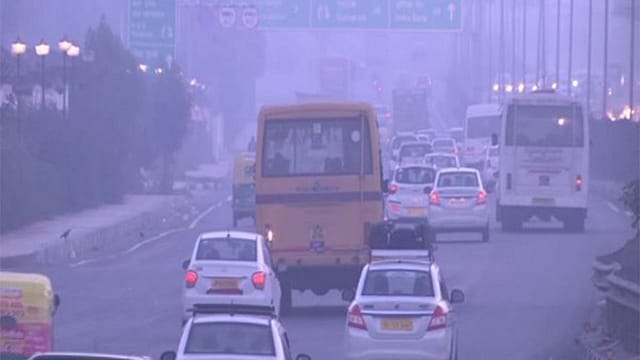
Delhi woke to toxic air and a thick blanket of smog on Thursday, with the city’s overall Air Quality Index (AQI) at 482 at 8.01 am.
Seven stations of the Central Pollution Control Board (CPCB) recorded AQI levels above 400, in the “severe” category. Punjabi Bagh was the worst at 446, followed by Narela at 434, Rohini at 431, RK Puram at 416, Bawana at 412, North Campus at 408 and Patparganj at 405.
Okhla Phase-2 and India Gate were just short at 399, followed by ITO at 397, Dwarka Sector 8 at 396, Chandni Chowk at 356 and Vasundhara Enclave at 330. Anand Vihar, at 293, and the IMD Lodhi Road station, at 268, were in the “poor” category.
“A SILENT KILLER”
Dr Randeep Guleria, Chairman of the Institute of Internal Medicine, Respiratory and Sleep Medicine at Medanta, Gurugram, said pollution kills by making existing illness worse. “Every year, when the AQI hits the severe range, we see an increase in the number of patients coming to the emergency with breathing difficulties and coughs, many of whom have to be admitted to the ward or ICU,” he said.

The Era of Forever Wars
30 Oct 2026 - Vol 05 | Issue 44
Coping with an explosive Middle East
It is not only the sick who suffer. “Even normal people start experiencing chest tightness, breathlessness, watering eyes, and coughing,” Guleria said. For those with COPD, asthma and heart disease, he said, pollution raises inflammation in the lungs and blood vessels, lowers oxygen saturation and increases breathlessness. Children and the elderly are most at risk. In the long term, he said, it “decreases your lifespan and leads to stunted lung growth in children.”
THE DIABETES LINK
Dr Ambrish Mithal, Group Chairman and Head of Endocrinology and Diabetology at Max Healthcare, said air pollution is an established environmental contributor to type 2 diabetes. “There are Indian studies that have shown a direct impact of PM 2.5 on the prevalence of diabetes as well as high blood pressure,” he said. “Even one month of exposure to PM2.5 can raise your blood sugar, and over the years the risk of diabetes can go up by 22%.”
He explained how it works. The particles contain nitrates, sulfates, heavy metals and carbon, and are so tiny that they pass from the lungs into the bloodstream. There they damage artery walls, which leads to hypertension and vascular disease. They also reach the pancreas, where they inflame the organ, affect insulin secretion and cause insulin resistance. India, Mithal said, is already the “diabetes capital of the world.”
WHY DELHI’S AIR TURNS TOXIC
Guleria said both emissions and weather are to blame. The Indo-Gangetic Plain is landlocked, and in winter cold air and low wind keep pollution at ground level. Emissions add to the load through stubble burning, diesel use, more vehicles, crackers, generators and construction. “A multi-pronged approach is required,” he said, and stopping crackers and cutting crop burning “would help in a big way.”
WHAT TO DO
Guleria’s advice is to take medicines and inhalers regularly and see a doctor if breathlessness worsens. People should stay indoors when the AQI is very bad, keep windows and doors closed, use air purifiers and avoid outdoor exercise. Those who must go out should do so when the sun is out and it is warm, and wear an N95 mask.
With inputs from ANI