After the Dalai Lama, Who Will Lead Tibet’s Movement in Exile?
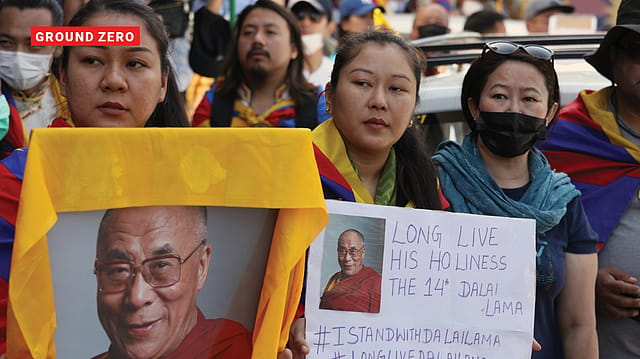
Karma Rinchen has never been to Tibet. Born in India, he went to school in Dharamshala and knew Tibet first through books and films. He was about 23, just starting out in the Tibetan exile administration’s security department, when he began meeting people who had come from Tibet. They told him about the lives they had left behind and what it took to keep their culture alive under Chinese rule.
“Their stories have really inspired me,” he tells OPEN Digital. They are a reason he has stayed with the Tibetan cause for more than three decades.
Rinchen is now secretary of the Central Tibetan Administration’s Department of Information and International Relations. In his old job, he followed developments in Tibet and worked to build support for the cause. He still does much of that work, he says, but in public and with a wider circle of people.

The Era of Forever Wars
30 Oct 2026 - Vol 05 | Issue 44
Coping with an explosive Middle East
The timing matters. The 14th Dalai Lama, who fled Tibet for India in 1959, is now in his nineties and travels less. For decades, he could draw international attention to Tibet simply by turning up. Rinchen says the elected leaders in Dharamshala will have to do more of the work that once fell to him.
“Now it is very important that our political leadership engages more with leaders and people around the world,” he says.

Who Gets to Recognise the Next Dalai Lama?
On July 2, 2025, the Dalai Lama settled one question that had hung over the exile community for years. There would be a 15th Dalai Lama. He said the Gaden Phodrang Trust, which he established, alone would have the authority to recognise his reincarnation. It would consult religious leaders and follow Tibetan Buddhist tradition.
“There was some confusion about whether there would be a 15th Dalai Lama or not,” Rinchen says. “His Holiness has made it clear that there will be one.”
The announcement sharpened the dispute over who gets to recognise him. Beijing’s 2007 regulations require government approval for the recognition of reincarnate Tibetan Buddhist leaders and bar interference by foreign organisations and individuals. Beijing also invokes the Golden Urn, a Qing-era ritual, to argue that the state has a historical role in the process.
Rinchen takes issue with the premise. “How can a Communist Party, which says religion is a poison, suddenly claim the authority to choose a reincarnation?” he asks. “It is a purely spiritual matter. It is not a political appointment.”
He doubts Tibetan Buddhists would accept a Dalai Lama recognised through a process controlled by Beijing. Their communities extend well beyond Tibet. If Beijing and the trust recognise different figures, Buddhists across borders could face rival claims to the same spiritual office.
What Dharamshala Can Carry
The Dalai Lama began preparing the exile community for a change in political leadership years ago. In 2011, he handed his political authority to elected Tibetan leaders. Tibetans around the world elect representatives to the Tibetan Parliament-in-Exile, which passes laws and resolutions. That gives the community a way to make decisions across borders. Winning a hearing abroad is another matter.
“His absence would be devastating for the whole community,” Rinchen says. He expects Beijing to try to influence the reincarnation process and worries that it could exploit differences among Tibetan groups and religious traditions.
Beijing already has far more money and technology at its disposal than the exile administration. Rinchen says his department uses its own channels and works with governments, institutions and experts to challenge what it sees as distortions of Tibetan history and life under Chinese rule. He knows the effort has to go further.
“The good thing is we have the truth and China doesn’t have the truth,” he says. “They have to lie all the time.”
Among Tibetans in exile, there is a debate over what the movement should ultimately seek. The administration’s Middle Way Approach seeks genuine autonomy for Tibet within the People’s Republic of China. Advocates of Rangzen want independence. Rinchen says the administration stands by the policy its democratic institutions adopted and respects Tibetans who want a different outcome.
“People can have their own aspirations and wishes,” he says. “We respect all political aspirations.”
The Country That Took Them In
India became the principal home of the Tibetan exile community after the Dalai Lama arrived in 1959. The community built schools, monasteries and political institutions here. Dharamshala became the seat of its administration. For Rinchen, it was also where a boy who had never been to Tibet first learnt about the place he would spend his working life speaking for.
Asked what more New Delhi could do, Rinchen points to what India has already done. “India has done so much that we do not have the modesty or the courage to ask for anything more,” he says. “India has been the backbone of our struggle.”
He expects that support to continue and recognises that New Delhi has its own calculations in dealing with Beijing. In his view, India’s border dispute with China will keep troubling relations as long as the Tibet question remains unresolved.
Who Is Keeping Tibet’s Exile Monasteries Going?
Tibetans account for 28 per cent of the more than 38,000 monks and nuns in 295 exile monasteries and nunneries across India, Nepal and Bhutan, according to the Central Tibetan Administration. People from Himalayan regions account for 68 per cent, and foreigners for four per cent. Tibetan leaders point to Chinese travel restrictions for the sharp fall in arrivals from Tibet. They also cite falling birth rates, later marriages and the move of young Tibetans to the West. Buddhists from places such as Ladakh, Spiti, Lahaul, Kinnaur, Arunachal Pradesh, Sikkim and Bhutan have helped keep overall monastic numbers steady.
A Homeland He Has Never Seen
“You cannot rely on one person to lead a struggle,” Rinchen says. “Now it is an institution that will carry forward the struggle.”
He has another reason for taking the long view. In Buddhism, he says, impermanence applies to political orders as surely as it does to everything else. Empires have come and gone. He believes China’s concentration of power in one person makes its present system unsustainable. He cannot say when it will change.
“I am very hopeful,” he says. “Things will change, and things will change for the better.”
At 23, Rinchen was listening to people tell him what it was like to leave Tibet. More than three decades later, he still believes he will make the journey in the other direction. It will be his first visit. He thinks of it as going home.