The last Politburo man: Misir Besra and the long endgame of India’s Maoist War
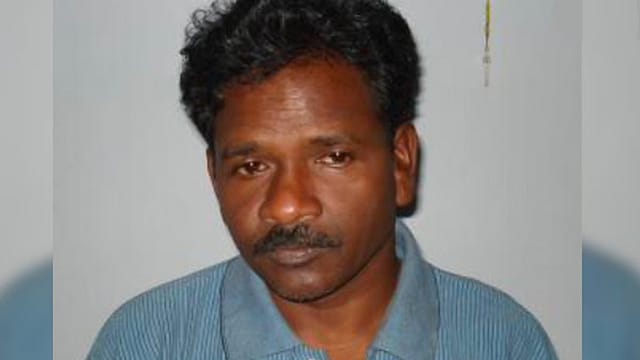
The arrest of Misir Besra marks more than the capture of another Maoist commander. It closes a chapter in one of India’s longest internal conflicts—a war that once stretched across forests from Andhra Pradesh to West Bengal and at its peak challenged the writ of the Indian state over vast territories.
Security agencies on Tuesday announced the arrest of Besra, the CPI (Maoist)’s senior Politburo member carrying a ₹1 crore bounty. He was apprehended in Jharkhand’s Dhanbad district by security forces after years of intensive intelligence operations. Officials described it as one of the biggest breakthroughs against Left-wing extremism.

The Health and Wellness Issue
25 Sep 2026 - Vol 05 | Issue 39
For the security establishment, Besra represented something larger than an individual. He was the last surviving operational member of the party’s top leadership who continued to direct military operations after successive waves of encounters, arrests and surrenders had decimated the organisation. Only two months ago, security agencies had spoken of him as the final major prize in Operation Black Forest, while dozens of cadres from his network surrendered under sustained pressure.
Yet this is not the first time Misir Besra has been in police custody.
Nineteen years ago, Besra was caught almost by accident.
The police party approached the vehicle in which he was travelling. He did not attempt to flee. The strategy had worked because almost nobody in the police force knew what he looked like. His photograph did not exist in official records. Short, soft-spoken and physically unimposing, he hardly resembled one of India's most wanted insurgents.
The officers nevertheless took no chances.
Within hours, cadres identified him. The anonymous-looking man was in fact Commander Sunirmal, better known as Misir Besra or Bhaskar—the man who sat on the CPI (Maoist)’s Politburo and Central Military Commission.
At the time, Besra supervised the organisation’s Eastern Command, coordinating operations across Jharkhand, Chhattisgarh, Odisha, West Bengal and parts of Assam. He also oversaw military intelligence and procurement of arms.
When I met him shortly afterwards inside a Jharkhand jail, it was his first conversation with any journalist.
He appeared almost disarmingly ordinary.
Wrapped against the cold, he declined a cigarette with a smile.
“I have quit smoking,” he said. He said he had just come to have tea when the police picked him up.
Besra’s journey into the Maoist movement began neither in ideology nor in underground politics. He grew up in Giridih district, where, according to his own account, he witnessed discrimination against tribal communities. While pursuing Hindi Honours in college during the mid-1980s, he also immersed himself in political literature, reading Bhagat Singh, Khudiram Bose and other revolutionaries.
He often narrated two incidents as turning points.
A shopkeeper refused to pay him for Mahua and threatened violence.
Soon afterwards, influential landlords cut down an old jackfruit tree in his village. They intended to carry away the timber. Besra gathered a handful of young men and physically prevented them from taking the trunk, even resisting pressure from local officials.
For a while he admired Shibu Soren’s Jharkhand Mukti Morcha before getting disillusioned with it.
In October 1985, a cultural troupe associated with a revolutionary left organisation visited his village. After the programme ended, Besra simply disappeared with them. He never returned home.
The movement that recruited Besra was still small.
He recalled that the early squads possessed little more than double-barrel guns and were often dismissed as ordinary bandits by villagers.
Training came from the People’s War Group in Andhra Pradesh. The later merger of the People’s War Group and the Maoist Communist Centre in 2004 created the CPI (Maoist), producing a far more organised insurgency. In the new organisation, Besra rose rapidly. Investigators linked him to some of the deadliest attacks of that era, including the 2004 Baliba ambush in Jharkhand's West Singhbhum district in which 29 security personnel were killed. He also handled security during the party’s Ninth Congress before another operation that killed four policemen in Bihar.
Inside the organisation he acquired a reputation as a military planner rather than an ideologue.
Perhaps the most revealing part of our conversation had little to do with weapons. Besra argued that many recruits initially abandoned the movement because they could not survive jungle life. Those who remained, he said, often did so for simpler reasons. There was guarantee of food, and of dignity and power, of which young men and women had known neither.
Besra also revealed the leadership’s long-term ambitions. He confirmed that organisational structures existed in Delhi, Haryana and Punjab.
“Without the participation of the middle class,” he told me, “there will be no revolution.” Yet he admitted the movement had achieved little in India’s cities.
When I asked whether he remained in contact with his comrades, he smiled faintly.
“No," he replied, “since I am under arrest they won't trust me anymore.”
History, however, had one more twist left. In 2009, armed Maoists stormed the Lakhisarai court complex during his production before a judge, killing a policeman and helping Besra escape. That dramatic jailbreak restored him to the underground, where he remained for nearly two decades as one of the most elusive Maoist leaders.
His latest arrest comes at a time when the Maoist movement is almost over. Continuous security operations, expanding road networks, mobile connectivity, intelligence-led policing and surrender policies have steadily reduced its territorial reach. Even before Besra’s capture, dozens of his own cadres had begun surrendering under sustained pressure. As many senior leaders surrendered, Besra chose to fight it out, turning Jharkhand’s Saranda forest into his last guerrilla zone.
Operationally, his arrest marks the definitive end of India’s Maoist insurgency. But whether it also marks the end of the grievances that once sustained that organisation remains an altogether different question.