PM Modi Pushes Critical Mineral Self-Reliance With ₹2,814 Crore Scheme
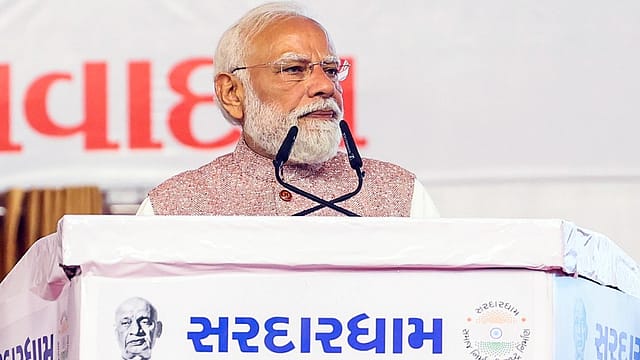
The Union Cabinet, chaired by Prime Minister Narendra Modi, has approved the Capex Support Scheme to Promote Critical Mineral Processing, with a financial outlay of ₹2,814 crore over five years, from 2026-27 to 2030-31.
Reacting to the decision, Modi highlighted India's dependence on imported refined materials and called for building domestic capabilities in critical mineral processing.
"India must have capabilities to build technologies of the future!" he said in a post on X, pointing to lithium, nickel and cobalt as essential materials for electric vehicles, batteries, electronics and defence.
According to the Cabinet's official release, the processing of critical minerals remains concentrated in a handful of countries. This leaves global supply chains vulnerable to geopolitical disruptions, price fluctuations and potential export restrictions.

The Era of Forever Wars
30 Oct 2026 - Vol 05 | Issue 44
Coping with an explosive Middle East
India, meanwhile, continues to rely heavily on imports of refined intermediates and high-purity materials because its domestic beneficiation and processing infrastructure remains at an early stage of development.
WHAT THE ₹2,814 CRORE SCHEME OFFERS
The new scheme seeks to address this gap by providing targeted capital expenditure support for setting up and operationalising domestic critical mineral processing facilities.
Under the programme, the government will offer a capital subsidy covering 30 per cent of eligible investments for four processing plants. These will include two lithium processing facilities, each with a minimum capacity of 30 kilotonnes, and two nickel processing facilities, each with a minimum capacity of 50 kilotonnes.
The maximum capital support will be capped at ₹500 crore for each lithium beneficiary and ₹900 crore for each nickel beneficiary.
The scheme also envisages processing lithium and nickel ores and intermediary products into high-purity compounds. Cobalt is expected to be recovered as a by-product of nickel production.
HOW WILL COMPANIES BE SELECTED?
The selection of beneficiaries will take place through a two-stage process. Applicants will first be assessed for technical qualifications, following which eligible companies will participate in financial bidding.
For each mineral, two beneficiaries will be selected on the basis of the lowest capital expenditure support sought from the government.
The incentives will be disbursed in three instalments, linked to the achievement of specified project milestones.
A PUSH FOR ATMANIRBHAR BHARAT
The government sees the scheme as an important step towards reducing import dependence and strengthening India's position across the critical mineral value chain.
Critical minerals are increasingly important to India's energy transition, particularly as the country expands electric mobility and battery energy storage systems. They are also essential for electronics, defence manufacturing and speciality steel.
The Cabinet said developing domestic processing infrastructure would help increase value addition within the country, improve supply chain resilience and strengthen economic security.
The initiative is part of the broader Atmanirbhar Bharat push, with the government seeking to build domestic capabilities in sectors that will shape future technologies and manufacturing.
With inputs from ANI