Green Card, Red Flag: One Wrong Form Could Sink Your US Application After September 18
Most people imagine the hardest part of getting a Green Card is qualifying for one.
Finding an employer willing to sponsor you. Waiting years for a priority date to become current. Navigating America's famously complex immigration system.
But sometimes, the biggest obstacle is something far less dramatic.
A form.
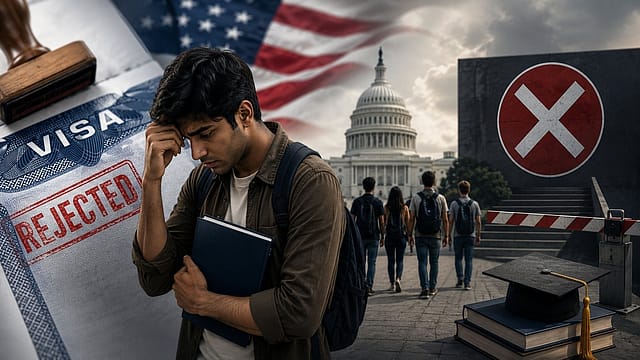
Starting September 18, the US Citizenship and Immigration Services (USCIS) will require applicants seeking permanent residency from within the United States to use a revised version of Form I-485, the document used to apply for a Green Card through a process known as Adjustment of Status. USCIS has warned that there will be no grace period. Applications filed with the old version after the deadline will be rejected.

Rise of the Pivotal Power
18 Sep 2026 - Vol 05 | Issue 38
The BRICS declaration is a strategic victory for Modi
For Indian professionals already spending years—sometimes decades—in the Green Card queue, that makes one date particularly important.
What Is Changing in the US Green Card Process on September 18?
USCIS has announced that a new edition of Form I-485 will take effect on September 18, 2026. The current version, dated January 20, 2025, will only be accepted if it is submitted before that date. From September 18 onward, only the new form will be valid.
The agency has been unusually explicit about the transition.
File the old version after September 18 and the application will be rejected, regardless of when it was prepared. File the new version before September 18 and that could also create problems because the form is only valid from its effective date onward.
In other words, the filing date matters as much as the form itself.
Why Should Indians Care About a Form Update?
Because Indians make up one of the largest groups waiting for employment-based Green Cards in the United States.
Thousands of Indian professionals in technology, healthcare, engineering and research spend years on temporary work visas before becoming eligible to file for permanent residency. Due to annual country caps on immigrant visas, Indian applicants often face significantly longer waits than applicants from many other countries. Reuters and multiple US immigration analyses have repeatedly highlighted the disproportionate impact of these backlogs on Indian workers.
For someone who has already spent years waiting for a visa number to become available, a paperwork rejection can mean additional delays, costs and uncertainty.
That is why immigration lawyers are urging applicants to pay close attention to the September deadline.
The Bigger Story Isn't the Form. It's the New Public Charge Rule.
The revised form is not appearing in isolation.
USCIS says the update is designed to align Green Card applications with a new federal rule governing the "public charge" ground of inadmissibility. The rule takes effect on the same day, September 18.
If that phrase sounds bureaucratic, here's the simpler version.
The US government wants immigration officers to examine whether a Green Card applicant is likely to become primarily dependent on government assistance in the future.
To make that assessment, officers may consider factors such as age, health, education, skills, financial resources and family circumstances. USCIS says the policy is intended to reinforce the principle that immigrants should be self-sufficient rather than dependent on taxpayer-funded benefits.
The public-charge standard has shifted repeatedly under different US administrations and remains one of the most debated areas of American immigration policy.
What Indian Green Card Applicants Need to Know
If you are planning to file Form I-485, there are three things worth remembering.
First, USCIS will continue accepting the current January 2025 version only until September 17.
Second, applications submitted on or after September 18 must use the new September 2026 edition.
Third, USCIS has said there will be no overlap period during which both forms are accepted.
That may sound like a technical detail.
But in a system where people wait years for permanent residency, technical details can have real consequences.
The Green Card Journey Has Always Been About More Than Eligibility
For many Indians in America, a Green Card is not just an immigration document.
It determines whether they can change jobs more freely, plan long-term careers, buy homes without visa uncertainty hanging over them and build a future without worrying about the next renewal deadline.
That is why a form update from USCIS is attracting so much attention.
Because after years of waiting, gathering documents and navigating one of the world's most complex immigration systems, nobody wants their application delayed by something as simple—and as frustrating—as the wrong paperwork.
The Green Card may still be the goal.
But come September 18, the paperwork could be what stands between applicants and the next step in that journey.
(With inputs from ANI)