Agniveers to Get Two-Year Extension; Willing Personnel to Be Enrolled in Armed Forces: CDS
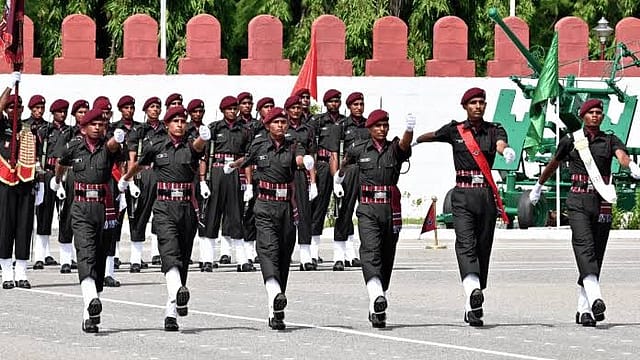
Chief of Defence Staff General NS Raja Subramani announced the decision on Wednesday, saying the extension would create a pathway for Agniveers to continue serving in the military. Those willing to join the regular forces after the additional two years will be enrolled subject to objective selection criteria.
Addressing the media, General Subramani said the Cabinet had approved the change after reviewing the performance of Agniveers over the past four years.
“Based on the performance evaluations conducted over these four years, we have received very positive feedback regarding their performance,” he said.
Under the original Agnipath scheme, introduced on June 14, 2022, 25 per cent of Agniveers were eligible for enrolment into the regular forces on merit after completing their four-year engagement. The remaining 75 per cent were to leave the services and return to civilian life.

The Era of Forever Wars
30 Oct 2026 - Vol 05 | Issue 44
Coping with an explosive Middle East
The revised arrangement offers this latter group an additional two-year engagement period. At the end of it, those willing to continue in the Armed Forces can be enrolled, subject to the prescribed selection criteria.
WHAT IS THE AGNIPATH SCHEME?
The Union Cabinet introduced the Agnipath scheme in 2022 to recruit young people into the Army, Navy and Air Force under the respective Service Acts for a period of four years. Recruits under the scheme are known as Agniveers.
The scheme was presented as a way to give young people an opportunity to serve the country while making the profile of the Armed Forces younger and more dynamic.
DEBATE OVER FOUR-YEAR TENURE
The short duration of service under the original scheme had drawn criticism, particularly over the future of the 75 per cent of recruits who were not retained in the regular forces after four years.
Several states, including Uttar Pradesh, Haryana and Maharashtra, had announced reservations for former Agniveers in police and other government services.
The latest decision changes the original exit pathway by allowing the 75 per cent group to remain engaged for another two years before being considered for enrolment in the Armed Forces.
With inputs from ANI